
Save the Date 11/18/23 Mercy Home’s Lux Gala

You won't want to miss the premiere of Mercy Home's brand new fall fundraising gala.
This upscale, black-tie event will feature immersive and electrifying experiences that will thrill your senses as you journey through the exquisitely restored art deco interior of Chicago's Old Post Office.
Enjoy live stage performances, free-roaming entertainment, a dinner program, auctions and raffles, VIP experiences and more.
Want a taste of what you can expect? Take a look at what’s in store!
Mark your calendar today and be there November 18. Give young people in crisis the tools they need to build brighter futures by attending the Lux Gala. Proceeds benefit Mercy Home for Boys & Girls—a solution for kids in crisis since 1887.
November 18, 2023
Old Post Office
433 W Van Buren St, Chicago, IL
For more information click here.
Join us for Have Mercy!

Date: Friday, May 12, 2023
Time: 8 p.m. to midnight
Place: Theater on the Lake, 2401 N. Lake Shore Dr.
We are looking forward to returning to Theater on the Lake again for this year's Have Mercy!
We hope you will join the Associate Board of Mercy Home for Boys & Girls for their 14th annual Have Mercy! fundraising gala on Friday, May 12, 2023.
Have Mercy! brings together leading young professionals for a night of dancing and entertainment. The event features live music, hors d’oeuvres, drinks, and dancing, an exciting auction, and raffle items--all in the beautiful setting of Theater on the Lake.
Tickets are on sale now, and will cost $110 until the first 110 are sold. Then the price will increase to $125 until 11:59 p.m. on Thursday, May 11, 2023. Any tickets that may be available for purchase at the door on May 12 will go up to $135 (based on availability).
You don't want to miss out—get your tickets today!
All proceeds raised at Have Mercy! go directly to support the boys and girls of Mercy Home.
Show us your Poker Face!

JOIN US CELEBRATE 10 YEARS OF POKER NIGHT!
Join us this January 26 as we gather for our 10th annual Mercy Home Poker Night!
Back at the Bank of America Tower, overlooking the Chicago River, Poker Night will feature Vegas-style excitement and great Gibson’s food. It's the perfect mid-winter night out on the town!
The event features a Texas Hold 'em tournament and charitable gaming, cocktails, hors d'oeuvres, and dinner buffet.
You can win big too! Top tournament prize is a $10,000 seat at the World Series of Poker Main Event in Las Vegas. We'll award more than $15,000 in additional prizes as well.
As always, the biggest winners are our kids – proceeds from Poker Night support the young people at Mercy Home.
Don't wait to get in on the action. Buy your ticket today. Our $225 Poker Buy-in goes up to $275 after January 13, 2023. Price for the casino ticket is $150.
Why Virginia Law Makes it Hard for Adoptees to Get Information about their Birth Parents
Click here for original article and related media. Written by Mark Spain.
From his ordinary house in Madison Heights, VA, Jim Peters has embarked on a not-so-ordinary journey.
"I’ve had it in the back of my mind for probably 40 or 50 years," Peters said.
What Jim Peters has thought about all those years is that something is missing.
Jim's mother gave him up for adoption at birth.
It happened in Roanoke in 1946.
"I’ve always been curious, being an only child. Do I have a brother? Do I have a sister? It’d be nice to know," he said.
Eventually, Ethel and Theodore Peters adopted Jim.
He started searching for his birth parents in the early 2000s.
He sent letters to the state but eventually gave up.
"I realized pretty soon after that it was a dead end for me," Peters explained.
Then, a couple of months ago, Peters reached out to ABC13 to see if we could help.
We encouraged him to fill out any necessary paperwork again and that we’d go from there.
"I’d like to find mommy and daddy," Peters said.
Retired now, with more time on his hands, he sent his paperwork to the Virginia Department of Social Services.
The agency handles most things that have to do with adoptions in the state.
Peters even took a 23-and-Me DNA test.
That didn’t help much.
The American Adoption Congress website lists Virginia as one of 15 states considered a "closed" or "sealed" adoption state.
It means adoption files are sealed by court order and are not public record.
In Virginia, adult adoptees have the right to apply to the Department of Social Services for identifying information on their birth families, such as names and addresses.
However, “good cause” must be shown in order to gain access to those records.
It means, consent from the birth family member on whom identifying information is being sought.
Priscila Barber is a local adoption attorney and an adoptee herself.
She explained why the law exists regarding confidential information.
"A lot of the anonymity concerns of adoptions is that private information won’t be shared with people who could then make the information which is very sensitive known to other people," Barber said.
Twelve other states have open adoption records.
"Why is Virginia so backward in the fact that they seal the records," wonders Peters.
Delegate Wendell Walker is Peters' representative in Richmond.
I asked him, what can you do to help make it easier for adoptees to get information about their births?
"Maybe that’s something we need to be looking into. The sessions coming up here in January and that’s something I'm willing to do is look at what we can do to amend or make some changes there," said Walker.
At 76, the Vietnam Veteran has wondered whether his birth parents are even still alive.
In September, his most recent request for information about his birth went through Richmond and then to the Social Services Office in Roanoke.
A family services specialist located Peters' birth certificate a few weeks ago and sent it to him.
It shows he was born at Roanoke Hospital, and even included his mother’s name.
However, it’s identifying information that was supposed to be redacted.
So, we’re not revealing it.
His mom was a 16-year-old student at Monroe High School. His father’s name was left blank.
Another document from 1946 shows he was born, Jimmy Lee Grubbs.
Remember, for an adoptee to get “identifying” information about their birth parents, they’d have to be ok with their information being shared.
Under a few circumstances, Virginia law does allow adoptees to petition the Commission of the Virginia Department of Social Services for identifying information about their birth parents if they’re deceased or mentally incapacitated.
The family services specialist also learned Jim's mother passed away several years ago.
"That's the least that we can do on behalf of the citizens out here is try to fix something that would be more friendly toward finding out who your parents were," Delegate Walker said.
Jim Peters is one adoptee who believes no one should have to wait until their parents are dead to find out who they are.
All adoption records in the state of Virginia are sealed.
There are no timelines for the expiration of their confidentiality and they are not subject to FOIA requests.
Adoption records in the state of Virginia were formally preserved beginning in July 1942.
However, the confidentiality of adoption records and the identity of birth parents extends to all adoptions before and after that time.
The Code sections for Adoption Disclosure are Code Section 63.2-1247 and Code Section 63.2-1246.
Resources:
If you have information about Jim Peters that could possibly put him in touch with any long-lost relatives, email mspain@wset.com.
11 Benefits of Volunteering
Become an SOS Volunteer. Read more below to learn how being an SOS volunteer can help you.

Many nonprofit organizations rely on volunteers to accomplish their mission. Some smaller organizations might even depend solely on volunteers for their first few years of operation. As such, volunteers are so critical to nonprofit organizations that they would not be able to do their vital work without the power of volunteer work.
How crucial are volunteers to nonprofit organizations?
As of 2021, studies have calculated the monetary value of volunteer hours at $28.54 per hour. While the actual amount varies from state to state, it’s clear that volunteers provide an enormous service to nonprofit organizations.
While you won’t receive a paycheck for your community service, volunteering also provides countless other personal benefits you may not have considered, including social, emotional, physical, and professional perks. Donating your time, energy, and resources can be just as rewarding for you as for those you are helping.
The Volunteer Commitment
Volunteering doesn’t have to be a long-term commitment, although those are always welcomed. You can customize your volunteer experiences to fit your lifestyle and schedule. Nonprofit organizations have multiple needs, including those requiring a minimal investment of time and energy. SOS Children’s Villages Illinois has many different volunteer opportunities. For example, you could volunteer to serve as a virtual tutor for one hour per week. Another option is to help organize drives to provide paper goods, school supplies, and books.
11 Benefits of Volunteering
1. Builds Strong Communities
When you volunteer, you make connections with other volunteers to tackle challenges facing your community. Even helping out with a small task can make a big difference in the lives of others.
2. Increases Socialization
Loneliness and social isolation are two severe epidemics in the world today that can lead to significant health risks. Although loneliness can affect anyone, older adults have a higher risk for loneliness and social isolation because they are more likely to face factors such as living alone and the loss of family or friends. Volunteering connects people and helps strengthen bonds between friends, family, and coworkers.
3. Improves Self-Esteem
Volunteering can be life-changing in many ways, especially for those who suffer from low self-esteem. Helping others and the community can boost confidence by providing a sense of accomplishment. Volunteering can also give you a sense of pride and identity.
4. Reduces Risk of Dementia
Alzheimer’s disease and other forms of dementia are frightening possibilities for millions of individuals. However, research has shown that volunteering may reduce the risk of dementia. Further studies indicate that social service improves elasticity in the brain. So, as volunteers age, volunteering may help them maintain the connections in their brains that often break down in patients with dementia.
5. Improves Physical Health and Longevity
Research shows that volunteers are healthier and have a lower mortality rate than those who do not volunteer. One study found that people who volunteer over 100 hours a year are some of the healthiest people in the US. Volunteering can also minimize chronic pain symptoms and reduce the risk of heart disease.
6. Provides a Sense of Purpose and Direction
Volunteering can add new meaning to the lives of young people who haven’t yet found their path and older adults, especially those who have retired or lost a spouse. Regardless of your age or life situation, volunteering can help take your mind off your worries, keep you mentally stimulated, and add more zest to your life.
7. Increases Happiness
Contemporary social neuroscience research shows that when people donate to charity, either financially or through volunteering, the mesolimbic system, the portion of the brain responsible for feelings of reward, is triggered. As a result, the brain releases feel-good chemicals, spurring you to perform more kind acts—something psychologists call “helper’s high.”
8. Helps Counteract the Effects of Stress, Anger, Anxiety, and Depression
Few things relieve stress better than a meaningful connection to another person. The social contact aspect of helping and working with others can profoundly affect your overall psychological well-being and help bolster your support system, which can protect you from anxiety and depression.
9. Increases Self-Confidence
Doing good for others and the community provides a natural sense of accomplishment. Your role as a volunteer can also give you a sense of pride and identity. When you feel better about yourself, you are more likely to view your life and future goals positively.
10. Advances Your Career
Volunteering provides opportunities to build and practice valuable job skills used in the workplace—teamwork, communication, problem-solving, project planning, task management, and organization. Whether you’re considering a new career or simply interested in upgrading your skills, volunteering can include useful training.
Volunteering is also a great way to try out a new career without making a long-term commitment and gaining experience in a new field. For example, if you’re interested in nursing, volunteering at a hospital or a nursing home can expose you to that environment.
11. Improves School and College Experience
Young people still in school obtain social skills and develop awareness as volunteers. It can also boost college applications, and job resumes. Volunteering can also help college students improve their job search post-graduation.
Become an SOS Illinois Volunteer
Volunteering your skills, time, and resources is one of the most potent ways to make a difference, to help others, and, as it turns out, to enhance your life! There are multiple benefits of volunteering. If you have doubts about whether volunteering is right for you, you might be surprised by how much you’ll gain by becoming a volunteer. Find out how you can help as an SOS Illinois volunteer!
MERCY HOME HEROES RACE DAY VOLUNTEERS
Sign up to Volunteer!
On Wednesday, March 23 at 11am CST,Volunteer for Mercy Home on Race Day this October!
Volunteer Details
All ages are welcome; children 16 & under must be accompanied by an adult. Community service hours will be given to those who need it.
Volunteers are needed at two different locations:
Heroes HQ is located at DePaul University’s Loop Campus, 333 S. State Street, Chicago, IL 60604, 11th Floor.
The Mercy Mile Cheer Station is located at our West Loop Campus, 1140 W Jackson Blvd, Chicago, IL 60607.
Details on individual volunteer roles are listed below. Requests for a certain role will be taken into consideration and filled on a first-come, first-served basis. We ask that all volunteers be flexible as roles may change. If you’d like to request a certain role, please include it in the comment box on the form below. Otherwise, we will assign you to a role that best fits your availability.

Heroes HQ
Gear Check and Runner Support
Manage the runners’ room, check, and organize gear, and provide runner recovery support as needed after the race.
Spectator Check-In
Greet families and other supporters of the runners. Collect contact information and payments for meals.
Spectator Support
Manage smooth entry/exit of spectators at buffet area. Ensure all guests have the necessary wristband to proceed.
Shuttle Attendant
Help guests find the trolley pick-up point and direct them to the 11th floor once they exit.
Finish Line Team
Greet runners as they return from finishing 26.2 miles! Cheer at elevators and direct them toward our runner recovery room or greet them downstairs and direct them to the 11th floor.
Mercy Home Cheer Station
Set Up Team
Install bleachers, signs, and tables for the “Mercy Mile.”
Shuttle Attendant
Help guests board trolley to Heroes HQ and direct guests to Cheer Station upon exiting the trolley.
T-Shirt Area/Cashier
Sort and distribute t-shirts to be given to volunteers. Accept payments for spectator shirts and food items.
Spot-A-Runner
Be on the lookout for Mercy Home Heroes! When you spot a Hero amid the other runners, announce that the runner is headed toward the Mercy Mile. We’ll be ready to cheer as they run by!
Recruit-A-Hero
Talk with guests at the Cheer Station and recruit runners for next year.
Dismantle Team
Remove bleachers, signs, and other event equipment.
Sign up to Volunteer!
Understanding Youth Suicide and Taking Action
Training Institute for School Social Work Professionals
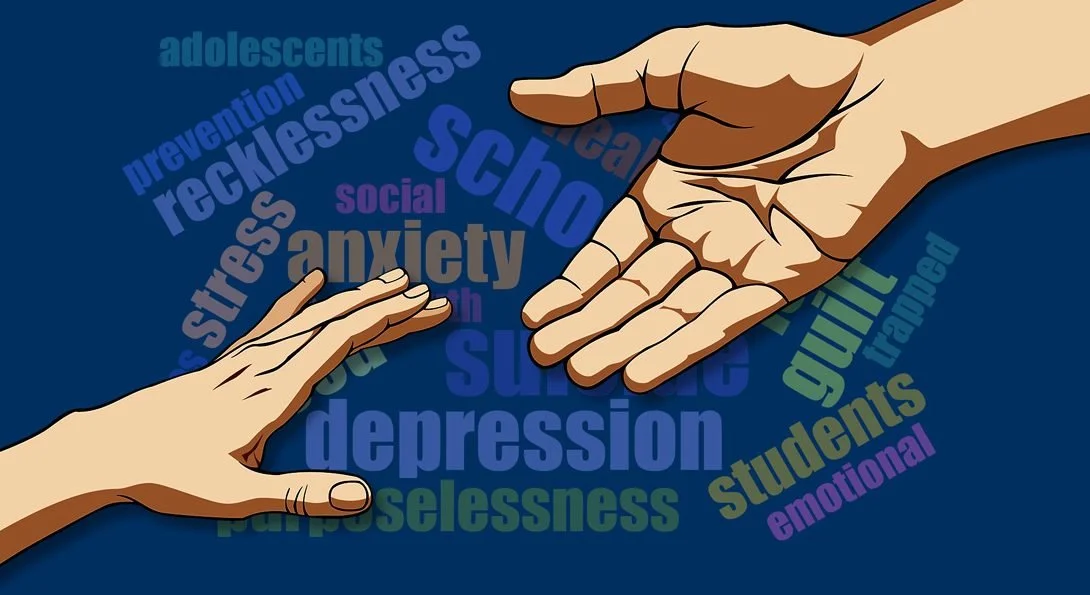
The 2022 JACSW Training Institute for School Social Work Professionals will present a prevention and intervention framework that supports the mental health needs of youths in school settings. Participants will leave this workshop with action steps to understand youth suicide and address their mental health needs.
Registration fee is $20.00
Includes 2.0 CEUs/CPDUs
Contact
Training Institute
Expertise with Survivors of Gender-Based Violence

New faculty member Assistant Professor Shih-Ying Cheng’s passion for working with survivors of gender-based violence (GBV) is rooted in personal experiences. “I have family members who have survived GBV. And having worked with survivors, I admire their strength and how resourceful they are,” she says, “but I also see how vulnerable they can be. I had a client who was almost killed by her husband, and when I visited her in the hospital, I told myself that I didn’t want to see that happen again.”
Before coming to the U.S. from Taiwan, Dr. Cheng worked with survivors of GBV. She explains that GBV includes intimate partner violence (IPV), sexual harassment, and sexual assault. “Different forms have different impacts on survivors. For example, survivors of sexual harassment tend to engage in avoidance, which can harm their career and what they achieve professionally,” she explains. “And then IPV may involve economic abuse, the abuser can exhibit abusive control, sabotaging their career or restricting contact with their colleagues or their supervisor. The impacts of IPV may be broad and pervasive.”
“Having worked with survivors, I admire their strength and how resourceful they are, but I also see how vulnerable they can be. I had a client who was almost killed by her husband, and when I visited her in the hospital, I told myself that I didn’t want to see that happen again.”
IPV may also impact children, even when they are not direct recipients of violence. After witnessing abusive behavior in their home, they may believe anger or abuse is an appropriate mode of communication and problem-solving, and the violence is then transmitted intergenerationally. “Parents who experience IPV are more likely to engage in harsh parenting or physical abuse, and it can contribute to further child maltreatment,” she says. “It is a complex process, and we need to understand the complexity and avoid stigmatizing the survivors.”
She has also worked with marriage immigrants who entered Taiwan through international marriages, mostly via marriage brokers. While the comparison of marriage immigration to human trafficking might seem self-evident, and in some cases may be true, Dr. Cheng urges caution in describing it as trafficking. “For activists and researchers, it might be easier to frame it as human trafficking, but we need to be very careful,” she explains. “The danger is in underestimating the agency among women who choose to immigrate. They may, for example, go to great lengths to prove the validity of their marriage, so they can go through the immigration process more smoothly.”
Regarding interventions, Dr. Cheng conducted a meta-analysis of the Batterer Intervention Program, a popular intervention in the U.S., and found that it is not highly effective in stopping abuse. “We found that effectiveness is more likely due to the characteristics of the participants, their own dedication to the program,” she says, adding that certain cognitive behavioral interventions can be effective in dealing with PTSD or depression among survivors.
Dr. Cheng wants to examine GBV in vulnerable populations in the U.S., especially recent immigrants. She has firsthand experience with being an immigrant and the culture shocks involved. “While my experience is probably different from that of other immigrants, I am very interested in the intersection of GBV with the experience of being a recent immigrant,” she says. “Chicago is a perfect city to have the opportunity to live with recent immigrants and learn about their experiences from them.”
“What attracted me to Jane Addams College of Social Work was all the work being done with marginalized populations. And that is exactly what I want to pursue in my life and my career; I want to be useful, and I want my research to be meaningful and have impact in the real world.”
She says that what drew her to JACSW was the College’s emphasis on social justice for marginalized and vulnerable populations. “Three years ago, I came to UIC specifically to visit the Hull-House Museum, to learn about Jane Addams and the settlement house movement. But what attracted me to Jane Addams College of Social Work was all the work being done with marginalized populations,” Dr. Cheng says. “And that is exactly what I want to pursue in my life and my career; I want to be useful, and I want my research to be meaningful and have impact in the real world.”
April 08, 2022
Click here for the full article.
Alumni Spotlight: Dr. Sharon E. Milligan, MSW ’73
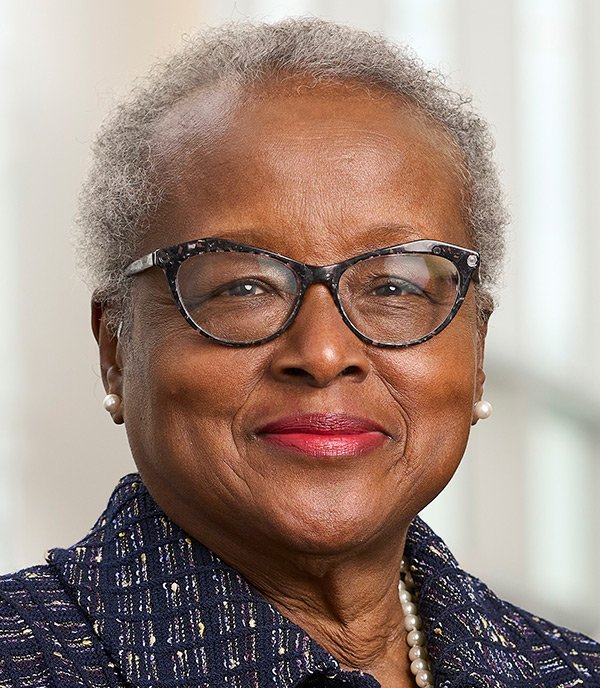
ACSW alumna Dr. Sharon E. Milligan is an Associate Professor at the Jack, Joseph and Morton Mandel School of Applied Social Sciences, Case Western Reserve University. In 2021, she served as Interim Dean and prior to that, she was Associate Dean for Academic Affairs and chaired the Master of Science in Social Administration/Master of Social Work and the Master in Nonprofit Management Organizations programs. She has also served as Associate Director of the Center on Urban Poverty and Community Development.
Dr. Milligan has been continuously involved in social work, community development, and public health as a program developer, researcher, teacher, and consultant to government and nonprofit agencies. As an educator, she has taught graduate courses in community development, social welfare policy, and research methodology. As a researcher, she directed a study to uncover technology for evaluating conditions and assets in low-income communities and has led several funded research projects focusing on health and minorities.
In this interview, Dr. Milligan shares perspectives on education, program evaluation, community development, and more.
What do you think are the greatest challenges that social work programs are facing?
There are, of course, many strengths that we are maintaining in the education of students, with a focus on the competencies that are important. I think the challenge is how we assess those competencies. We’re working on that as a profession. Another major challenge is the cost of education; not just tuition but the cost of attendance, what it actually takes for social work students to complete the two or three years of classes, including the cost of living. Many students are working as they go through a program, and also doing their field placements, and many exit with debt. The average social worker does not make a lot of money; we’re doing good with an entry level salary of $50,000.
We are witnessing renewed emphasis on racial equity; what do you think social work programs must do to achieve that?
One of the things we are struggling with is the question of what equity means, and what diversity and inclusion mean in our profession. And we are also struggling with the question of how equity plays out in society. I do believe that our programs need to achieve an education that relates to the lives and lived experiences of a variety of people. I think about the founders of social work, in the days of Jane Addams, and how we approached social change and social justice in the past, and I had assumed we would now be doing this differently. But, we need to approach the experience of being proximate in terms of the people, as Bryan Stevenson has talked about, and understanding and being open to the lived experiences of individuals in the communities we want to work with and help transform. We are still a divided country and race plays a significant part in the division.
What challenges are there in designing a social work curriculum that addresses racial inequity?
We’ve struggled with how we approach this, but we now believe that infusion of racial justice throughout the total curriculum is the most effective way to manage this, to help both students and faculty as they struggle with what it means to achieve racial equity in society and the world. So, together in the learning community we hope we can move the needle toward greater equity in our communities and across the world. But it can take a lot of introspection.
As an example, in one of my first employment opportunities I was trained in interventions for mother-child interaction, and at the time I never thought about how women of color never saw photos of brown mothers, or an illustration of a brown mother with a brown baby in the womb. Yet we just recently saw a young physician who produced such an illustration. It made me wonder why I hadn’t thought of that. Is it part of the struggle within myself? One assumes there is a single standard in terms of the kinds of exposures we could give people in our educational setting, and I suspect many people felt the same way when they saw
that illustration.
Program evaluation is an area of focus for you; how can program evaluation help organizations and the communities they serve?
A lot of my program evaluation work has been in neighborhoods, in the community, and that’s where JACSW helped me think about how and where to practice. This has taken me on a very interesting pathway of interacting with entities that were attempting to see what we can know about developing the effectiveness of organizations. Many were in poor neighborhoods, and often African American communities where you saw the intersection of poverty with race. So, part of what I learned is that evaluation does relate to equity, even though we didn’t used to call it that. The question is, how do you design an evaluation that can give us knowledge of how these organizations work and what’s important, and how do you establish long-term or short-term impact outcomes for the evaluation.
I have approached this as an expert but also as a learner, learning from people in the neighborhood. There was one particular community member who really took me to task. Her name was Katherine Butler, and when I would show her my diagrams with boxes, she’d say, “Dr. Milligan, those little boxes with their words in them are my lived reality.” And I’d never heard that before. Now, of course, everyone talks about lived experience. But she challenged me to think about and visualize the process with an understanding that our boxes and arrows represent real peoples’ lives. Proceeding from that, I have tried to develop outcomes that are not deficit-based but express the values, hopes, and dreams of people who live in those spaces. I think we still struggle with this as a profession.
You have also done research into community development; what is key to successful community development?
At the risk of repeating myself, engagement of residents in the process is key, no matter how difficult that is, and it can be challenging. We can be challenged when we come in with notions that we are in the transformation alone. We are not in it alone. And we must include a variety of people, not just the politicians, but the average person who goes to work every day. We must also be attentive to the organizations and institutions that already exist; people have already struggled in those spaces. Successful community development also includes knowing those individuals who provide services within the community, and not just human services, but the grocer or the person who owns the convenience store. What does it mean to have a corner store that does not carry a full selection of resources? What does that mean for the health of the community? We have to consider all the resources that are available or those that are needed.
How can social workers ensure that community needs and community voices remain central to their work?
It takes a lot of work comparing what you read in the literature to people’s lived reality. I think a big challenge is not only having community voices, but also using mixed methods of understanding the community. One has to look at the literature and see what has been written about similar neighborhoods, for example, asking how the work in Chicago translates to the work in Cleveland. We also need to understand that data can be fraught with issues related to equity; data science can be fraught with racist information. So, we have to account for the frequency of disparities, or adjust for them. Lastly, I don’t start any work without having focus group conversations with various voices from the community. The data in and of itself is not sufficient for understanding community needs. You need the community voices, and to understand that there are many levels of voices within a space.
What roles can universities play in supporting and partnering with marginalized communities?
The most important thing is that the university continues to be community-facing in the broadest sense. We need to bring people into the university not just as learners, but as teachers. Community members can learn but they can also challenge, as I noted before, so that we as academics are also learning. I love the idea of community fellows, which I know UIC has done, and I think as universities become increasingly aware of the benefits of real community engagement, such fellows can provide great value to our institutions and our research.
Did your education at JACSW influence your orientation toward community development and program evaluation?
I didn’t realize it at the time, but I came to Chicago at the end of the great migration to cities such as Chicago and Cleveland. So, I not only learned a lot from the people I worked with in the university, but also people who lived in the neighborhoods I worked in. So, it was the experience of living in Chicago and being immersed in it, and going to Jane Addams which is so part of the community, and then having two years of field placements in those neighborhoods. I learned so much about social work practice and organizing. It was not lost on me that Jane Addams herself worked in the community, so I felt at the time that I was at the right school, and in the right moment to learn community engagement, community practice, and group work.
You are also interested in art and its intersection with social work; can you please tell us about that?
There is definitely an intersection of art with social justice. I think portraits are especially important in terms of how we see “the other” and how we see ourselves, and to our sense of identity and pride. How we portray people, what they do in the world and how they fit in the world, is important and powerful. We often think about community as a physical space, but it’s also a space in which people live and thrive, and being able to show that is a wonderful way to transform spaces. That’s something I’ve always paid attention to in community development, trying to create an authentic space in which people can be reflective. I don’t care what you say to people, but if what you show them and surround them with contradicts their experiences, you’re only going to go so far. That’s why I love photovoice projects that allow people to show you their space and what it means to them.
While in Chicago, I saw a lot of public art in neighborhoods, and I loved that about Chicago. With my own children, I took them not only to museums but to public art spaces to talk about, for example, a mural and what it means. What does it represent? Is it the lived experience of the people who live there? Those artists, like social workers, listen to voices, to what people say about themselves, and what they aspire to.
Is there anything you’d like to add?
Yes, and this connects back to one of the first things we talked about, the cost of education. I chose UIC based on the quality of education, but also on the amount of debt I would have after graduating. I’m originally from Florida, and coming to Chicago was expensive. The city was an urban laboratory, which was attractive and which taught me a lot, but part of my choice was based on debt. And many students are still struggling with that. But getting your education at UIC Jane Addams is a great investment. There are so many ways you can use social work practice, and so many wonderful opportunities to contribute to society.
Click here for the full article.
Remembering Dr. Osei Darkwa
Dr. Darkwa was a humanitarian and a pioneer, and his unique combination of traditional and technological experiences provided a very distinctive and valuable perspective at the College.
In November of 2021, as he was planning instruction for the spring semester, Dr. Osei Darkwa passed away unexpectedly.

Dr. Darkwa joined the College as a Visiting Associate Professor in January of 2020. He taught Critical Social Work in a Multicultural Society, Social Work Research, and Human Behavior and the Social Environment, and also provided consultation on the use of digital technology for instruction. During his time at JACSW he became known for his kind and unassuming demeanor. Yet his humility belied his many humanitarian accomplishments in his home country of Ghana.
He served for 10 years as the Founding President of Ghana Technology University College (GTUC). Darkwa also founded and was president of African Virtual Campus, which provided students access to online programs directly from a variety of academic institutions. Through these initiatives he helped expand access to quality higher education for people living in rural areas of Africa.
He researched and published extensively in the areas of telecommunication, telemedicine, and online education and curriculum development. He also worked and published in the areas of gerontology and the well-being of older populations, with an interest in how socioeconomic development may impact the role of elders in a society.
He was fascinated by the contrasts between traditional and industrialized societies, and the implications for traditional societies as they undertake socioeconomic development. Dr. Darkwa had observed that as agrarian societies become industrialized the culture is impacted, usually bringing disorganization of primary social institutions such as family. He was interested in the policy implications of such sociocultural transformation, especially the implications for the provision of elder care.
In his most recent research project, conducted with Dr. John Holton of the Jane Addams Center for Social Policy and Research, he examined elderly African Americans’ perception of COVID-19 and the challenges they faced during the pandemic.
A perhaps little-known aspect of Dr. Darkwa’s life was that he was a Ghanaian traditional ruler, Chief of Patriensa Traditional Area, a role which helped instill in him an abiding belief in community, teamwork, and the constructive and empowering use of technology to bring people together. In this capacity, he undertook social and economic development projects for the people living in his community, including the construction of a senior high school which enabled people to access secondary education. In its 10 years of operation, the school has produced a number of talented young people who have gone on to higher education.
“No one has a monopoly on ideas; we all have our own strengths and limitations and weaknesses. But once we come together we are able to achieve a better outcome for society.”
He addressed transportation challenges for the community by donating over 2,000 bicycles to rural farmers and schoolteachers, and he purchased two tractors to reduce the necessity of walking and headloading farm produce. This humanitarian gesture earned him a nationwide nomination by MTN, one of the country’s major telecommunications companies, as one of 10 Heroes of Change. He also purchased an ambulance for the community health clinic.
Among the other honors and accolades received by Dr. Darkwa was a prestigious BID Quality Award, an international award recognizing organizations that are drivers of innovation, and a 2021 UIC Black History Maker Award, in recognition of his contributions to the UIC Black and African American community.
In a 2020 interview for Affirmations, Dr. Darkwa emphasized his belief in community and the power of collective action to bring about social transformation, saying, “No one has a monopoly on ideas; we all have our own strengths and limitations and weaknesses. But once we come together we are able to achieve a better outcome for society. I see this in my function as a chief. People say they think I am more understanding and accommodating as a chief, because I empathize and try to understand their issues. I want to empower them and find long-lasting solutions.”
Photos from Dr. Darkwa's Career


Click here for the full article.