
Expertise with Survivors of Gender-Based Violence

New faculty member Assistant Professor Shih-Ying Cheng’s passion for working with survivors of gender-based violence (GBV) is rooted in personal experiences. “I have family members who have survived GBV. And having worked with survivors, I admire their strength and how resourceful they are,” she says, “but I also see how vulnerable they can be. I had a client who was almost killed by her husband, and when I visited her in the hospital, I told myself that I didn’t want to see that happen again.”
Before coming to the U.S. from Taiwan, Dr. Cheng worked with survivors of GBV. She explains that GBV includes intimate partner violence (IPV), sexual harassment, and sexual assault. “Different forms have different impacts on survivors. For example, survivors of sexual harassment tend to engage in avoidance, which can harm their career and what they achieve professionally,” she explains. “And then IPV may involve economic abuse, the abuser can exhibit abusive control, sabotaging their career or restricting contact with their colleagues or their supervisor. The impacts of IPV may be broad and pervasive.”
“Having worked with survivors, I admire their strength and how resourceful they are, but I also see how vulnerable they can be. I had a client who was almost killed by her husband, and when I visited her in the hospital, I told myself that I didn’t want to see that happen again.”
IPV may also impact children, even when they are not direct recipients of violence. After witnessing abusive behavior in their home, they may believe anger or abuse is an appropriate mode of communication and problem-solving, and the violence is then transmitted intergenerationally. “Parents who experience IPV are more likely to engage in harsh parenting or physical abuse, and it can contribute to further child maltreatment,” she says. “It is a complex process, and we need to understand the complexity and avoid stigmatizing the survivors.”
She has also worked with marriage immigrants who entered Taiwan through international marriages, mostly via marriage brokers. While the comparison of marriage immigration to human trafficking might seem self-evident, and in some cases may be true, Dr. Cheng urges caution in describing it as trafficking. “For activists and researchers, it might be easier to frame it as human trafficking, but we need to be very careful,” she explains. “The danger is in underestimating the agency among women who choose to immigrate. They may, for example, go to great lengths to prove the validity of their marriage, so they can go through the immigration process more smoothly.”
Regarding interventions, Dr. Cheng conducted a meta-analysis of the Batterer Intervention Program, a popular intervention in the U.S., and found that it is not highly effective in stopping abuse. “We found that effectiveness is more likely due to the characteristics of the participants, their own dedication to the program,” she says, adding that certain cognitive behavioral interventions can be effective in dealing with PTSD or depression among survivors.
Dr. Cheng wants to examine GBV in vulnerable populations in the U.S., especially recent immigrants. She has firsthand experience with being an immigrant and the culture shocks involved. “While my experience is probably different from that of other immigrants, I am very interested in the intersection of GBV with the experience of being a recent immigrant,” she says. “Chicago is a perfect city to have the opportunity to live with recent immigrants and learn about their experiences from them.”
“What attracted me to Jane Addams College of Social Work was all the work being done with marginalized populations. And that is exactly what I want to pursue in my life and my career; I want to be useful, and I want my research to be meaningful and have impact in the real world.”
She says that what drew her to JACSW was the College’s emphasis on social justice for marginalized and vulnerable populations. “Three years ago, I came to UIC specifically to visit the Hull-House Museum, to learn about Jane Addams and the settlement house movement. But what attracted me to Jane Addams College of Social Work was all the work being done with marginalized populations,” Dr. Cheng says. “And that is exactly what I want to pursue in my life and my career; I want to be useful, and I want my research to be meaningful and have impact in the real world.”
April 08, 2022
Click here for the full article.
Alumni Spotlight: Dr. Sharon E. Milligan, MSW ’73
ACSW alumna Dr. Sharon E. Milligan is an Associate Professor at the Jack, Joseph and Morton Mandel School of Applied Social Sciences, Case Western Reserve University. In 2021, she served as Interim Dean and prior to that, she was Associate Dean for Academic Affairs and chaired the Master of Science in Social Administration/Master of Social Work and the Master in Nonprofit Management Organizations programs. She has also served as Associate Director of the Center on Urban Poverty and Community Development.
Dr. Milligan has been continuously involved in social work, community development, and public health as a program developer, researcher, teacher, and consultant to government and nonprofit agencies. As an educator, she has taught graduate courses in community development, social welfare policy, and research methodology. As a researcher, she directed a study to uncover technology for evaluating conditions and assets in low-income communities and has led several funded research projects focusing on health and minorities.
In this interview, Dr. Milligan shares perspectives on education, program evaluation, community development, and more.
What do you think are the greatest challenges that social work programs are facing?
There are, of course, many strengths that we are maintaining in the education of students, with a focus on the competencies that are important. I think the challenge is how we assess those competencies. We’re working on that as a profession. Another major challenge is the cost of education; not just tuition but the cost of attendance, what it actually takes for social work students to complete the two or three years of classes, including the cost of living. Many students are working as they go through a program, and also doing their field placements, and many exit with debt. The average social worker does not make a lot of money; we’re doing good with an entry level salary of $50,000.
We are witnessing renewed emphasis on racial equity; what do you think social work programs must do to achieve that?
One of the things we are struggling with is the question of what equity means, and what diversity and inclusion mean in our profession. And we are also struggling with the question of how equity plays out in society. I do believe that our programs need to achieve an education that relates to the lives and lived experiences of a variety of people. I think about the founders of social work, in the days of Jane Addams, and how we approached social change and social justice in the past, and I had assumed we would now be doing this differently. But, we need to approach the experience of being proximate in terms of the people, as Bryan Stevenson has talked about, and understanding and being open to the lived experiences of individuals in the communities we want to work with and help transform. We are still a divided country and race plays a significant part in the division.
What challenges are there in designing a social work curriculum that addresses racial inequity?
We’ve struggled with how we approach this, but we now believe that infusion of racial justice throughout the total curriculum is the most effective way to manage this, to help both students and faculty as they struggle with what it means to achieve racial equity in society and the world. So, together in the learning community we hope we can move the needle toward greater equity in our communities and across the world. But it can take a lot of introspection.
As an example, in one of my first employment opportunities I was trained in interventions for mother-child interaction, and at the time I never thought about how women of color never saw photos of brown mothers, or an illustration of a brown mother with a brown baby in the womb. Yet we just recently saw a young physician who produced such an illustration. It made me wonder why I hadn’t thought of that. Is it part of the struggle within myself? One assumes there is a single standard in terms of the kinds of exposures we could give people in our educational setting, and I suspect many people felt the same way when they saw
that illustration.
Program evaluation is an area of focus for you; how can program evaluation help organizations and the communities they serve?
A lot of my program evaluation work has been in neighborhoods, in the community, and that’s where JACSW helped me think about how and where to practice. This has taken me on a very interesting pathway of interacting with entities that were attempting to see what we can know about developing the effectiveness of organizations. Many were in poor neighborhoods, and often African American communities where you saw the intersection of poverty with race. So, part of what I learned is that evaluation does relate to equity, even though we didn’t used to call it that. The question is, how do you design an evaluation that can give us knowledge of how these organizations work and what’s important, and how do you establish long-term or short-term impact outcomes for the evaluation.
I have approached this as an expert but also as a learner, learning from people in the neighborhood. There was one particular community member who really took me to task. Her name was Katherine Butler, and when I would show her my diagrams with boxes, she’d say, “Dr. Milligan, those little boxes with their words in them are my lived reality.” And I’d never heard that before. Now, of course, everyone talks about lived experience. But she challenged me to think about and visualize the process with an understanding that our boxes and arrows represent real peoples’ lives. Proceeding from that, I have tried to develop outcomes that are not deficit-based but express the values, hopes, and dreams of people who live in those spaces. I think we still struggle with this as a profession.
You have also done research into community development; what is key to successful community development?
At the risk of repeating myself, engagement of residents in the process is key, no matter how difficult that is, and it can be challenging. We can be challenged when we come in with notions that we are in the transformation alone. We are not in it alone. And we must include a variety of people, not just the politicians, but the average person who goes to work every day. We must also be attentive to the organizations and institutions that already exist; people have already struggled in those spaces. Successful community development also includes knowing those individuals who provide services within the community, and not just human services, but the grocer or the person who owns the convenience store. What does it mean to have a corner store that does not carry a full selection of resources? What does that mean for the health of the community? We have to consider all the resources that are available or those that are needed.
How can social workers ensure that community needs and community voices remain central to their work?
It takes a lot of work comparing what you read in the literature to people’s lived reality. I think a big challenge is not only having community voices, but also using mixed methods of understanding the community. One has to look at the literature and see what has been written about similar neighborhoods, for example, asking how the work in Chicago translates to the work in Cleveland. We also need to understand that data can be fraught with issues related to equity; data science can be fraught with racist information. So, we have to account for the frequency of disparities, or adjust for them. Lastly, I don’t start any work without having focus group conversations with various voices from the community. The data in and of itself is not sufficient for understanding community needs. You need the community voices, and to understand that there are many levels of voices within a space.
What roles can universities play in supporting and partnering with marginalized communities?
The most important thing is that the university continues to be community-facing in the broadest sense. We need to bring people into the university not just as learners, but as teachers. Community members can learn but they can also challenge, as I noted before, so that we as academics are also learning. I love the idea of community fellows, which I know UIC has done, and I think as universities become increasingly aware of the benefits of real community engagement, such fellows can provide great value to our institutions and our research.
Did your education at JACSW influence your orientation toward community development and program evaluation?
I didn’t realize it at the time, but I came to Chicago at the end of the great migration to cities such as Chicago and Cleveland. So, I not only learned a lot from the people I worked with in the university, but also people who lived in the neighborhoods I worked in. So, it was the experience of living in Chicago and being immersed in it, and going to Jane Addams which is so part of the community, and then having two years of field placements in those neighborhoods. I learned so much about social work practice and organizing. It was not lost on me that Jane Addams herself worked in the community, so I felt at the time that I was at the right school, and in the right moment to learn community engagement, community practice, and group work.
You are also interested in art and its intersection with social work; can you please tell us about that?
There is definitely an intersection of art with social justice. I think portraits are especially important in terms of how we see “the other” and how we see ourselves, and to our sense of identity and pride. How we portray people, what they do in the world and how they fit in the world, is important and powerful. We often think about community as a physical space, but it’s also a space in which people live and thrive, and being able to show that is a wonderful way to transform spaces. That’s something I’ve always paid attention to in community development, trying to create an authentic space in which people can be reflective. I don’t care what you say to people, but if what you show them and surround them with contradicts their experiences, you’re only going to go so far. That’s why I love photovoice projects that allow people to show you their space and what it means to them.
While in Chicago, I saw a lot of public art in neighborhoods, and I loved that about Chicago. With my own children, I took them not only to museums but to public art spaces to talk about, for example, a mural and what it means. What does it represent? Is it the lived experience of the people who live there? Those artists, like social workers, listen to voices, to what people say about themselves, and what they aspire to.
Is there anything you’d like to add?
Yes, and this connects back to one of the first things we talked about, the cost of education. I chose UIC based on the quality of education, but also on the amount of debt I would have after graduating. I’m originally from Florida, and coming to Chicago was expensive. The city was an urban laboratory, which was attractive and which taught me a lot, but part of my choice was based on debt. And many students are still struggling with that. But getting your education at UIC Jane Addams is a great investment. There are so many ways you can use social work practice, and so many wonderful opportunities to contribute to society.
Click here for the full article.
Remembering Dr. Osei Darkwa
Dr. Darkwa was a humanitarian and a pioneer, and his unique combination of traditional and technological experiences provided a very distinctive and valuable perspective at the College.
In November of 2021, as he was planning instruction for the spring semester, Dr. Osei Darkwa passed away unexpectedly.

Dr. Darkwa joined the College as a Visiting Associate Professor in January of 2020. He taught Critical Social Work in a Multicultural Society, Social Work Research, and Human Behavior and the Social Environment, and also provided consultation on the use of digital technology for instruction. During his time at JACSW he became known for his kind and unassuming demeanor. Yet his humility belied his many humanitarian accomplishments in his home country of Ghana.
He served for 10 years as the Founding President of Ghana Technology University College (GTUC). Darkwa also founded and was president of African Virtual Campus, which provided students access to online programs directly from a variety of academic institutions. Through these initiatives he helped expand access to quality higher education for people living in rural areas of Africa.
He researched and published extensively in the areas of telecommunication, telemedicine, and online education and curriculum development. He also worked and published in the areas of gerontology and the well-being of older populations, with an interest in how socioeconomic development may impact the role of elders in a society.
He was fascinated by the contrasts between traditional and industrialized societies, and the implications for traditional societies as they undertake socioeconomic development. Dr. Darkwa had observed that as agrarian societies become industrialized the culture is impacted, usually bringing disorganization of primary social institutions such as family. He was interested in the policy implications of such sociocultural transformation, especially the implications for the provision of elder care.
In his most recent research project, conducted with Dr. John Holton of the Jane Addams Center for Social Policy and Research, he examined elderly African Americans’ perception of COVID-19 and the challenges they faced during the pandemic.
A perhaps little-known aspect of Dr. Darkwa’s life was that he was a Ghanaian traditional ruler, Chief of Patriensa Traditional Area, a role which helped instill in him an abiding belief in community, teamwork, and the constructive and empowering use of technology to bring people together. In this capacity, he undertook social and economic development projects for the people living in his community, including the construction of a senior high school which enabled people to access secondary education. In its 10 years of operation, the school has produced a number of talented young people who have gone on to higher education.
“No one has a monopoly on ideas; we all have our own strengths and limitations and weaknesses. But once we come together we are able to achieve a better outcome for society.”
He addressed transportation challenges for the community by donating over 2,000 bicycles to rural farmers and schoolteachers, and he purchased two tractors to reduce the necessity of walking and headloading farm produce. This humanitarian gesture earned him a nationwide nomination by MTN, one of the country’s major telecommunications companies, as one of 10 Heroes of Change. He also purchased an ambulance for the community health clinic.
Among the other honors and accolades received by Dr. Darkwa was a prestigious BID Quality Award, an international award recognizing organizations that are drivers of innovation, and a 2021 UIC Black History Maker Award, in recognition of his contributions to the UIC Black and African American community.
In a 2020 interview for Affirmations, Dr. Darkwa emphasized his belief in community and the power of collective action to bring about social transformation, saying, “No one has a monopoly on ideas; we all have our own strengths and limitations and weaknesses. But once we come together we are able to achieve a better outcome for society. I see this in my function as a chief. People say they think I am more understanding and accommodating as a chief, because I empathize and try to understand their issues. I want to empower them and find long-lasting solutions.”
Photos from Dr. Darkwa's Career


Click here for the full article.
On the Front Lines of Violence Intervention

Two new studies at the Jane Addams Center for Social Policy and Research have focused on a long-neglected but essential aspect of community-based violence intervention programs: the people who work on the front lines.
Reducing community violence through prevention and interruption programs is not a new concept, and certainly not new to Chicago. For twenty years, the UIC School of Public Health was home to Cure Violence, a pioneering program that applied a public health approach to violence interruption and community safety. Now, at the Jane Addams Center for Social Policy and Research (Policy Center), two leading-edge studies are elucidating a formerly neglected aspect of violence prevention: the intervention workers themselves. Through the examination of the experiences, perspectives, and well-being of these essential front-line workers, these studies have elucidated factors that contribute to successful community-based responses to gun violence and have elevated the voices of people who put themselves at risk working in violence prevention.
“I know the streets and I know what’s been going on.
I can reach out to people with high risk. I have seen them grow up. I have been living in this community for years.
I have compassion for kids and want to show young women the right way.”
The People Who Do the Work
The majority of Acclivus staff are male and are predominantly Black or Latinx, and the CEO is an African-American male. The age of Acclivus staff ranges from 36 to 66, with a mean of 47. Thirteen of the staff members were formerly employed by Cure Violence, eight of whom were front-line intervention workers.
The staff live in and have strong connections to the communities and people they serve. They also have shared experiences with the people they are trying to reach; staff described their backgrounds as having been involved in gangs, on the wrong path, or a troublesome youth, and a little over two-thirds had been incarcerated. Those shared life experiences make them very dedicated to their work and they report a strong sense of having learned from their past experiences and wanting to help others. On the other hand, they also work long hours and speak of being on-call “24/7”.
The educational background of the staff is diverse, with the highest degree obtained ranging from GED to doctorate. For 40 percent of the staff, the highest degree was a GED or high school. Forty-six percent had an associate degree or some college, and 13 percent had a bachelor’s degree
or higher.
The staff report great pride in what they have achieved in their own lives, for example, buying a house or a car, completing a college degree, or seeing a child go to college. The importance of family is evident in their responses, with some reporting the grief of losing family or friends during the COVID-19 pandemic.
Doing the Work
In general, the staff view communication as key to their work, involving maintenance of a network of relationships with individuals and community organizations, team communications, effective communication in deescalation efforts, and communication of available supports and resources to individuals and families in the community.
“They understand the communities where the individuals come from and the dynamics of the situations. They truly understand the culture and without being judgmental provide them with valuable assistance.”
They see their work of connecting residents to resources or social services, or helping people find employment, as core to the promotion of community safety. Likewise, the public health aspect of the work is evident in the frequency with which staff speak about supporting the health or mental health of community members. This is especially true with the community outreach team.
The focus of the hospital response team is centered around deescalation and violence prevention after a shooting, and they often cite rapid response as key to deescalation. However, they also work to connect clients and their families to supportive services or resources.
The staff express great care for the communities in which they live and work, and for the individuals they serve. They also indicate a fundamentally trauma-informed approach in the way that they respect their clients’ individuality and avoid stigmatization or further traumatization.
“The goal is to prevent the gun shot or stabbing victim from being reinjured and prevent family members/friends from retaliating.
We help prevent violence; improve health outcomes; prevent domestic violence; address homelessness, and (improve) mental health. We feed the homeless. In our communities we do it all.”
Assessing Success
Acclivus staff view their efforts as important and successful, and attribute their connections to the community as key to that success. They are also aware of the importance of changing social norms about violence at both the individual and community levels.
The staff think highly of the organization and its leadership, as well as of the organization’s approach to violence prevention and interruption, and they see their efforts as essential and successful. However, many staff cited lack of resources and funding as a limitation on expansion of their services.
Community members and stakeholders also see the work as valuable, and view the street intervention workers as assets in the community. Ability to navigate and effectively communicate within the community was also cited as a particular strength of Acclivus staff.
“Having a fuller understanding of the people who succeed at this dangerous but necessary work may be helpful in replicating violence interruption in other communities or other cities,” observes Dr. Hairston. “And it also serves as a reminder that people from the community are often the heart of effective community-based responses to gun violence.”
Supporting the Wellness of Street Intervention Workers
“Our outreach workers have been caught in crossfires. I’ve seen it. I’ve seen them lose people, get attachments to participants that’s making strides, and then they ended up getting killed.”
Dr. Kathryn Bocanegra
Assistant Professor Kathryn Bocanegra describes street intervention work as a healing profession, helping to heal individuals and communities. “However, most people in healing professions have not been the patient; most trauma surgeons have not had a traumatic injury, or most therapists have not experienced mental illness,” she says. “Street intervention workers, on the other hand, are often wounded healers, healing from their own trauma as they accompany others in the process of redirecting and transforming their lives.”
Dr. Bocanegra’s recent study, Between a Bullet and Its Target, examined the primary occupational stressors experienced by street intervention workers (SIWs), the forms of trauma they are exposed to, and the existing organizational supports and best practices to support them in addressing this trauma. “We need to do everything possible to support front-line workers engaged in violence reduction practice. Their success can be measured in human lives,” she says. “They are doing this work with few resources available; It’s like trying to stop bullets with their bare hands.”
To better understand the range and impact of these traumatic experiences, Dr. Bocanegra and her team conducted in-depth, semi-structured interviews with SIWs and supervisors who provide services in Chicago neighborhoods that experience community violence. Following is a general overview of
the findings.
The Experience of Trauma
“I began this work while incarcerated. So, we began to do outreach in the space that we were in…so many nights of watching the news and seeing what was happening in the city that we loved.”
Most SIWs are system survivors and work within communities impacted by disinvestment and structural racism. Dr. Bocanegra found that trauma manifests itself within a longitudinal, ecological context in their lives and dynamically interacts with the regular exposure to trauma that occurs in community violence intervention. She also found that trauma exposure in street intervention work is much more expansive than originally conceived, and she describes shootings or homicides as just the tip of an iceberg. “SIWs are deeply engaged in victim services, they experience a high frequency of criminal-legal interface, and they may also experience forms of organizational trauma in their workplace,” she says.
The shared histories between SIWs and their clients also carry a number of risks, including increased potential for boundary confusion, violation, or countertransference; the projection of personal experiences onto clients; and increased vulnerability to burnout. “Just having been involved in the streets or been to prison does not make someone a wounded healer, and it does not make someone effective in street intervention work,” she explains. “Trauma recovery is the personal transformation that must take place, and how we think about trauma and understand it through existing clinical frameworks is complex.”
Dr. Bocanegra found existing clinical frameworks to be inadequate in describing the traumatic experience of SIWs, with most discourse using PTSD as the reference point for understanding symptoms. “PTSD and Complex PTSD are incomplete and inaccurate depictions of the trauma, which is ever-present and ongoing, and the problematic ‘symptoms’ we target in PTSD may be keeping SIWs alive,” she explains. “Problematizing hypervigilance and hyper-startle reactions is contradictory to the very instincts one needs to navigate environments with high rates of gun violence.” The study indicates that Continuous Traumatic Stress is the best clinical framework through which to understand the experiences of outreach workers, and it is from this framework that subsequent interventions should be designed.
“[Trauma training] helped me with some of my own trauma that I had, that I’ve experienced growing up and especially with doing this work and also had identified it through others too . . . So, yeah, it was definitely helpful.”
Organizations as Intervention Points
Dr. Bocanegra thinks it is imperative for nonprofit organizations to operationalize wellness by integrating it into onboarding and orientation, supervision, workload management, and ongoing training and professional development. Organizations employing SIWs can create safe spaces within the organization for the sharing of experiences and peer support. They can also help SIWs deal with past and ongoing traumatic experiences by providing psychoeducation or coping skills training.
“The organizations themselves play a very important role in maintaining an environment of safety and support,” she says. “By protecting the workers, they are building a more robust public health infrastructure, which has a long-term impact in the neighborhoods they serve.”
Click here for the full article.
New Expertise for Social Justice: Professors at Jane Addams School of Social Work
Faculty who joined the college in Fall 2020 brought a diverse range of expertise to support the mission of advancing social and racial justice, and health equity for marginalized populations .
Expertise in community mental health and violence prevention in urban communities

Kathryn Bocanegra
Assistant Professor
Through over 15 years of experience in community mental health and violence prevention, Kathryn Bocanegra has seen firsthand the trauma experienced by street intervention workers . They not only witness violence, they have personal experiences with violence . They often work in the same communities where they have experienced harm or previously harmed others, she says . “This takes a toll on their physical and emotional health, and their relationships . It even impacts their ability to effectively do their job.
”Now, under a grant from the Robert R . McCormick Foundation, she is working to understand the effect of trauma exposure among street intervention workers and to identify supports that mitigate the effects of this trauma in their personal and professional lives . Through interviews with 35 intervention workers in several Chicago neighborhoods, as well as with their supervisors, she will gain insights into best practices for supporting these workers .
“Trauma-informed and healing-centered approaches to violence prevention work have become commonplace over the last five years” says Bocanegra . “Individuals employed in street intervention practice are trained in these frameworks to help them work more effectively with clients . It is important, however, for the same approach to be used within organizations to support street intervention staff in the difficult work they do .” At the completion of the study in Winter 2021 she will have manualized the findings into training modules that assist organizations in creating supportive work environments for street intervention staff, as well as mechanisms to develop their leadership skills and career trajectories.
Bocanegra is also collaborating with scholars at other institutions with a common goal of strengthening street intervention work as one of the primary measures of public safety in urban communities .“Street intervention staff are leaders in developing more robust infrastructures for community safety,” she say . “Their expertise, often born out of personal suffering, should be promoted at a larger scale as our city develops multifaceted strategies to reduce violence and heal from historical and structural violence .”
Expertise in substance use among sexual minority men, syndemics and intersectionality

Walter Gómez
Assistant Professor.
A recent research focus for Walter Gómez has been methamphetamine use among sexual minority men, with data gathered primarily in the San Francisco area, where he worked before joining JACSW . “My study initially focused on how sex and sexual compulsivity played a role in these mens’ lives, and how it impacted recovery efforts for them,” he says . “But I also looked at the effects of interventions themselves . Methamphetamine is one of the few high-risk, high-priority areas that do not have an approved biomedical intervention for recovery . So I’m interested in seeing if and how we can ramp up behavioral interventions to be more effective .”
Gómez sees both intersectionality and syndemics as central to his work .He explains syndemics as involving multiple co-occurring synergistic, adverse events that impact health and well-being in particular communities or groups . “You may be dealing with people impacted by substance use, but who are also understood to have higher rates of depression, sexual abuse, trauma, poverty, incarceration, and other factors,” he says . “You can’t just look at addiction as a siloed phenomenon, you have to look at how all of these other adverse events and experiences impact their trajectory .
”He explains intersectionality as entailing demographic traits; describing people who are multiply oppressed and may carry multiple identities . In the case of his study the population was HIV positive men with histories of substance use . “But it’s essential to examine all the additional ways they experience oppression or marginalization,” he says .Gómez notes that methamphetamine use research with sexual minority men is more focused in coastal metropolitan centers such as New York, Miami, San Francisco or Los Angeles, and that in the Midwest meth tends to be more used by the straight white population . “Here, opioids are the focus, so it’s going to require adaptation of my work to the local environment,” he says, “but the goal is to continue this kind of research to address the needs of these communities in Chicago .”
Expertise in childhood trauma and well-being, and community partnerships

Michelle-Ann Rhoden Neita
Assistant Professor
Michelle-Ann Rhoden Neita is deeply committed to community-based practice, with a special interest in grassroots and faith-based organizations . “It’s so important for service provision to be based in the community for accessibility,” she says, adding, “I favor smaller grassroots organizations because they provide needed community services with limited resources and support compared to larger organizations.
”Her prior clinical experience is grounded in providing therapy for children and families involved in the foster care system . She has witnessed the trauma and adversity these children can experience, and the long-term impact it may have later in life . “With these children, we’re often talking about psychological and intergenerational trauma, exposure to chronic violence, and abuse . The impact can depend on how chronic the trauma is, that is the intensity and the frequency,” she says . “And there is a spectrum of outcomes ranging from altering how you view yourself and how you view the world, to developing some PTSD symptoms to full PTSD .”
Michelle-Ann explains that people who experience chronic, cumulative trauma are in a heightened state of “fight, flight or freeze .” This raises cortisol levels which impacts them physiologically, producing chronic health issues, but also emotionally and behaviorally, which increases the risk for impulsivity and other self-regulation problems . “I’m very interested in these physiological and biological responses to trauma,” she says, “and advancing trauma-informed care approaches .
”She also wants to examine trauma and epigenetics, and this lies at the heart of her intended research agenda at JACSW . “Studies have shown that chronic trauma can actually affect the functioning of one’s genes, which has implications for physical and psychological health, and this may be intergenerational,” she says . “I want to study changes in the epigenetics of people in the child welfare and justice systems, to gain a greater understanding of the full impact of trauma in these populations .”
Expertise in school social work and equity building

Make it stand out
Whatever it is, the way you tell your story online can make all the difference.
Lecturer Chastity Owens: Expertise in school social work and equity building
Chastity Owens spent 10 years serving as a school-based practitioner in both a charter school and in UI Health school-based health centers in Chicago . She now leverages that cumulative experience as a lecturer in the college’s School Social Work Specialization, including the Post-MSW PEL (Professional Educator’s License) Certificate Program.
At this moment in U.S . history, she thinks it’s important for social workers to foster conversations around justice and equity in their school communities . “We should be focusing on issues around equity and elevating the voices of the youth, and finding ways to come together and be a united front,” she says . “But we also need to understand and listen to the diversity of perspectives within our schools .
”To facilitate this, she suggests the creation of spaces where students can share their thoughts and feelings about their community and what they can do to make things right .“But the most important thing is to listen, and see what’s going on with our students in schools,” she says .“We might have our own ideas about what’s going on with racial justice, but it’s important to especially focus on where the students are at and where they’re coming from . And then, from a human development perspective, assist them in making connections and working on how they can contribute to making things better in their communities .
”Owens says it’s essential that school practitioners see parents and families as key stakeholders, observing that too often parents are viewed as being merely extensions of the students . “Parents really need to be engaged as individuals and key contributors in the conversation about equity . The more we can connect with and engage parents, the more holistic education can be,” she says . “The more students can see their parents and teachers and school administrators interacting and working together, the healthier it is for their own development .”
She also thinks social workers will play a key role in the return to classroom instruction after remote learning . “As schools go back to in-person learning, there will be more need for school social workers because students will need to process and heal from the trauma of COVID-19, and re-learn how to interact with each other again,” Owens says . “Who better to do that than social workers?”
This article was printed in the UIC Jane Addams School of Social Work Spring 2021 Edition of “Affirmations”.
Answering the Call for Racial Justice

During the last year, many events converged to bring renewed urgency to combating racism and white supremacy. The College responded by placing race and racial justice at the center of many activities.
“What is racial justice? A better starting point might be to talk about racial injustice, identify all the places injustice exists,” says Henrika McCoy, JACSW Associate Professor and Interim Associate Dean for Academic Affairs and Student Services . “As Dr . Martin Luther King Jr . wrote from his jail cell in Birmingham, ‘Injustice anywhere is a threat to justice everywhere.’
”The list of racial disparities, inequities and injustices in the United States is long, at this point almost a litany that should be well-known to scholars and practitioners in social work: the overrepresentation of Black families in the child welfare system; the racially disproportionate use of detention and other punitive practices in schools; the underrepresentation of Black students in higher education; racial disparities in criminal justice, from policing and sentencing, to parole and post-prison; and the disproportionate use of force and violence by police in communities of color. “The list just goes on . It can be overwhelming to think about,” McCoy says . “But we have to. We must be willing to talk about injustice and inequity, and shine a light on racism everywhere it exists .
”Advancing racial justice is a core part of the College’s mission and informs much of the work done at the College and its Centers .Concomitantly, elevating the voices of people who live in marginalized communities of color and including their lived experiences in research and advocacy is central to that work .The past year, however, brought a renewed call to action for combating racism and ending discrimination, with people across the country and around the world pouring onto the streets to express outrage and call for an end to white supremacy . The College has answered that call in a number of very meaningful ways .
Giving Voice to Experiences of Racism and White Supremacy
Dr . McCoy has been studying experiences of violent victimization among young Black men, including both familial, interpersonal and structural violence . Central to her research were interviews conducted with such young men, gathering their experiences and unique perspectives in their own words . More recently, however, her focus turned to other forms of structural and institutional racism, especially as they exist in social work and in higher education .In the last year, she has published powerful and incisive articles on these topics, in both the academic and popular press . McCoy is quick to point out that the experiences she has written about are nothing new, and that she is expressing thoughts and ideas many people have but may not feel secure or safe enough to share . “America is in a state of heightened awareness of race and racism, and social workers are being asked to interrogate white supremacy in their own practice,” she says .“I think there’s a general feeling that we have a window of time in which we can speak more directly to these issues, so that’s what I’ve been doing .We need to take advantage of this because, if history is any indicator, the window will probably close as quickly as it opened .”As made clear in her article What Do You Call a Black Woman With a PhD? A N*****, as well as in a recent panel the College hosted with the American Society of Criminology (see below), Black academics have no difficulty citing personal experiences of racism in academia . “No matter who you are as a Black person, in my case a Black woman, you don’t have the power to say anything about it . Because even when you do, your words don’t matter as much as the other person’s,” she observes .Racism can extend beyond personal interactions to the core of social work practice, where certain attitudes, no matter how well-intentioned, can manifest white supremacy . “Traditionally, social workers see themselves as people who want to help the world . I remember my first day as a student in practice class, and the instructor asked how many of us were there because we wanted to help people . We all raised our hand,” McCoy says with a chuckle . “She said to us, ‘Put your hands down, that is not what social workers do!’ Social work is not about you being a savior .”McCoy thinks there has long been an underlying sense among many well-meaning social workers, though certainly not all, that the point of their practice is to be heroes or saviors, bringing exogenous knowledge into the community and speaking on behalf of people . “I’m increasingly seeing this, social workers assuming they know what the problems are, what people in the community need or want,” McCoy observes . “But they don’t live in the community . They’re latching onto what they think is important because they heard one community member say it . That’s not good enough . Broad involvement from community members must underlie our understanding of what’s true, as well as our practice as social workers and advocates .”
McCoy hopes that her recent scholarship, op-eds and opinion pieces will have an impact as a form of macro social work advocacy, but she has no illusions about the resistance or discomfort some people experience with these issues. “The primary goal in all of my work is to give voice to people who don’t have the same opportunity to share their thoughts and experiences . In my recent articles, I hope that my voice has been representative of people who are perhaps unable to share their own experiences,” she says . “And I want to make sure that paternalistic or racist attitudes in social work are pushed aside, and that we foster an authentic community-based ethos in our practice. Social workers are not saviors; the community leads,we follow .”
Addressing Racism with the American Society of Criminology
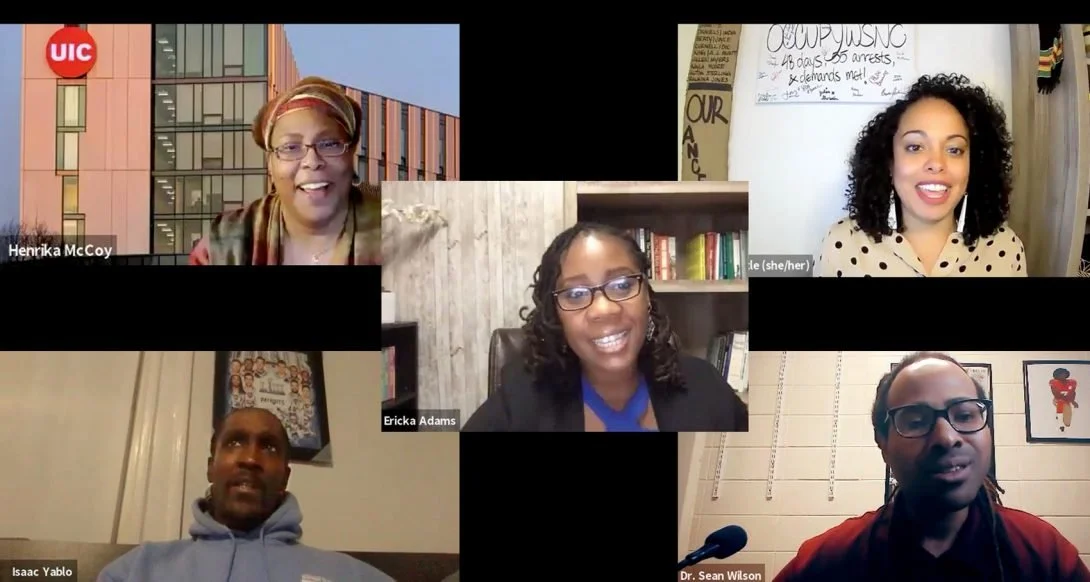
A screenshot from Activism Among Academics: Creating Change from “The Ivory” showing the five panelists, including JACSW associate professor Henrika McCoy (top left).
Beginning in the Fall of 2020 and continuing through Spring 2021, the College has partnered with The American Society of Criminology, Division on People of Color and Crime, to produce a series of webinars exploring aspects of race and activism in academia. The first such webinar was Activism Among Academics: Creating Change from “The Ivory” and featured a panel of four Black academics at different stages of their careers . The panelists discussed racial disparities and personal experiences with discrimination in academia, as well as their decisions to engage in anti-racist activism despite potential damage to their academic careers.
Interim Associate Dean Henrika McCoy served as a panelist, drawing on the ideas and experiences she has presented in her own scholarship . “Calling out racism can have professional ramifications, and Black tenure-track academics have to make a potentially difficult decision . Your academic career can be dependent on other people who have power over you,” she says . “I’m very fortunate that Dean Hairston has been so supportive; I’m sure I would not have felt as free to say such things in other environments. But it is very important to share these experiences and ideas because people need to know the truth .”
The second webinar, Black Lives Matter vs. Far Right Extremism: Protests, Movements, and Riots, featured Black academics and activists who addressed the rise in white supremacism and how Black activists and their allies can combat this threat to justice and equity . This panel included JACSW doctoral candidate Janaé Bonsu, who has been a prominent and powerful voice for racial justice in Chicago.
Engaging with Race, Racism and Trauma in School Settings
The 2020 JACSW Training Institute for School Social Work Professionals, titled Mental Health Strategies for School Re-entry for Students & Staff Amidst Societal Uncertainty and hosted virtually in August, was a response to what Clinical Associate Professor Annette Johnson, MSW ’03, describes as the “double pandemic of COVID-19 and racial injustice .” Johnson is Chair of the college’s specialization in School Social Work and also spearheads the annual training institute.
“I was concerned that there was so much information about the concrete, preventative aspects of the pandemic, such as wearing protective equipment and social distancing, but very little was being said about people’s emotional response to COVID-19,” she says . “Communities of color have been so disproportionately affected by the pandemic, then in the midst of that we saw the killing of George Floyd and the social unrest that followed . All of these things can be traumatic and impact mental health, especially among vulnerable young people . I knew we had to do something .”
Johnson searched the literature but found very little that would help address the issue, so she assembled a team of practitioners and administrators from Illinois schools . The team examined ways of addressing the social and emotional impact of the double pandemic on students, teachers and staff . “We began to think about what this would look like when in-class instruction resumed, what information school practitioners would need to convey to administrators, teachers and students,” she says .
The institute drew nearly 180 participants from across the country and featured Sharon A . Hoover, PhD, Co-Director of the National Center for School Mental Health, who provided expertise in school practice and the mental health needs of students . “The webinar was very well-received, and all participants received a comprehensive resource guide that was developed by our team,” Johnson says . “But I knew there was more work to do, that we had not exhausted the topic of addressing race and racism .”
In January of 2021, a virtual Booster Session was hosted to continue that work . Titled Expanding Equity: Addressing Racism in Our Work, the discussion was led by three outstanding school-based practitioners, Jenny Andersen, LCSW, Dawn Deacon Maroscher, School Psychologist, and Joe Alger LCSW . The webinar prepared school practitioners to engage in difficult conversations about race and equity . The discussion challenged attendees to alter their paradigm on how best to engage in discourse on race, structural inequalities, oppression, and the invisibility of privilege .
Johnson notes that as remote learning has continued longer than anticipated, practitioners have had no knowledge of how students have been impacted by social isolation amidst the ongoing double pandemic . “In addition to addressing the trauma we wanted to continue building on the themes of racism and equity, and get helping practitioners to think reflectively and introspectively about their own perspectives, and how they address equity and racism,” she says .“School social workers need to be acutely aware of their own potential biases, how they see and respond to students of color .
”The presenters also spoke of “the talk”, a conversation that African American parents have with their children . “I think some people may not know what that talk is . But I don’t think you can approach an African American parent who hasn’t had that talk with their children, particularly if the children are male,” says Johnson .“What we’ve accomplished in this session is to open this conversation for practitioners, get it on their radar . And we will continue building on this foundation, and are looking to continue this important work at future institutes .”
The Injustice of Trauma and Violence Among Young Black Males

Olga Osby, DSW
Special Guest Panelist
The focus of the Karen J . Honig Memorial Lecture has always been children, especially those in urban settings and/or involved with the child welfare or foster care systems. However, given the nation’s renewed sense of urgency for racial justice, the theme for this year’s virtual lecture was Strategies to Address Trauma, Anxiety and Violence Interruption Among Black Males, a topic that is crucial for the advancement of racial justice in marginalized communities. For the lecture, a panel was assembled to bring expertise in trauma-informed clinical practice with youth and families, community violence, and violence intervention and prevention, in order to fully explore the theme.
Panel moderator Associate Professor Henrika McCoy has herself researched violent victimization experienced among young Black men . “Young men in marginalized Black communities may experience so many forms of violence and trauma, which have so many ramifications for their mental and physical health and well-being, as well as their progress in our society,” she says . “The importance of addressing these experiences and traumas cannot be overstated . This is why we asked Dr . Olga Osby to present as our special guest panelist .”
Olga Osby, DSW, who has received many honors and accolades throughout her career, is currently co-managing partner of Clean Slate Behavioral Health Solutions, LLC, which provides trauma-informed training to health care, law enforcement, social service and other professionals, and trauma-informed counseling to children, families and communities . It was this range of experience that made her particularly well-suited to this panel.
The other panelists were JACSW faculty members, each bringing essential knowledge and experience to inform this discussion . Assistant Professor Kathryn Bocanegra has over fifteen years of experience in community mental health and violence prevention, and is advancing survivor-centric reforms to criminal justice processes and developing community-based models of public safety. Dr . Joseph Strickland brought 25 years’ experience in community-based advocacy and programs for affordable housing, community development, ex-offenders, youth, and community health, and has a research focus of how Black males bounce back from the traumas of incarceration and street violence .
“Addressing racial injustice has long been a pillar of the college’s mission and the work of its faculty, whether the injustice occurs in schools, the criminal justice system or other environments . It is affirming to see social workers and social work educators joining these discussions, and calling for justice with an energy and interest seldom seen before,” says JACSW Dean Creasie Finney Hairston . “Yet we know the magnitude of the task that lies before us, the work we have still to do, on a number of fronts . To help meet that challenge, the college will continue to foster these sorts of dialogues – in a spirit of openness and inclusivity, even if uncomfortable at times – in the knowledge that we share a common goal of achieving justice and equity for all people . Working together, we can make a difference for individuals, families and communities of color .”
This article was printed in the UIC Jane Addams School of Social Work Spring 2021 Edition of “Affirmations”.
Developing Community Leaders: Race Matters
Initiatives at JACSW are helping individuals from communities of color, especially Black communities, acquire the knowledge and skills needed to lead social services and development in their community.
At the forefront of conversations around racial justice have been discussions of how to address the underrepresentation of men of color in social work education and social services leadership positions. JACSW leadership have made these topics a focus, as well as how the College can substantively contribute to the strengthening of community-based social services and community development. The College has, therefore, prioritized the establishment of new initiatives that further strengthen and diversify the MSW program, advance the College’s mission, and enhance workforce development and capacity building in marginalized communities.
Promoting Racial Equity in Social Work Leadership: The We Are Men Program
Now in its second year, the college’s We Are Men (WAM) program recruits Black men with a demonstrated dedication to addressing the needs of impoverished communities, and provides financial assistance and other forms of support to aid them in completing their graduate degree in social work. Upon graduation, they are prepared to provide leadership for health and human services agencies and organizations.
The Need for Black Leadership in the Community
“Looking back on my childhood, I didn’t see examples of African American men in leadership. I didn’t even see Black quarterbacks in football. But when I went to the Boys Club on the West Side of Chicago, I saw Black men in leadership and that was what I looked to. That was important for me,” says alumnus Marvin Lindsey, MSW ’06. “There’s a myth that Black people are not good leaders, or don’t have the capacity to lead, when we know the reason is that Black people usually don’t have the opportunity to lead.”
Lindsey facilitates the WAM program, working in partnership with the program participants and acting as a guide and mentor during their time in the MSW program. Based on his own experiences growing up in Chicago, the program has great personal significance. “This program is really important to me, and I want to devote the rest of my professional career to this effort of recruiting African American men into leadership positions,” Lindsey says. “These men might even run for office, run a political campaign. That’s a very strong possibility. And it has great impact for the community, for young guys who are in grammar school now, seeing Black men leading gives them a lot of hope for their own future.”
Why "We Are Men"?
Why “We Are Men”?
The program’s name echoes the 1968 rallying cry “I Am a Man” used by African American sanitation workers in Memphis, whose protest for racial equity and dignity was sparked by the deaths of two Black workers. Their calls for equity intensified after the assassination of Dr. Martin Luther King, Jr., and ended in a settlement which included union recognition and wage increases. The We Are Men program honors this legacy by advancing racial justice and dignity for men living and working in contemporary Black communities.
The Benefit to Communities and Social Service Provision
The Benefit to Communities and Social Service Provision
For Dean Creasie Finney Hairston, the positive impact of WAM begins in the classroom but extends far beyond. About the need to increase enrollment of Black men in the college’s MSW program, she says, “The absence of African American males in our classes was concerning, and not only from a perspective of representation. The silence of their voices in discussions about social conditions and programs was noticeable to both instructors and students. For a program that not only values, but depends on diversity and the inclusion of multiple perspectives, this needed to be addressed.”
That void has also been a concern for service agencies providing social services in communities with poor and marginalized populations. In their 2007 report Institutional Racism and the Social Work Profession: A Call to Action, the National Association of Social Workers noted that executive leadership and management positions are occupied predominantly by white people, even in organizations that serve predominantly populations of color. And the situation now is little improved. “Many agency leaders have expressed a desire to have more Black men in positions of leadership, which can bring many benefits to both agencies and the communities they serve,” Hairston says.
Marvin Lindsey is in whole-hearted agreement and thinks that having Black men not only as leaders but as practitioners can make a difference, especially for younger males whose experiences have led them to a position of mistrust. “If a young African-American male is seeking support, it could be beneficial to have a Black person as an option for them,” he says. “It is likely that an African-American practitioner could be more genuinely empathetic to their experiences than a non-Black person would be.”
He also thinks that having more Black people in leadership positions will help guide the provision of social services with greater basis in cultural and historical context, and more authentically reflect the needs of the community. “Cultural insensitivity and implicit bias on the part of practitioners in the past led to misdiagnosis with, for example, Black children receiving a more severe mental health diagnosis,” he says. “Trained practitioners who are from the community can help lead to much greater health equity. In the current environment people are talking a lot about equity, and I think WAM will bring more equity into social work and the realm of leadership for Black men.”
Although WAM and it’s sister program BAM (see below) are new to the college, they are already showing success and year-over-year growth, with a total of 19 African American men enrolled in the college’s MSW program, 15 of whom were enrolled in fall 2020.
Spotlights on the WAM and BAM programs
Spotlight on WAM Participant David Banks
David was always looking for ways to improve the Cleveland community where he grew up, volunteering his time to plant gardens or serve on neighborhood clean-up projects. “I saw so much dysfunction in my environment growing up, of people stuck in a loophole, feeling hopeless and not knowing how to better themselves,” says Banks. “I wanted to break the cycle, make a difference, accept responsibility and be a resource. On college tours in ninth grade I saw examples of what other Black leaders have done and it gave me a sense of what I could do.”In the WAM program, David is already manifesting his skills as a leader and serves as co-president of the program. “There’s no telling where I’d be without We Are Men,” Banks says. “It’s prepared me to do the work needed to ensure vulnerable populations, especially Black men, have the resources needed to grow and create change. It is fighting for social justice in making sure there is opportunity for everyone to have an equal chance and be treated fairly.”
BAM: A Community Partnership
In fall of 2020 the College partnered with the community organization Youth Guidance and their Becoming a Man® (BAM) program to support men of color in obtaining an MSW degree, as they continue their employment as counselors at Youth Guidance, providing crucial social services in the community. Below, JACSW alumnus Michelle Morrison, MSW ’90 and CEO of Youth Guidance, talks about how effective the partnership has been.“When I first met with Dean Hairston, it was crystal clear we were completely aligned on the common goal to have diverse voices informing and leading the field of social work. It was also clear that we wanted to take immediate action, and that is what we’ve done. We currently have six BAM counselors finishing-up their first year of JACSW’s MSW program and the impact has already been tremendous.
We’ve got this amazing staff, rich with experience. They have youth development and clinical expertise, and they have the lived experiences that make them credible messengers, able reach young people in ways that are transformative. What they don’t have, however, is the benefit of a graduate education and a network of social workers.
Greater equity in educational access to opportunity will ultimately help disrupt systems that aren’t working and will help inform policy to remove barriers for the next generation, resulting in increased Black representation and leadership in social work.”
Michelle Morrison, MSW ’90
Chief Executive Officer, Youth Guidance
Addressing the Racial Injustice of Mass Incarceration: Academic Resource Program
For people returning to their community after having been incarcerated, the odds are stacked against successful reentry. They may experience barriers to nearly everything they need to successfully make that transition, including basic needs such as housing, health care, and transportation. They are also effectively barred from social and economic advancement because of barriers to accessing education and employment. And given our nation’s unjust policies in policing, arrests, convictions and sentencing, these barriers are disproportionately experienced by people from poor Black and Latinx communities. For many returning citizens of color, the lack of opportunity, healthy support networks, and dignity and self-worth leaves them disconnected from their community and vulnerable to recidivism.
A Path to Independence and Social Impact
In January of 2021, the Jane Addams Center for Social Policy and Research (Policy Center) launched the first cohort of its Academic Resource Program (ARP). The program addresses the injustice of mass incarceration and its disproportionate impact in communities of color by supporting individuals with justice system involvement in the attainment of a college degree. Leveraging a network of community-based services and partnerships, ARP provides holistic support to help returning citizens bridge the gap between incarceration and higher education, providing access to socioeconomic opportunity and reducing recidivism. The program has received funding from the Illinois Community College Board (ICCB) to help achieve these goals.
Joseph Strickland, PhD ’08, Senior Researcher at the Policy Center, says the intent of the program is to support people who have actually served time in jail or prison. He says, “We often use the phrase ‘justice system involvement,’ but for ARP we’re really talking about people who have spent at least a couple years in jail or prison.” Strickland goes on to explain that for many people, lack of education is a prime reason they found themselves incarcerated to begin with. “They may have attended schools with poor educational methods, or somehow they didn’t connect and dropped out, or they performed so poorly in school that they didn’t want to continue their education,” he says. “ARP is here to help people in that situation, people who are returning to their community and need a network to support them in attaining a college degree.”
Strickland notes the critical need to connect returning citizens to a healthy support network that can help translate into socioeconomic autonomy and success. “If you come from a community and a social network where most members are living unhealthy lifestyles, then your chances of recidivating are higher when you return to that environment,” he observes. “By connecting people to a more positive and healthy social network, they’re provided with social capital that helps them learn more about what opportunities exist in college, as well as after college on the job market.”
The ARP cohort, dubbed Urban Scholars to reflect the impact the program will have for individuals and urban communities, consists of nine people who are pursuing undergraduate and graduate degrees at UIC and other Chicago area institutions. “The impact of our Urban Scholars will extend beyond their own individual achievement and into their communities. Some are getting degrees in law, social work, and inner city studies,” says Strickland. “The education they receive will help them provide leadership and become a resource for their community.”
College education is not always an immediate goal for returning citizens, some of whom are motivated to obtain employment and achieve financial independence as soon as possible. For these people, ARP is working with community partners to help them get their GED or access vocational training. “With our community partners we’re able to help people through workforce development services, job and career readiness services, and assistance with their resume or interviewing skills,” Strickland says, adding that the Policy Center is planning virtual events to help connect people to these services, and inform them about the workforce development and educational opportunities available to them. “Some people may not want a college degree now, but it could be an option for them in the future. We want ARP to be a full-spectrum and long-term solution not only for returning citizens, but for their communities,” he says.
Beyond Ban-the-Box: Understanding and Reforming College Admissions Practices
Beyond Ban-the-Box: Understanding and Reforming College Admissions Practices
Terrell Campbell serves as director of the ARP program, and he is also undertaking a survey of policies at many institutions of higher education in the Chicago metropolitan area, as they relate to people with a criminal background. He is examining admissions policies, practices and procedures, both formal and informal, and is gathering relevant information from institutional offices of admissions, housing and diversity.
Campbell says initial findings of the survey reveal considerable variation from institution to institution. Many have a checkbox on their application, some do not, and some lack a checkbox but ask about criminal background during the admissions process. In making enrollment decisions, an institution might consider the kind and severity of the offense, and whether or not there are multiple offenses. Returning citizens may also face barriers with financial aid, or be excluded because of certain drug crimes. And at some institutions, failure to disclose a criminal background may result in dismissal.
“We want to be able to provide practical guidance to returning citizens on how best to navigate the college admissions process,” Campbell says. “When it comes to being asked about their background, a returning citizen can experience some trauma simply by being asked that question, having to think about and relive the experience. We don’t want someone to see the checkbox on one application and just assume that every school does that.” Strickland agrees, adding, “One of the main points of ARP is to provide situational capital to guide people through these processes, while applying, while enrolled and through graduation. There is a saying: If you know more you can do more.”
A longer-term goal of this research is to facilitate policy reform around issues of access to education for returning citizens. “Much of the work we do at the Policy Center is focused on policy reform to achieve justice and equity,” Strickland says. “It’s important for elected officials and university administrators to understand the impact of their policies and the ways in which they can function as barriers to success for this population. These people already face so many barriers, why make it any harder for them to achieve success?”
This article was printed in the UIC Jane Addams School of Social Work Spring 2021 Edition of “Affirmations”.
COVID-19: The Disproportionate Impact on Marginalized Populations
AFFIRMATIONS Spring 2020
A publication of the Jane Addams College of Social Work, University of Illinois at Chicago
Under orders to shelter at home, there has been a well-intentioned impulse to describe the pandemic as a “great equalizer.” However, the impact of this public health crisis is anything but equal, and disproportionately affects communities of color and other vulnerable populations.
In the early days of America’s response to the COVID-19 pandemic, individuals from pop stars to politicians labeled the disease a great equalizer. There is a superficial truth to that statement: both rich and poor are asked to shelter at home, liberals and conservatives all may acquire the virus. But that commonality is a veneer, masking underlying social and economic inequities that make some populations more vulnerable to the disease than others. Such vulnerable populations are typically those who have experienced a history of discrimination and marginalization.
“The most vulnerable populations are those with less access to resources, which makes life more complicated for them,” says Clinical Associate Professor Annette Johnson. “Even before the pandemic, lack of access to resources and opportunity, and lack of access to health care made those individuals and families more vulnerable. During a health crisis such as this, the situation becomes exacerbated in many marginalized communities.”
Black and African-American Communities

More recently, the disproportionate impact of the coronavirus for Chicago’s Black community has received some coverage and discussion, but the magnitude of disproportionality is stunning: as of April 7, 2020, Black Chicagoans comprised 30.1% of the city’s population, yet made up 52.1% of COVID-19 infections and 68.6% of deaths.
People in communities of color often suffer from the kinds of chronic health conditions that during this pandemic have been described as “underlying.” Assistant Professor Kalen Flynn, who has worked with urban youth of color, says that health inequity often has roots in structural social violence that increases rates of trauma among this population. “The traumas experienced by the youth I’ve worked with leads them to be more likely to have obesity, diabetes or heart disease as adults; health conditions that are more prevalent in communities of color and which make people more vulnerable to the virus,” she says. “And then on top of that, many under-resourced communities have limited access to quality health care. The coronavirus pandemic augments all of these preexisting health inequities.”
“People who are low income and people of color are also statistically less likely to have health coverage, and this is especially problematic in a state like Illinois where the Affordable Care Act marketplace is run by the federal government,” adds Assistant Professor Aaron Gottlieb. “Illinois needs permission from the federal level to reopen enrollment for ACA, and they have not agreed to do that. So that creates another limitation on health coverage in poor communities, and lack of coverage can prevent people from getting tested or treated because they fear what the financial implications may be.”
Additionally, there are factors that make Black Americans more at risk for exposure to the virus. Limited educational attainment means many Black people work in jobs that are deemed essential, ensuring that they remain more exposed. Gottlieb, whose work focuses on criminal justice reform, fears that further exposure could also arise from the increased police activity experienced in Black neighborhoods. “A number of police officers have tested positive for the virus, and people in communities of color are more likely to be stopped by police, so they are more likely to be put at risk,” says Gottlieb. “Police are expected to be proactive in stopping crime, not waiting until something has actually happened, which means stopping people and being in close contact. The way we ask police do their jobs in this country is not conducive to stopping COVID-19.”
Undocumented Latinx Communities

Restricted access to healthcare is also a fact of life for undocumented immigrants, who are not eligible for ACA coverage and tend to be employed in jobs that are deemed essential and do not provide health coverage. “People in these communities tend to use community clinics and emergency rooms for their health needs,” says Assistant Professor Daysi Diaz-Strong, “and right now emergency rooms are overwhelmed with coronavirus cases, which impacts their ability to address other more routine problems. Combined with fear to go to a hospital where you might risk getting infected, access to health care is further limited for undocumented families.”
Another complication is the Public Charge Rule, which went into effect in February of this year, and creates the potential for denial of legal permanent residency for individuals who are deemed likely to become a public charge due to lack of economic resources. “This is actually impacting people’s access to health care at this crucial time,” says Diaz-Strong. “If you are an immigrant who is planning to apply for legal status, the government will look to see if you have used public benefits. If you have, you might be considered a public charge and therefore inadmissible to the U.S. The rule applies to a small number of immigrants, but it’s very confusing and makes immigrants afraid to access services.” She adds that the government has said it will not count services used during the pandemic, but that the policy change creates additional confusion, and people may be unaware of the change. “Additionally, many undocumented immigrants simply don’t trust that use of services won’t count against them,” she says.
An additional stressor in the immigrant community is that a Supreme Court decision on DACA (Deferred Action for Childhood Arrivals) is expected in the near future, and there is a lot of anxiety about the potential end of DACA. “Many nonprofits that work with immigrants are preparing for this potential. If immigrants lose DACA, they lose their ability to work,” she says. “And the fact that this is happening during the pandemic creates further complication, stress and anxiety for these families.”
People in the Criminal and Juvenile Justice Systems
“Prisons are places where health and health care are particularly poor to begin with, let alone with an infectious disease like this, and incarcerated people are particularly at risk of getting and spreading the disease because social distance is nearly impossible in prison,” says Aaron Gottlieb. “Also, prisoners tend to have chronic health issues, making COVID-19 potentially more deadly for them. Add to that the aging of the prison population; about 20% of people in Illinois prisons are over 50, and older people are more susceptible to the disease. All of these factors make prisons an especially bad place to be with a disease such as this.”
Gottlieb also points to jails as sites where the virus may easily be spread. “In jails you have many people going in and out all the time, including guards. Someone who is detained in a jail gets exposed to so many people, and detainees aren’t being tested unless they exhibit severe symptoms. And then they’re sent home to their community,” he says. “It seems like a perfect recipe for spreading the disease.”

Associate Professor Henrika McCoy adds, “We know a lot of people are in jail because they don’t have $200 to pay bail, so now because they are poor their lives are being put at risk. Some cities have responded to the pandemic with decarceration, and some have decided to stop incarcerating people who have committed low-level crimes, but certainly not all, and not enough,” she says. “These are places that are already overcrowded, and we know that people of color are overrepresented in the criminal justice system, so they are put at greater risk for getting this virus.”
Gottlieb agrees, adding, “We live in a country where you are more than five times as likely to be incarcerated if you’re Black than if you’re white, and 1.5 times as likely if you’re Latinx. So COVID-19 in prisons and jails is likely to have a disproportionately large impact on people of color.”
McCoy, whose recent research has focused on young men of color, brings the conversation around to the juvenile justice system. “I think we are likely to see increased negative impact on mental health for some young people in the system. Because of social distancing, I know that attorneys are using Zoom to represent their juvenile clients. Based on my experiences as a social worker who worked both sides of the court, both child welfare and juvenile justice, I know how scared young people are when they walk into that courtroom,” she says. “I can’t imagine what it’s like to not have your attorney there with you, to give some level of comfort or support, and help you understand what’s happening when a judge is about to make a decision that could impact the rest of your life. And apparently this is happening across the country.”
She is also concerned about the possibility of increased rates of incarceration resulting from the pandemic’s negative economic impact. “We know crime rates across the country have generally been down, but I am worried about how the recession could raise crime rates. A lot of businesses won’t bounce back from the recession, and there will be job loss and delays in education,” McCoy says. “Historically, we know these factors lead to increased crime rates, which will bring more people into the criminal and juvenile justice systems. We need to be prepared for that aftermath from the pandemic.”

Youth in the Public School System
“There are so many ways that school age children will be impacted by this pandemic,” says Clinical Associate Professor Annette Johnson, chair of the college’s MSW specialization in school social work. “No one was able to really plan for the shutdown of schools, but the ability to adapt to and recover from the shutdown will be a matter of resources, and there are so many inequities in our educational system, so many disparities between schools.”
Johnson particularly worries about students in underserved communities. “In general, most children will not receive the same quality of education virtually. We’re relying on the parents and on technology,” she says. “For those families who don’t have access to technology, who are unable to provide the necessary level of support or don’t have the skillset to provide that support, the pandemic exacerbates the digital divide. Educational outcomes for those children are likely to be especially impacted.”
Another factor is the loss of school programs and after school programs that support at-risk students. “I think of schools as being almost a parent for six hours a day, and for some young people that can be a great stabilizer,” she observes. “Think about the loss of that support system, and what’s happening in those families now. We simply don’t know how the students are faring throughout the shutdown.”
Johnson is also thinking about the longer-term implications for students and for the system’s response when students return to school. “It’s going to be a new normal in the schools, and we don’t know what that new normal is going to be,” she says. “What will be the social emotional health of these young people and their families, what will we see around issues of domestic violence, child abuse or neglect? That is going to manifest in ways we can’t really anticipate, but that we need to start thinking about.”
Also requiring more attention and care will be students’ mental health coming out of the pandemic and the shelter at home and Johnson indicates that students will have experienced some level of trauma. “This has been traumatic for all of us, in ways we may not even be aware of, but I think young people will be especially impacted. We are going to see students with issues around trauma, and loss and separation, because there will be some losses here, especially in the African American community,” she says. “I think we may need to look at research that has been done in war-torn countries where families have experienced significant crisis for long periods of time. Whatever trauma these children experience, the schools will have to own a lot of that, and be responsible for addressing it, because that’s where youth spend such a large portion of their day.”
Children and Families in the Child Welfare System

The impact on families involved in the child welfare system will be variable and may depend on where the family is on the continuum of services. At one end of the continuum, social distancing may have the effect of obscuring incidents that typically bring a family into the system. “With social distancing and orders to stay at home, especially for children and families who are more at risk, there is now a lack of what we call sentinels, individuals outside the family who can observe and report cases of abuse or neglect,” says Assistant Professor Christina Myers, whose work focuses on child welfare policy and practice. “The system relies on school social workers, school counselors, therapists and other individuals to report such incidents. For families not already in the system and with children now staying home from school, there could be an increase in cases that go unreported.”
She also worries about an increase in stressors that tend to amplify negative parent-child interactions. “At-risk families are already dealing with a variety of stressors. During the pandemic, if they’re worried about health, or the parents are going through financial challenges, all those kinds of things carry through to parenting and that can heighten tensions,” she says. “And children are home all day and require more care from the parents, so the parents are more stressed, and the children may experience greater levels anxiety. All of this can increase negative parent-child interactions, with mental health implications for the children.”
Myers notes that Illinois DCFS has responded to the pandemic by adapting the way it delivers services. For cases of abuse or neglect, it seems that in-person investigations are still being conducted, but caseworker visits for families receiving ongoing or foster care services are being conducted virtually or by phone. “Because case worker visits are being done virtually, they are now happening weekly instead of monthly,” she says. “Interestingly, that could have a beneficial effect of strengthening the relationship between the case worker and the family, and making families feel more supported. It might also help the caseworkers achieve a fuller understanding of what that family is going through and what their concerns are. That’s speculation, but it will be interesting to see how this plays out.”
The Impact on Service Delivery in the Community

The pandemic has forced many social service agencies to change how they deliver services and conduct their business. Private sector companies and other organizations with access to resources have responded with the rapid implementation of and reliance on new technologies. For many community-based non-profit organizations, which are often under-resourced and operate on shoestring budgets, the shift to operating virtually has been much more difficult.
Henrika McCoy observes that this is another example of the digital divide in America. “I know there are staff at agencies who are not familiar with the technologies needed to function virtually. These people provide crucial services in our communities, and they are not prepared for a disruption like the coronavirus, requiring social distance and staying at home,” she says. “Additionally, so many of their clients are not able to use the technology or may not have access to a computer. The requirement of technology to maintain public health may actually get in the way of people receiving services that they need.”
As an example, McCoy cites an agency she knows that has struggled to get paperwork signed by clients, paperwork needed for the agency to be reimbursed for the services they provide. “The agency has no experience using PDFs or working with ZIP files. Until now, they had done everything on paper and that was working for them,” she says. “But that’s doesn’t work now. How can an organization like that adapt to the new reality of the pandemic, to get services to the people who need it, but also to meet their own financial needs? Again, we see that a crisis such as the coronavirus tends to magnify existing social and economic disparities.”
Amidst the pandemic’s starkly disproportionate impact in the Black community, Joseph Strickland, PhD, Associate Director of the Jane Addams Center for Social Policy and Research, sees a potential positive outcome that could arise from the crisis. “One result of the disproportionate impact on poor communities of color is that officials at the state, county and local levels have come to understand the need to have boots on the ground in the community, in order to properly respond to such a health crisis. A community-centered approach is something that the Center has long advocated for,” he says. “In the past, resources and investment tended to go to larger organizations outside the community. Maybe now we can start to see investment in the community, and see grassroots organizations getting the resources they need to respond in a situation like this. It’s just good public policy and good public health.”
This article was printed in the UIC Jane Addams School of Social Work Spring 2020 Edition of “Affirmations”.
The Mental Health Impact of Family Separation
AFFIRMATIONS Spring 2019
A publication of the Jane Addams College of Social Work, University of Illinois at Chicago
The policy of separating children from migrant families at the U.S. border brought the issue of family separation into the national conversation.
As social workers, we are already familiar with the negative mental health impacts for children who are forcibly separated from their parents; we have long seen the consequences for children in the child welfare system.

Professor Sonya Leathers
In the summer of 2018, national attention became focused on migrant children who were separated from their families at the U.S. border. The policy of mandatory family separation was short-lived, but as of January 2019 there were an estimated 10,500 unaccompanied minors in detention centers in the U.S. Many of these children will not be reunited with family, and some are likely to go into foster care.
Professor Sonya Leathers, drawing on her experience with attachment and trauma among children in the child welfare system, observes that there are always mental health impacts for children who are separated from their primary caregivers. She notes that trauma will vary with the age of the child, their particular developmental needs, current or past stresses, and by how the separation is handled.
“But, in the situation at the border there has been a lack of attention to the needs of the children and how very vulnerable they are,” she says. “Their parents and siblings have really been their lifeline, not just at the moment of separation but also because they’ve been through enormous challenges up to that point. And then to have that lifeline abruptly separated...I fear there will be an enormous mental health impact.”
Assistant Professor Jennifer Geiger agrees, observing that even if a migrant family is fleeing violence or extreme poverty, the children have still felt safety and security in being with a parent or caregiver. She compares this to what she’s seen with children in the child welfare system. “Children fundamentally wish to stay with their parents and their family, even though home life may be abusive or neglectful. It might have been the worst situation you can imagine, but the child will almost always say they want to be back with their family,” she says. “So, working with and supporting the family and keeping the family intact is the desired outcome for the child’s mental health and well-being.”
For cases in which removal of the child is recommended, Dr. Leathers says that child welfare practitioners have been working toward a system of care that attends to the attachment needs of the child. Ideally, the trauma of separation is lessened by making sure the child understands the circumstances and understands that they will continue to have a connection to their parent. “We know from child welfare studies and practice that children fare much better when the separation is more gradual,” she says. “It’s helpful if they are able to go with the parent to their new home, and to know that the parent is involved in that decision.”

Assistant Professor Jennifer Geiger
Dr. Geiger explains that for children entering the child welfare system, the trauma of separation from family can stem from many variables, such as the allegations against the parent, who is present when the separation occurs, the age of the child, the relationship between the child and caregivers, how the adults in the situation are responding, or whether it happens at home or elsewhere. “There is always some degree of trauma as a result of the separation,” she says. “In some cases, children may develop traumatic responses to professionals who are present at the time of removal.”
Geiger worries that with the separations at the U.S. border, neither parents nor children had time to prepare. “Plus, there’s the involvement of military or law enforcement, and the presence of weapons. All of this increases the trauma,” she says. “In separating these children from their families and placing them in institutional care, it really seems as if policymakers are not considering the long-term impacts to the children.”
Dr. Leathers observes that in child welfare, children and teens are placed in an institutional setting only after an in-depth review process, to ensure it is required to meet the child’s treatment needs. “Placement in group care usually occurs only when the child has intense physical or mental health needs that cannot be met by being placed in foster care,” she says. “And when they are placed in a group setting, we hope to make the stay as short as possible.”
Dr. Geiger adds that with children who are placed in an institutional setting such as congregate care, the trauma may become further complicated. “Research shows that this is not the best environment for kids, especially if they have higher needs. In this setting there’s more instability and staff turnover,” she says, “so it’s harder for the children to form relationships with their adult caregivers.”
Geiger notes that the child welfare system is moving away from placing children in institutional care. “With the passage of the Family First Act, there will not be as much funding for those types of placements, and this will be a real shift in how we practice child welfare,” she says, “but the goal has always been to balance the safety and well-being of the child with minimizing trauma and the resulting mental health issues.”
For the migrant children who were placed in detention centers or shelters, Leathers says that it’s hard to know what sort of care the children are receiving. “Care providers working in the shelters are probably well- meaning and want to provide the best care they can, but they are probably overwhelmed by the numbers of children,” she says. “And we don’t know how many of the children are receiving trauma-informed care.”
Even when children are reunited with their families, the process of reunification may be difficult. “We know that severing the attachment between parent and child is traumatizing, and trying to mend that is extremely difficult. Reattachment doesn’t happen automatically,” Geiger says. “We see this in the child welfare system, and social workers need to play a role in the process, helping to mend the relationship and the psychological and emotional trauma.”
“ There is always some degree of trauma as a result of the separation.
In some cases, children may develop traumatic responses to professionals who are present at the time of removal.”
“For the mental health of the children, the surest remedy is prevention, making sure that families are not separated to begin with,” adds Dr. Leathers. She says that among families entering the child welfare system, there is typically a significant level of need, making it difficult for case workers to address the various needs of the parents and the children. “I would love to see a system that puts as much effort and investment into strengthening those families and making sure that parents are well- equipped from the time they have a child,” she says.

Assistant Professor Christina DeNard
Assistant Professor Christina DeNard, whose research focuses on improving services for families in the child welfare system, is in complete agreement. “From the literature, we know that families encountering the child welfare system already have risk factors. Once they’re in the system, the interventions are individual, it becomes an individual issue, and the onus is on the individual or the family,” she says. “We need to support families before they enter the system. If we invest in our communities, we can see a lot of difference in terms of families flourishing.”
This article was printed in the UIC Jane Addams School of Social Work Spring 2019 Edition of “Affirmations”.
Mass Incarceration: Punishing the Families

AFFIRMATIONS Spring 2019
A publication of the Jane Addams College of Social Work, University of Illinois at Chicago
In America’s era of mass incarceration, a startling number of families experience the deleterious impact of the imprisonment of a family member. More sensible public policies are needed to address this crisis.
The U.S. Bureau of Justice Statistics estimates that at year-end 2016 there were 6.61 million persons under the supervision of U.S. adult correctional systems, and 2.16 million persons under the jurisdiction of state or federal prisons or in the custody of local jails. While very high, these figures actually represent a trend of decreasing incarceration since 2007.
However, the United States still claims the dubious distinction of leading the world in the imprisonment of its citizens. Our unmatched levels of incarceration have not resulted from increasing crime, but from more punitive policies and practices, such as the war on drugs, three strikes laws, truth in sentencing laws and overzealous prosecution. Further, these laws have disproportionately impacted low-income families and communities of color.
Given how many people have been incarcerated, there is shockingly little conversation about the impact on their families. When a person is imprisoned, their family usually carries a tremendous burden, but they have been forgotten in the apparent rush toward more punitive policies, and a permanent focus on the prisoner and the offense.
When the Incarcerated Person is a Parent
Assistant Professor Branden McLeod has examined the relationships incarcerated fathers have with their children and family. He observes that children experience ambiguous loss when a parent is incarcerated; the parent is not permanently gone, but is missing from the child’s daily experience, and the parent’s identity and family role have been significantly altered. Further, the child’s access to the parent becomes very limited, a situation made worse when the parent has a longer sentence or if visitation is not possible. “Without regular contact with the parent, it’s hard for children to reconcile their emotions about that person,” observes McLeod. “We have to help families maintain those roles and identities in order to maintain healthy relationships.”

Assistant Professor Branden A.McLeod, PhD
To accomplish this, he says there need to be more family-centered policies and programs to keep children connected with incarcerated parents. “There have been successful programs for this, but they tend to rely on volunteers from outside the prison,” says McLeod. “We need a serious nationwide commitment to preserving families, including robust visitation policies and supportive programs for family reunification.”
McLeod’s research has explored the impact of incarceration on paternal involvement, how fathers can be resilient once they reenter society and how they can reconnect and reestablish certain roles within their family. He has found complex relationships between fathers’ engagement, accessibility and responsibility with their children, including the role of co-parenting in mitigating impacts and improving outcomes for the children. He has also conducted a father and son study to examine the effects of paternal incarceration on educational outcomes for the son.
McLeod hopes his research will contribute to informing effective and supportive public policy. “Generally, there are not positive outcomes from incarceration; it’s merely punitive and doesn’t address underlying issues that exist in so many of our communities,” he says. “It costs about $40,000 per year to incarcerate someone which, again, doesn’t accomplish much and has so many deleterious effects.” He points to the dissolution of families, the mental health impacts on children, how many of the children end up in the child welfare system and, longer-term, the impacts on childrens’ educational and employment outcomes. “The money spent on incarceration needs to be reinvested in programs that keep families together and improve outcomes for the children,” he says.
The money spent on incarceration needs to be reinvested in programs that keep families together and improve outcomes for the children.
While mass incarceration has overwhelmingly impacted men, especially men of color, the rate of incarceration of women is increasing. “Women make up approximately 10% of the prison population, but the number is growing,” adds Assistant Professor Aaron Gottlieb. “Women are more likely to be incarcerated for nonviolent offenses, are almost always victims of violence or sexual assault, and are more likely to have substance use issues. And more than 50% of these women are mothers.”
He observes that issues around the incarceration of women and mothers is under-discussed because of the relatively low numbers compared to men. “But prison doesn’t make the most sense for women,” he says, “not only because of the impact for children, but also because women’s prisons tend to have less programming than men’s prisons, fewer employment or education programs, and inadequate reproductive healthcare.”

Assistant Professor Aaron Gottlieb, PhD
Gottlieb’s research examines factors that bring women into the criminal justice system, and factors that keep them trapped in the system. For example, he studied the impact of eviction on criminal justice involvement for mothers in the U.S., and the data suggests that mothers who have been evicted have more than two times higher odds of experiencing criminal justice involvement. “Additionally, a system of money bail or money bond disproportionately impacts women,” Gottlieb says. “Twenty-eight percent of women behind bars are simply awaiting their trial, but are unable to pay the bail. People wait weeks or months, and in some cases years for their trial. This can have serious consequences for the family.”
Returning to the impacts on children, Gottlieb points to mental and physical health issues and higher risk for juvenile or criminal justice involvement. “Incarceration of a parent can also impact the resources children receive,” he says, referencing a study he co-authored with McLeod examining the impact of parental incarceration on child support arrears. Their study found that incarceration is a predictor of fathers’ accrual of child support debt. “When child support arrears pile up,” he says, “it adds additional stresses to family relationships.” McLeod adds, “The debt may become a further barrier to successful reentry and reintegration for the father. This again highlights the importance of policies that focus on the well-being of the family.”
The Further Impact on Families and Communities

The impact of incarceration on the families of prisoners has long been a focus in the work of Dean Creasie Finney Hairston. She explains that, while children are perhaps the most vulnerable members of the family, the impacts may be felt by spouses, partners, parents, siblings and cousins, and can extend beyond the family into the community. She notes that the impact on families may be financial, social or emotional.
Financial Impact
Dean Hairston notes that families become strained when the incarcerated person had been contributing financially. “Regardless of whether it was a legal job, income ‘under the table,’ or even from illegal activity,” she says, “that income is now gone and the family suffers. Imagine the impact to a family that was already struggling financially prior to the incarceration.”
In addition to potential lost income, she points to a variety of costs that may burden the family, costs that are often unanticipated. There can be legal costs such as counsel, appeals or sentence reduction. Maintaining a family relationship can bring a number of additional costs, including telephone calls from within the prison, which carry exorbitant fees. Families also bear the cost of visits to the prison. “Visiting an incarcerated family member may require substantial travel, since state prisons are often in remote areas, and a person in federal prison may be in a distant state. And traveling requires food and lodging,” Hairston says. “Even video visitation has costs associated with it. It can get very expensive for families trying to maintain a relationship with an incarcerated individual.”

Dean Creasie Finney Hairston
There are also financial costs of supporting and maintaining an incarcerated person. “ Even if the person has a job in prison, the pay is very low,” says Hairston. “So when there are things that they need or want – an extra pair of shoes, money for the commissary, books, magazines or art supplies – a family member or friend has to send the money or send the item. It all adds up. The combination of lost income and increased expenses can plunge a family into poverty.”
Social Impact
The social costs to families are very real and very practical, yet rarely recognized or discussed by academics or policymakers. “Social costs are more to do with the absence of that person from the home, and what it means for the family,” says Hairston. “What was the person’s role in that family? Whatever it is or was, that is now disrupted. That relationship has now changed.” She cites as examples life situations that may be taken for granted until a person is removed from the family. “Is the incarcerated person the one who picked the kids up from school? Were they the one who changed the light bulbs in the high ceilings? Such things might seem insignificant,” she says, “but can have a cumulative impact on family life.”
People may also experience stigmatization simply for having a family member in prison, or for being related to someone who committed a crime. “Often, whatever that person did to be imprisoned, the perception is transferred to his or her family members,” says Hairston. “If you’re the mother, people may think ‘How did you raise that person?’ Or if you’re a partner, ‘Why are you maintaining contact with that awful person?’ This overlooks the important fact that the incarcerated person is more than their worst deed. They are a father, a sister, a son or a brother.”
Hairston also points to the common perception that in communities with high rates of incarceration, there is no stigma attached to being incarcerated. She explains that it may depend upon the particular offense. For example, being sentenced for selling marijuana may be seen as acceptable, whereas shooting an infant in a drive-by or mugging and beating an elderly woman would be viewed very negatively. “The family must deal with what people think about the crime and about them. How do you protect your kids from this, while also being supportive of the family member who may have done something really bad,” she asks. “It’s very complicated and can be a difficult balancing act for the family as they struggle to maintain some sense of stability or normalcy.”
Finally, there are the social costs that incarceration has exacted on entire communities. When large numbers of people (most often men) are removed from the community, many social relationships become disrupted which, in turn, impacts the social ecology. There is a ripple effect that moves throughout the community. For example, the incarceration of a parent may contribute to children acting out in school. Schools may respond by enforcing zero-tolerance policies, punishing even small infractions. Many such children will end up in special education, with an increased likelihood of contact with the juvenile justice or criminal justice systems.
Emotional Impact
Having already experienced the stress of an arrest, the wait for the trial and then the trial itself, families are further taxed emotionally during the incarceration, especially if they are trying to maintain a relationship with the person in prison. There is the obvious emotional cost of just knowing that the family member is in prison, or seeing them in that environment. But there can be additional costs, such as going to a parole hearing only to hear that parole is denied. “There is an uncertainty that is very stressful for the family,” says Hairston. “They never know what’s going to happen, at trial or at a parole hearing. Or even on a visit, when they arrive at the prison but it’s on lockdown, so they’re prevented from seeing the family member.”
“A prisoner’s life is no longer his or her own, but neither is the life of the family. There are so many things over which they have no control. Someone else makes all the decisions, exercising a kind of control over their lives. It creates a lot of uncertainty and stress for the family.”
She goes on to explain that this is why families so often say it feels as if they are doing time, that they are being punished. “A prisoner’s life is no longer his or her own, but neither is the life of the family. There are so many things over which they have no control. Someone else makes all these decisions, exercising a kind of control over their lives,” she says. As an example, when on a visit, the treatment families receive from prison staff can make them feel as if they are prisoners. “The dress code for visitation can vary not only from prison to prison, but also from day to day at a single prison, depending on who is processing,” says Hairston. “It creates great uncertainty and stress for the family.”
There are also emotions around the loss of the person from family life. People may experience grief for the loss of their incarcerated family member, but the experience is different from when someone has died. “When someone in the family dies, there is a funeral and a eulogy saying nice things, and people bring food and they grieve with you,” Hairston says. “But when someone goes to prison, you grieve alone, you don’t get that support.”
Costs Continue Even After Community Reentry
Most incarcerated people do return to the community and, while this is generally the desired outcome, there are still costs and difficulties for the family. Dean Hairston points to practical costs such as supporting the person while they seek employment. “
Formerly incarcerated people face many obstacles to finding and keeping gainful employment. Movements like Ban the Box are making some progress, but supporting the person as they struggle to find employment can add substantial financial difficulty for the family,” she says.Formerly incarcerated people often have health issues, some of which were acquired during their time in prison. This may include chronic health conditions such as asthma, diabetes, high blood pressure or sexually transmitted disease. In addition to producing more strain on the family, the person’s health needs may further reduce their chances for employment.
Hairston adds that families continue to deal with social and emotional issues even after the person has returned home. Have family relationships changed? Can the person resume their former role in the family? Or in the community? What if no one will hire them? Do family members harbor resentment toward the person, even unconsciously? “There are many variables and questions that can make reintegration a difficult process for the entire family,” she says.
All of this underscores the pressing need for public policies that take a more holistic view. The national focus on punishment at any cost has served to punish families and damage communities. The well-being of these communities depends in large part on putting an end to mass incarceration, and placing families at the center of public policy decisions.