
SOS Illinois Revisits the History of Foster Care Awareness Month
Each May, the United States honors Foster Care Awareness Month to show support for children in foster care, foster parents, and biological families on their paths towards healing. During Foster Care Awareness Month, and throughout the year, SOS Children’s Villages Illinois encourages all individuals and organizations to play a role in making Illinois a better place for children in foster care. By acknowledging Foster Parents, family members, volunteers, mentors, policymakers, child welfare professionals, and other members of the community who help children and youth in foster care find permanent homes and connections, we change the narrative of the child welfare system. SOS Illinois is proud to join in Foster Care Awareness Month to celebrate all those who make a meaningful difference in the lives of children in care.
History of Foster Care Awareness Month
The United States Department of Health and Human Services established the Children’s Bureau 107 years ago. Since then, the Bureau has worked to assist children in foster care, engage youth in decisions that affect their lives, and support Foster Parents, kinship caregivers, child welfare professionals, and others who help these children. As we raise awareness for children in foster care, SOS Illinois would like to share a brief history of Foster Care Awareness Month in the U.S.:
· Before the creation of the Children’s Bureau in 1912, child welfare and foster care were mainly in the hands of private and religious organizations.
· In 1919, the Children’s Bureau published Minimum Standards of Child Welfare, which affirmed the importance of keeping children in their own homes whenever possible and, when that was impossible, providing a “home life” with foster families.
· In 1923, the Children’s Bureau published Foster-Home Care for Dependent Children, an acknowledgment of the growing preference for foster family care over institutional care.
· During World War II, when more than 8,000 children were evacuated from Europe to the United States, the Children’s Bureau oversaw their temporary placement in U.S. foster homes.
· The Children’s Bureau published “The Rights of Foster Parents” in the May 1970 issue of its journal Children. That same year, the Children’s Bureau sponsored the National Conference of Foster Parents.
· In 1972, the Children’s Bureau sponsored—and President Nixon proclaimed—National Action for Foster Children Week to raise awareness of the needs of children in foster care and recruit more foster parents. The following year, Children published “The Bill of Rights for Foster Children.”
· In 1988, President Reagan issued the first Presidential proclamation that established May as National Foster Care Month.
In support of these efforts, the U.S. Department of Health and Human Services’ Children’s Bureau, Administration for Children and Families: Office of Regional Operations, its Child Welfare Information Gateway, and over 20 National Foster Care Partners created a 2020 Campaign Resource Guide: Foster Care as a Support to Families, Not a Substitute for Parents.
Additionally, each year, the U.S. President makes a formal announcement through a Presidential proclamation to support National Foster Care Awareness Month. The White House acknowledges the profound contributions of the individuals and organizations supporting foster and kinship caregivers, and those of community providers and professionals who are helping children in foster care find safe and stable families. All are invited to observe this month by taking time to help children and youth in foster care, and to recognize the commitment of those who touch their lives, particularly celebrating their foster parents and other caregivers.
SOS Illinois Raises Awareness for Children in Foster Care Today
This year, help share the SOS Illinois mission with your co-workers, friends, families, and communities in a number of different ways. Join the conversation to support the children at SOS Children’s Villages Illinois—and all children in foster care. Get your copy of our 2020 Influencer Tool Kit, which includes TEN different opportunities to get involved, key dates, and plenty of information to share with your networks. These ten opportunities offer different levels of time commitment, which allows you to support in a way that works with your schedule.
Celebrate Children and Youth All Year Long
In addition to National Foster Care Month in May, SOS Illinois supports two other special initiative months: National Child Abuse Prevention Month in April and National Adoption Month in November. At SOS Children’s Villages Illinois, we are committed to providing safe, stable, loving homes. We do this by keeping brothers and sisters together in an individual home in the care of a full-time, professional Foster Parent. In doing so, we lay the foundation for rebuilding trust, confidence, and hope for each child in our care. We invite you to support our programs and services. You can donate here to help us continue strengthening families and transforming lives. Together, we are building the future of foster care.
Fear, sadness and uncertainty: Waiting for international adoption during a global pandemic
By Jackie Spinner in the Washington Post
This story has been updated to reflect that the U.S. State Department has issued guidance that says adoptions are exempt from President Trump’s executive order on immigration.
For several weeks in early March, my 5-year-old carried a picture in the front pocket of his backpack. Every so often, he’d take it out and look at the toddler in the brown sweater and then with his finger trace the lips that matched his own. His teacher told me he talked about “baby brother” during circle time at kindergarten, unable to contain his excitement over news that I hadn’t shared widely yet in my own circle.
His backpack has been hanging by the door of our Chicago house since March 13, the last day my son and his older brother, who is 8, went to school, the last day life didn’t feel suspended. The suitcase I had packed for my trip to Morocco to meet the boy in the picture stayed on my bedroom floor for a few weeks until I finally put it in a closet, unable to deal with the reminder of what almost was.
Days before I was scheduled to travel to meet my son and start the process to bring him home, Morocco closed its borders. It is under a quarantine until at least the end of May. We had planned to travel as a family to Morocco this summer to complete the adoption. I now hope I can get to him sometime this fall, which feels optimistic, particularly with increasing rates of infection in the United States and the rush to return to an elusive normal before the virus is contained.
Our family is healthy for now, even the little one in Morocco, according to the orphanage director, who sends me pictures through WhatsApp. I am grateful for our health, and for the pictures. But a devastating uncertainty to the global pandemic has caught me by surprise, even though I am familiar with the unpredictability of international adoption. Both of my older sons were adopted from Morocco when they were infants, and I’ve often told people adopting is like being in the first trimester of pregnancy the entire time. Laws change. Countries open and close. In Morocco, I need a judge to grant custody and then the U.S. Consulate to grant the child an immigrant visa, both processes that can be delayed, or not happen at all.
“We are certainly in the midst of an unprecedented time, and the impacts to adoption — both domestic and international — are real,” said Kim Perez, president and chief executive of The Cradle, an Illinois adoption agency.
Tiffany Jackson had her flight booked to travel to China on Feb. 7 to meet her 5-year-old daughter with the “cutest little pigtails you’ve ever seen.” The couple has three children at home in rural Utah.
Now the adoption is on hold.
“I had everything ready,” Jackson said. “All of her little clothes are clean, hanging in the closet. Our daughter asks frequently, ‘When you go get my little sister?’ It has been hard on us all. We have been given no projection as to when would even be a possibility to go. Which, I understand.”
Jackson isn’t angry, she said, just sad. “Some days I think, ‘We’ll get through this. We’ll get her home when we’re meant to.’ And some days the overwhelming realization sets in that this unprecedented time, with everyone being home, would have been the most amazing opportunity to introduce our child into our family, and to be able to have this time to bond and attach as a family. We were so close. And now, we just don’t know. ”
Allison Singleton and her family also were days from traveling to China to meet their 7-year-old daughter when they got word in February that they needed to cancel their flights.
“We had a feeling this might happen but held out hope,” said Singleton, whose family lives in South Carolina. She said it has helped to connect with other waiting families through adoption groups on Facebook.“
We trust God’s plan and timing,” said Singleton, a worship leader, home-school mom and ESL teacher to Chinese children.
I had already bought presents for my son’s 2nd birthday and had hoped to celebrate with him in July in Morocco. My sons and I were going to spend most of the summer there, visiting our favorite beaches and playgrounds and sharing Friday couscous with friends.Now, though, when I do get to go, I expect that we will have to quarantine on either side of the trip. I know the coronavirus won’t be gone by the time I can hopefully travel to Morocco. We’ve been diligent about staying at home and following the advice of our state and city leaders and the Centers for Disease Control and Prevention, so the idea that I would risk all of that makes me feel nervous. But I can’t leave my son in the orphanage. Even though the courts haven’t made it official, even though legally I’m just a stranger with a broken heart and a creased picture, this little boy already feels like part of our family.
Like Jackson, the Utah mother, I’m not angry, just sad and, truthfully, fearful about changes to the process. President Trump temporarily suspended immigration to the United States, but the U.S. State Department has said that international adoptions, as well as minor children of U.S. citizens, are exempt from the 60-day ban on issuing new green cards. Most children who are adopted from overseas come to the United States as immigrants — lawful green-card holders — and either get citizenship upon arrival or later through a U.S. court process when their adoption is finalized.
The Office of Children’s Issues informed U.S.-Hague adoption agencies late Tuesday that it had received questions regarding the latest immigration order but had no additional information to offer.
People seeking to adopt overseas must get approval from the U.S. Citizen and Immigration Services, which is part of the Department of Homeland Security. Since January, there were 765 orphan applications pending in both Hague and non-Hague countries in which a child has been identified and the family has been authorized by the host country to adopt. (These are called I-600 and I-800 petitions).
\Some of the measures USCIS has taken in response to the pandemic may assist adoptive families, such as automatically rescheduling appointments or offering emergency services in special circumstances, the spokesperson said. USCIS is also accepting applications for extensions. (U.S. approvals to adopt have expiration dates. Mine is next summer).
I hadn’t planned to share news about the pending adoption (and had also instructed my mother not to tell anyone, a very difficult request for a 77-year-old grandmother expecting her seventh grandson) until I was able to bring my son home this summer. But in recent weeks, I’ve told a few more friends and neighbors, mostly to feel less isolated in my sadness and fear.
Many mornings I check in with a friend I met through BLOOM Charity, a nonprofit that builds playgrounds and gardens for orphans in Morocco. Mona Reza, a lawyer who lives in Bethesda with her husband and two daughters, ages 17 and 21, is adopting a 9-year-old boy from Morocco.
We had planned to be there at the same time this summer and had been sharing our hopes and concerns about the unpredictable process even before the pandemic turned the world upside down.
Reza said she is trying to be patient, but it’s hard. She has been able to FaceTime with her son, but it eats at her “knowing that he’s wondering why we aren’t coming to get him.” She said she keeps reminding herself to have “faith over fear,” especially with the Muslim holy month of Ramadan just beginning.
My own disappointment comes in waves. One morning this week, Reza patiently walked me back from the edge when I reached out with my latest worry about the temporary immigration ban.
We texted back and forth, sharing what we knew from poring over the latest news accounts. I thanked her for being the friend I needed right now. “I have to go get him,” she told me.
“We will bring our boys home together,” I assured her.
But for now, we wait.
Jackie Spinner was a staff writer for The Washington Post for 14 years. She is now a filmmaker and associate professor of journalism at Columbia College Chicago.
Please see the original article in the Washington Post here.
Mercy Home: Mission Critical—Serving Our Children and Families During the COVID-19 Crisis
Mercy Home is taking action to help keep our community safe and healthy while continuing to provide therapeutic and tangible support to youth and families we serve.
The families of our young people, who often live on the margins of financial stability during the best of times, have been hit particularly hard by the economic fallout from this crisis. And providing healing for families is a core component of our mission to save young lives. That’s why our staff is assessing the array of critical needs that these families have right now, such as food and household items, financial assistance, benefits enrollment, and therapeutic support, and then meeting those needs in new ways.

We are reaching out to youth and families who are connected to Mercy Home through all of our programs to help them weather this storm. Patrick Needham, Mercy Home’s Director of Planning and Evaluation, is overseeing this expanded service.
“I am helping all the leaders in different program areas – residential, mentoring, admissions, and aftercare – to gather information about how families are being affected by the crisis,” Needham said. “With that information, I’m coordinating all the different supports that are going out.” Needham sees this work as part of Mercy Home’s mission and as faith in action.
“As Father Scott put it, this is our extended family,” he said. “Everything is changing right now, so we need to change the way we support people. We’re adapting the ways that we can support them based on what the needs are.”
That ability to adapt is due in large part to the support of donors close to home and across the country who provide Mercy Home with 99.6% of the resources we need to operate. Thanks to those who support our work throughout the year and to those who are stepping up in a variety of ways during this crisis, we can meet the most critical needs while also operating in the era of social distancing and stay-at-home orders. That includes partnerships with businesses and other organizations who can provide the things our families need.
Mario Tamayo, Manager of Youth Programs Operations, is tasked with facilitating the delivery of tangible supports to families, like food, which is among the most urgent needs for many because of job loss or reduced income. Tamayo and other coworkers are working with wholesalers, grocers, and restaurants to help provide food for our kids and families.
This extended care, he says, “represents a transitioning of services needed by our youth and families, from on-site, to a mobile delivery system,” said Tamayo. “Whether it’s tangible goods like food or Chromebook laptops so our youth can do online homework and families can continue therapy sessions via video conferencing.”
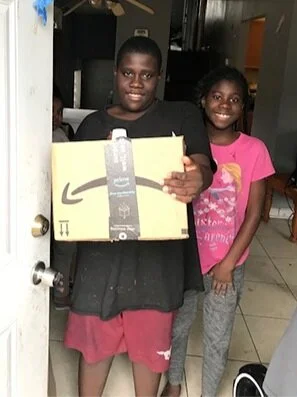
During the first week, Tamayo’s team delivered food and hygiene items to over 50 families who were overjoyed to receive our help. We are thankful to our friends at Families Helping Families for their generous donation of food. Tamayo said that all the kids and families have been grateful, joyful, and hopeful as well.
“I sense that it eases the anxieties of our youth, as they realize that Mercy Home is still with them and still as committed as ever to support them,” he said.
As our helpers rolled out across the city, messages of thanks poured in from our kids and families.
“Having Mercy Home support me and my family through this uncertain time has been a tremendous amount of help,” said AfterCare member Monesha. “I want to say thank you to all of the wonderful people that are doing the upmost for the Mercy family.”
AfterCare member Shena wrote: “Dear Mercy Home staff and donors, on behalf on my little family and me, we want to express our thanks and gratitude. Thanks for blessing us with the food items. It was unexpected, much needed, and appreciated. Thanks for helping us and many more during this time.”
Juan Medina, Mercy Home’s Manager of Community Partnerships, has also helped deliver food and described the reactions of those we’ve been able to assist.
“One of our young adults had a big smile on his face when he saw my familiar face as he picked up his food,” said Medina. “He mentioned that he was recently furloughed from his job and was looking for a new job.” Medina delivered more food to a young man, Maurice, who smiled as he gathered his food.
“He said he and his grandmother were doing okay. I told him to call us if they needed anything,” Medina said. “He said our school resource coordinator checked in on him. All around his neighborhood you see empty lots.” On-the-ground facilitators like Medina and Tamayo both say that, when it comes to our kids and families, just seeing a familiar face from Mercy Home brings them comfort and hope.
“One of the kids I delivered food to said ‘Hey, I know you.’ He thanked me and wanted to walk closer to shake hands, but I stopped him,” Medina said. “He is living with a friend. They both came down to pick up the food.”

We are deeply grateful to those who make our support of children and families possible throughout the year. But we want to say a special thanks to all of those who are doing all they can to help in this urgent moment of need.
Please see the original post on Mercy Home’s Blog here.
Mercy Home Supports Families Through Teletherapy
As the world unites to fight the spread of the coronavirus, the safety and well-being of our children is our top priority. But our kids have faced steep obstacles in their lives, and continuing their therapeutic treatment is critical – especially during these stressful times. Like the rest of the world, we have adapted to these new circumstances as best we can, utilizing teletherapy to ensure our children and family receive the support they need.

Individual therapy
To minimize the risk of infection for youth and staff during this time, Mercy Home made the difficult decision to temporarily reduce our physical, on-site community as much as possible, with some youth sheltering with friends or relatives, and others remaining on site and being cared for by a smaller group of staff. But technology is helping us remain connected despite physical distance.
Each youth who has temporarily transitioned out of the Home connects at least once a week for individual therapy with their regular therapist. These sessions take place via videoconferencing or phone and are tailored to meet the individual needs of each child. Before we started practicing teletherapy, our IT department took the proper measures to ensure that the confidentiality of our families was protected.
“I’ve been really pleasantly surprised – both at how well we can do telehealth and how receptive the kids and parents are to it.”
In just a short time, Mercy Home therapist Sally Weld has seen a positive response from the youth she has been able to work with in this new way. “I’ve been really pleasantly surprised – both at how well we can do telehealth and how receptive the kids and parents are to it,” Weld said. “Kids who don’t want to do therapy in person – who are really reluctant or just struggle sitting in the office – they’re asking, ‘can you call me two or three times a week – not just once?’”
In addition to the challenges that brought them to our Home, the COVID-19 pandemic has presented our kids with a new set of stressors. Their lives have shifted dramatically as their routines have been interrupted, their learning methods have altered, and their living situations have changed.
“I have a few guys who this is a really, really challenging time for,” Weld said. “And it really reiterates to me that they need help and they need services.” While talk therapy may work well for some kids, others have an easier time opening up when their bodies are engaged in physical activity. Though Mercy Home therapist Katie Cunningham can’t have in-person sessions right now, she is getting creative and finding new ways to engage youth, like going for virtual walks.
“It was a beautiful day and we both decided to take a walk and have our therapy over the phone at the same time,” Cunningham said. “And it was just nice, because it was like we were taking a walk and we could both feel how great the sun felt and how nice the wind felt and notice those things.” For many of us, going for walks is a great way to get outside for fresh air during this period of social distancing. But sadly, for some of our kids, this is not an option due to community violence.
When getting outside is not an option in this era of social distancing, our therapists have recommended indoor physical activities including YouTube exercise videos, dancing, running around the backyard, and doing pushups. And since therapists are used to seeing our kids almost every day, they are finding new ways to stay connected, like watching the same TV shows or playing video games online together.
A safe place in residential
For those youth who remain on site because they had no safer temporary place to go during this crisis, videoconferencing is still allowing them to keep connected to those staff with whom they have build therapeutic relationships but who may themselves be sheltering at home to prevent the spread of the COVID-19 virus. Each youth is still able to have weekly individual therapy sessions with their regular therapist through videoconference.
One of the kids who Weld works with is still living at Mercy Home right now, and they continue to meet weekly.
“He has a very complicated situation, but knowing that Mercy Home was open and a safe place for him to be was hugely important,” Weld said. With safe social distancing practices, kids living at Mercy Home continue to enjoy some of the same activities they always have, such as playing basketball in our gym, playing in our soccer building, and playing with our facility dog Pongo.
“It went pretty well. I could see a lot of smiles on their faces – they were excited to interact with each other.”
Group Therapy
At Mercy Home, youth often develop close bonds with their peers. One of the places bonds are formed is during group therapy sessions. Group therapy allows kids to discuss common issues they are facing, break down barriers, and find new ways to relate to each other.
During her individual therapy sessions, Cunningham found that kids were asking her if she had heard from their peers and how they were doing. And in the spirit of innovation, she decided to bring them together through a group therapy video conference.
“It went pretty well. I could see a lot of smiles on their faces – they were excited to interact with each other,” Cunningham said.
“I think that a big piece to all of this is normalizing how challenging this time is. And they can relate to one another in that because, quite frankly, many of these kids were not scheduled to transition home right now, so the challenges that they’re facing with their families are really to be expected.”
Family Therapy

During this time of sheltering in place, people are spending a lot more time with family or those with whom they live. As part of our teletherapy treatment plan, therapists continue to hold family therapy sessions on a weekly basis. “Because of everyone being cooped up – things that are so small are becoming really big. And trying to manage moments like that is more so the focus than unpacking big family histories.”
Moments like these demonstrate how important it is that our therapists continue to be there to support families. In providing remote family therapy sessions, Cunningham has found that it’s not only the kids who need support during this crisis, but parents as well.
“Parents are trying to be really strong through all this right now and brave,” Cunningham said.
“Sometimes I like to just create space where they can vent and tell me about some of their fears and worries – and I’ve noticed they feel more inclined to do that when their child is not present. I’ve called parents individually and we’ll have sessions in that capacity.”
Though this is a trying time for our families, it’s also an opportunity to practice the skills they have been working on through treatment. The goal for most kids is to equip them with the skills they need to successfully transition back home or to independent living ultimately. And while many of them return home on some weekends to practice these skills, as they do each day in school or at their workplaces, the current situation allows them to identify things they still need to work on.
“Parents are trying to be really strong through all this right now and brave.”
“I think for me, it really has become kind of like a measuring stick. For some kids, I’m like, ‘wow, you’ve made a lot of progress, and you’re able to do it better than I thought,” Weld said.
“It’s really providing a lot of data in terms of where we are at in their treatment, and where we need to go.”
Mercy Home is using every tool at our disposal to make sure our kids and families continue to build on the progress that they have made when this crisis gripped our country and our city in the past month. While some of the specific ways we’re providing healing for those in our care might look different than they did several weeks ago, our core mission and therapeutic approach remains constant. And something kids can depend on during a time of change and uncertainty is worth its weight in gold.
Please see the original post on Mercy Home’s Blog here.
“All Roads Lead to Home”: SOS Illinois Featured on Kennedy Expressway’s Wintrust Mural Building
SOS Children’s Villages Illinois is excited to announce the unveiling of “All Roads Lead to Home” as featured on the Wintrust Mural Building. This Mural, located at 1735 N. Ashland Avenue, Chicago, will be viewable from the Kennedy Expressway—one of the busiest roads in the state. SOS Illinois looks forward to welcoming our community members into our evolving journey as we gear up for Child Abuse Prevention Month and Foster Care Awareness Month.

All Roads Lead to Home Mural
About the Wintrust Mural
The Wintrust Mural, a three-sided building viewable from the Kennedy Expressway owned at operated by Wintrust Financial, stands as voice for nonprofits across the Chicagoland area. The mural, attracting thousands of city-bound commuters each day, sheds light on the missions of some of Illinois most reputable, dedicated, and impact-driven nonprofits committed to making a difference, building experiences, and strengthening our city.
SOS Illinois is honored to have been chosen to be featured on the mural from mid-March through mid-April 2020, creating the perfect introduction to SOS Illinois’ major awareness months: Child Abuse Prevention Month (April) and Foster Care Awareness Month (May).
About “All Roads Lead to Home”

The inspiration for SOS Illinois’ “All Roads Lead to Home” is based on a shared story that for many begins with young, vulnerable lives that have endured abuse or abandonment. The “All Roads Lead Home” mural focuses on bringing much needed awareness to the nearly 500,000 children in foster care in the U.S.
This mural looks to highlight SOS Illinois’ Village model of care, which is an innovative approach to traditional foster care. This model keeps brothers and sisters together in the care of a full-time, professional Foster Parent, living as a family in a single-family home and surrounded with an intentional community of support that includes onsite case management, therapeutic, academic, and recreational services. The Village lays the foundation for rebuilding trust, confidence, and hope for each child in our care. We do this so that children can go on to lead fulfilling lives as adults.
In addition to providing safe, stable, loving homes, we marshal all the resources needed to help children heal and achieve their permanency goals. Whether brothers and sisters are living on our Villages, or moving to their “forever homes,” SOS Illinois is there for every milestone.
Impact of the SOS Illinois Wintrust Mural
Whether zooming passed the Mural in a hurry or stuck in traffic with time to explore its detail, SOS Illinois is grateful for this opportunity for the mural to serve as a new type of “front door” to our organization over the next month.
It is our hope that viewers take away from the mural that there are organizations dedicated to building the future of foster care. As media stories so often focus on the heartbreak and missteps of the foster care system, and as policies are written to protect the most vulnerable lives, we are seeking for this mural to invite viewers into our evolving story; one of hope, persistence, and safety.

With this mural, SOS Illinois aims to show that regardless of the road that is traveled, we will continue to advocate for and support children and families in pursuit of a forever home. For us, we want viewers to recognize that “all roads lead to home” is not a catchphrase, but a promise that we have been keeping for thirty years.
Wintrust’s Longstanding Partnership with SOS Illinois
SOS Children’s Villages Illinois is fortunate to have the long-time partnership of Wintrust, which began during the construction of the 14-homes of the third Village in Chicago’s Roosevelt Square neighborhood more than five years ago. In the years following, Wintrust has offered support at every level of the organization, especially as it relates to spreading awareness of SOS Illinois’ programs and services.
Edward J. Wehmer, Founder/President/CEO of Wintrust Financial Corporation, said, “SOS (Illinois) is a light under a bushel basket. My personal philosophy is you have to give kids a leg up. If you can give someone a leg up, you can change a just one life . . . you can’t get a better feeling than that.”
By supporting SOS Illinois, Wintrust has embodied the notion of giving a “leg up” by making a profound impact on the lives of children in Illinois foster care. With this help, we are strengthening families, stabilizing communities, and building the future of foster care.
Thank you, Wintrust, for once again supporting our children and families with this special feature on the mural!
Inspired by the Mural? Here is How You Can Help
Feeling impacted by the joyous art on the “All Roads Lead to Home” Wintrust mural and wanting to do more? You can help support the children and families we serve by getting involved inside and outside of our Villages and sites.
Throughout the next two months, we will be participating in Child Abuse Prevention Month and raising awareness during Foster Care Awareness Month with various Village events and activities. You can get involved by making a donation in honor of these awareness months, learning about becoming a Foster Parent or Child Welfare Specialist, or getting your copy of our 2020 Influencer Tool Kit that includes ten different opportunities to get involved in spreading awareness of our mission. For information on becoming an Influencer, contact Tina Cisarik at tcisarik@sosillinois.org.
Please view the original post on SOS Illinois’ blog here.
SOS Illinois Given a Four-Star Rating by Charity Navigator

People often ask what sets SOS Children’s Villages Illinois apart from other similar nonprofit organizations, especially those that work with children in foster care. Aside from our unique mode, which is helping to build the future of foster care, we are proud to report that SOS Illinois was given a four-star rating by Charity Navigator, the leading charity evaluator in the United States. With distinctions like this, you can be confident in knowing that investing in the work of SOS Illinois makes a major difference!
About Charity Navigator
Charity Navigator aims to “provide donors with essential information to give them greater confidence in both the charitable decisions that they make and the nonprofit sector.” To achieve this goal, Charity Navigator implements a two-prong approach to evaluating a charity’s reputability. According to Charity Navigator:
“Charity Navigator’s rating system examines two broad areas of a charity’s performance; their Financial Health and their Accountability & Transparency. Our ratings show givers how efficiently we believe a charity will use their support today, how well it has sustained its programs and services over time and their level of commitment to good governance, best practices and openness with information. In the not-too-distant future, we plan to also rate charities’ reporting of their results. We provide these ratings so that charitable givers/social investors can make intelligent giving decisions, and so that the nonprofit sector can improve its performance.”
Nonprofit organizations cannot edit their star rating on Charity Navigator, nor can they simply request their rating be changed. Instead, nonprofit organizations are all held to the same standard when evaluated, ensuring visitors that each organization is assessed without bias, skew, or internal interest.
What Does it Mean to Be a Four-Star Charity on Charity Navigator?
A four-star rating is the highest rating given to nonprofits by Charity Navigator. This rating now places SOS Illinois amongst the top 25% of the 1.5 million charities in the U.S. SOS Illinois was recognized due to our dedication to fiscal responsibility, accountability, and transparency. Our four-star rating from Charity Navigator means that you can feel confident that the gift you make to SOS Illinois is positively impacting the lives of children in foster care.
Informed Giving to a Nonprofit Organization
We all appreciate knowing where our money is going when we donate to a nonprofit organization, and Charity Navigator ensures that you can make an informed decision when giving. For those looking to give, resources like Charity Navigator provide a hub of information where you can vet nonprofit organizations, view financial statements, read details on spending, and more. In doing so, an individual or company is able to determine if, in their eyes and through Charity Navigator’s recommendation, a charity is going to use their funds to create the biggest impact on the community or cause they serve. Having a four-star rating on Charity Navigator demonstrates our dedication to providing direct services to clients and communicating with transparency, ensuring our donors and corporate partners that investing in us is a wise decision.
Support Us Through Charity Navigator
SOS Illinois can now be viewed in Charity Navigator’ s list of four-star organizations. Please consider making a charitable contribution with the knowledge that your funds will go directly to serving the children and families at SOS Illinois!
Commentary: I was adopted. 'Disclosure’ raises new questions about ‘closure.’
By DENNIS HETZEL, CHICAGO TRIBUNE
Late in 1951, Marguerite Dargan, a bright, lively 19-year-old woman from Rock Island, got pregnant.
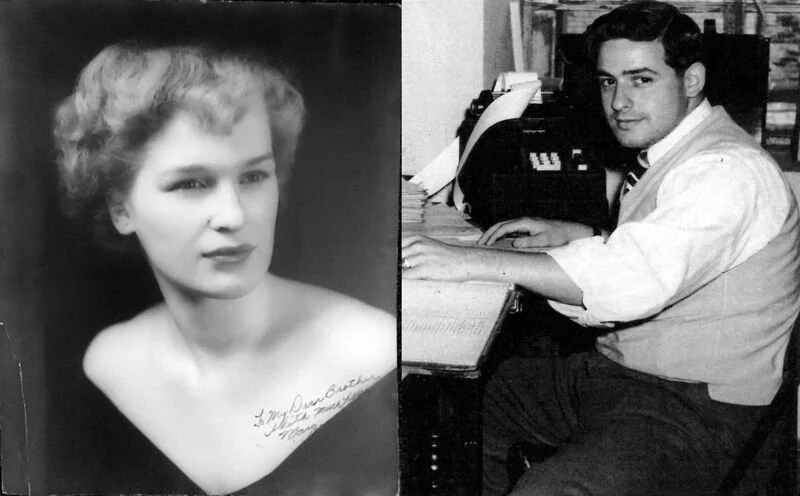
Dennis Hetzel's parents, Marguerite Dargan and Sherman Dutch.(Dargan and Dutch family photos)
The father, Sherman Dutch, was a Jewish man and a decorated Air Force veteran who took part in D-Day. He returned home to Madison, Wisconsin, after the war to get his accounting degree and start a career. He probably met Marguerite when she boarded and babysat at the nearby home of his sister and brother-in-law. After Marguerite learned she was pregnant, her family sent her to Chicago to stay with her grandparents. The plan: Keep things quiet. Offer the infant for private adoption. Get on with life.
The child was born July 22, 1952, and was described as “mixed race” to the few who knew. Marguerite named him “Michael Joseph Dargan” and clouded the father’s identity on the Illinois birth certificate, which records the dad as a soldier named “John Dargan.” Her doctor, Betty Delson, knew a blue-collar couple who badly wanted a child and lived in an ethnic Hungarian neighborhood on Chicago’s West Side. The courts awarded custody to Paul and Ruth Hetzel, and they changed Michael Joseph’s name to “Dennis Richard.”
Because of Marguerite, Sherman, Ruth, Paul and everything else that has happened in my life, I’m here and I’m me.
New York just became the most recent state to join Illinois and other states that allow adult adoptees the right to see their original birth certificates, and this certainly will make it easier for more adoptees to learn their stories. However, it’s important to remember that these documents are mere puzzle pieces. “Disclosure” is not a synonym for “closure.” Disclosure is simply the exchange of information; closure provides emotional peace — or at least helps you get closer to it.
Ruth and Paul Hetzel with young Dennis near Reisterstown, Maryland, circa 1956. (Hetzel family photo)

Ruth and Paul Hetzel with young Dennis near Reisterstown, Maryland, circa 1956. (Hetzel family photo)
I’ve also learned that “closure” isn’t just for adoptees. That became apparent the more I learned about Marguerite and other birth moms of the 1950s and 1960s.
Marguerite couldn’t just “get on with her life.” My recently discovered cousins have vivid memories of their late Aunt Marguerite doting over them, but she never had other children and fought her share of demons. She married later in life and found some happiness, but my cousins say deep sadness enveloped her each July — my birthday month. Years later, one of my cousins told me that she felt a spiritual urging to pray for “Marg’s baby.” I surfaced a few weeks later.
It’s possible she didn’t know Sherman was the father or wasn’t sure. Sherman’s family also has accepted me with open arms, and they believe he never knew about his fatherhood. That squares with the experiences of thousands of other unwed mothers and their families during the 1950s and 1960s.
‘Bad girls’ and slut-shaming
You meet lots of women like Marguerite in Ann Fessler’s “The Girls Who Went Away,” a book that brings tears and anger. Most of the birth mothers Fessler interviewed from that era were cast aside as “bad girls,” slut-shamed even by their parents in many cases and secretly sent away to give birth. They were often denied the right to even hold or see their newborns, and one of my cousins recalls Marguerite making such comments.
The cruel message was that keeping them from their babies would make it easier for them to forget. Young mothers heard such broken-record phases often, as if the loss of all connection with a child from your womb was no more consequential than donating a pile of lightly worn, unwanted clothes to the thrift shop.
For the fathers, the situation was quite opposite. Assuming they even knew their status, they and their families could choose their level of engagement, and society offered many incentives to take little or no responsibility.
I had resigned myself as I entered my 60s to never knowing much about my story and was particularly sad that my children and their children would have missing puzzle pieces in their lives as well. Thanks to DNA test results and many helpful people, the answers emerged in the past three years.
Twists in a family history
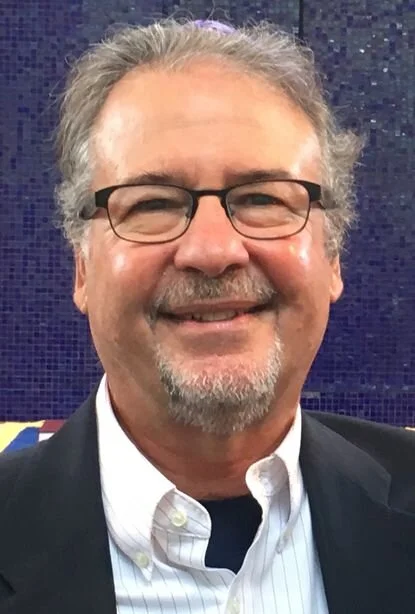
Dennis Hetzel (Dennis R. Hetzel)
Like many adoptees, I’ve found answers filled with unpredictable twists. For example, I lived in Madison for four years as managing editor of The Capital Times newspaper and knew some of my relatives. I just didn’t know we were related. Today I go to a Methodist church, but my surprising discovery that I’m half Jewish pulls hard on my psyche. I’m not sure what that means for me spiritually — but I’m glad I know.
You also learn that the dead ends on your journey can lift barricades for others. A member of my wife’s family connected with a long-lost daughter from her experience as a teenage unwed mother after getting the huge clue of the daughter’s DNA match to my son. I helped a Chicago doctor learn that the woman who I thought gave birth to my father (she didn’t; she’s a great-aunt) was actually his missing grandmother.
Still, I’d like to know more about Sherman’s and Marguerite’s relationship, and I wonder if Marguerite tried to find me or learn what happened to her child. There’s no evidence she did so, but I know enough to harbor no doubts that she wanted to know what happened to the son she never knew and maybe wasn’t even allowed to hold.
I’ve also learned the closure journey comes with a price. Marguerite paid her sadness forward to me, and I feel it most strongly every July. I don’t mind, because I’m also more at peace. I want to believe that she is too.
Dennis Hetzel grew up in Chicago and Hoffman Estates. He lives in Holden Beach, N.C., and recently retired as executive director of the Ohio News Media Association. He’s a former newspaper reporter, editor, publisher, journalism teacher and the author of two novels, “Killing the Curse” and “Season of Lies.”
Link to the original Chicago Tribune article here.
Why Black History Month Matters for Children in Foster Care
February is Black History Month and as such, SOS Illinois wants to highlight the significance of this month to children in Illinois foster care. The purpose of Black History Month is to celebrate the roles that various African American and Black individuals have played in the United States and to remember the legacy and continuing contributions of the black community in U.S. history.
The common narrative of the black community in America has been one of fighting to overcome barriers, breaking through boundaries, advocating for justice and fairness, and emerging as beacons of hope despite adversity. SOS Illinois believes that these narratives are important for all children in foster care to recognize, especially children of color.
The Disproportional Rates of Black Children in Illinois Foster Care
As part of recognizing Black History Month, it is our responsibility as a foster care agency to call to attention the disproportional rates of black children in Illinois foster care and beyond. Research has shown that “poor and racial and ethnic minority children and their families are disproportionately reported, labeled, and mandated into the child welfare system” (Horton, 1).
While the city of Chicago boasts a diverse population of 38.6% Black, 37.9% White, and 19.6% Hispanic, the population of the Illinois foster care system is disproportionally black. In fact, African American children make up approximately 33% of children in foster care nationwide, but only 15% of the national child population. Additionally, 84% of the children that SOS Illinois serves in our Villages are African American/Black.
Why Is There Such Racial Disproportion in Foster Care?
There are several systematic issues, such as the zoning of neighborhoods and the exodus of non-poor white families from the city to the suburbs, that have historically caused racial segregation, concentrated poverty, and drug and substance abuse in the inner-city. Certain zoning laws combined with white flight from the city resulted in many inner-city neighborhoods becoming primarily black neighborhoods with few resources, causing the cycle of poverty to continue.
This cycle of poverty, as we have written about previously on our blog, is a major contributor to the cycle of national and Illinois foster care, causing children in foster care to reach adulthood without the resources needed to thrive. The few opportunities offered to people living in neighborhoods marked by poverty makes it difficult to offer the best care to children. As a result, adults in these communities often face barriers in parenting, making their children vulnerable to entering the foster care system. As such, we see the cycle perpetuate and a disproportional rate of children of color, especially children who are African American, enter the Illinois foster care system.
At SOS Illinois, we believe it’s important to recognize that there are larger systems at play that are affecting why many black children are ending up in foster care. Acknowledging these systematic barriers is the first step in breaking this cycle.

Creating a Community of Hope for Children in Foster Care
Our unique model at SOS Illinois prioritizes and values diversity, education, wellness, and opportunity. We believe that these values present a different and more empowering narrative for children in foster care. We aim to create a community of hope and a cycle of opportunity so that successful futures may be realized. SOS Illinois communities are mindful in acting with culture sensitivity and affirming cultural differences, allowing the children in our care to celebrate diversity and individuality as they realize that they each have a story to tell.
Overcoming Restrictive Narratives and Celebrating Black History Month
Celebrating the history, legacy, and current impact of Black Americans across industries and communities presents a hopeful narrative for black children in foster care who may not have the stability of permanent role models while they are in care. Help celebrate Black History Month with SOS Illinois by donating to the work we are doing in helping to create a better future for children in foster care.
Most American Adoptees Can’t Access Their Birth Certificates. That Could Soon Change.

Even though the practice of lifelong anonymity
has no legal standing, it has dominated adoptions since 1935.
In 1963, when Carole Whitehead was an unwed 18-year-old mother in New York, she placed her baby up for adoption. This had always been the plan, but she asked for the record to be open so that one day, if her son was interested, he would be able to contact her.
“Don’t tell me I want confidentiality,” Whitehead remembers telling hospital staff. “I don’t want confidentiality.” But the process was unclear, and she felt forced into handing over her child to an adoption agency without being informed of her legal rights. “I wasn’t promised confidentiality,” says Whitehead, who is now an adoptee rights advocate. “We never asked for it.”
Staff at Louise Wise Adoption Agency handled the surrender and placement of Whitehead’s child and likely told her that, as a birth mother, there would be “confidentiality” no matter what she said was her preference. This assurance was routine at the time.
Indeed many birth mothers report they didn’t choose and weren’t legally guaranteed lifelong “anonymity” from surrendered sons and indeed, many birth mothers report they didn’t choose and weren’t legally guaranteed lifelong anonymity from surrendered sons and daughters, says Gregory Luce, a lawyer and founder of the Adoptee Rights Law Center, based in Minneapolis. As a result, many of those who support the status quo believe the original birth certificates of adult adoptees should remain sealed forever, and assume there is lifelong “anonymity” for birth parents. Adoption agencies, lawyers, or others in the industry may have offered birth parents short-term “confidentiality” or “privacy” to protect them from anyone finding out about the pregnancy, but any suggestion or insinuation that birth parent “anonymity” could be maintained forever is incorrect.
Even though the practice of lifelong anonymity has no legal standing, it has dominated adoptions since 1935. Until that point, most U.S.- born adoptees had unrestricted access to the records of their birth. After 1935, adoption agencies offered “confidential” or “closed” adoptions, in which there’s no contact between the birth and adoptive families while the adoptee is a minor. But adoptees of all ages, in states where the right to access their original birth certificate has not been restored to them as adults, continue to have the option to petition the court for a copy of this document.
States then started to seal original birth certificates once the adoption was finalized and issued an amended version to appear as if the adoptive parents had given birth to their adopted son or daughter. This began a clandestine process that politicians and supporters first presented as a way to protect the child from any perceived stigma of being adopted and later would present as a way to protect adoptive families from birth mothers who might meddle in their newly created or expanded families.
For most adoptees seeking to unseal their records, this practice has resulted in a difficult and costly journey should they ever attempt to get a copy of their original birth certificate. With no federal law dictating access to adoption records, the matter was left up to the states, where there is a patchwork of vastly different laws, none of which are based on any unifying legal precedent. Today, in statehouses around the country, a diverse and growing movement of adoptees, birth mothers, adoptive parents, and others — who see restoring unrestricted access to records of adult adoptees’ birth, like their original birth certificate, as an essential civil right — is pushing lawmakers to consider measures to enact what is known as “clean” adoption reform.
While no one knows for sure how many Americans are adoptees, the University of Oregon’s Adoption History Project estimates there are 5 million Americans alive today who are adoptees. In the 1970s, adoption rights activists attempted to change laws and make it possible for adoptees to regain unrestricted access to vital records, including original birth certificates. Activists argued it was important for them to understand their biological history, and the difficulty in accessing birth certificates was burdensome and discriminatory. No other American is required to get a court order to access this basic document.
The movement took hold in some states but not others. In nine states, adult adoptees can apply for and obtain their original birth certificate without any restrictions. Twenty-two states, including South Carolina, limit access through various measures, such as allowing a birth parent to deny the release of an original birth certificate or redacting information on the document (even though there are no laws promising anonymity to birth parents). In New York, 18 other states, and Washington, DC, where these records remain sealed, the only option for adoptees is to petition the court, which can be costly and has no guarantee. Whether a court petition is successful or not, adoptee rights activists say the process fails to recognize the basic right to access vital personal records of one’s own birth, and is inherently discriminatory.
All over the country, there are various efforts to restore the rights of adoptees. In states where laws that restore access have been challenged, courts have rejected arguments that birth parents have a constitutional right to privacy or anonymity in the context of the adoptee’s own birth record. New York, Texas, and Florida are all looking at restoring access to original birth certificates of adult adoptees to varying degrees, ranging from “access with restrictions” to “unrestricted access.”
In Florida, for instance, a bill was filed this year that adoptee rights advocates say is badly flawed because it makes access to original birth certificates dependent on birth parent involvement. If HB597 passes, adoptees will have to apply through the Florida Adoption Reunion Registry and connect with at least one birth parent before being allowed to apply for a copy of their original birth certificate. Currently, adult adoptees in the Sunshine State who want an original birth certificate must first be in reunion with a birth parent who consents to the release or obtain a court order.
Some adoptee rights advocates refer to Florida’s bill as “dirty,” because an adult adoptee’s access to their original birth certificate is restricted. In contrast, New York recently introduced a “clean” bill that will restore the rights of adoptees to get a copy of their birth certificate when they turn 18 If it is passed beginning January 15 2020 adult adoptees will have the same level of access to their birth certificate when they turn 18. If it is passed, beginning January 15, 2020, adult adoptees will have the same level of access to their birth certificates that non-adopted individuals may take for granted.
Even with more than 80 Assembly co-sponsors, and top adoptee rights groups like the American Adoption Congress, the National Center on Adoption and Permanency, and the North American Council on Adoptable Children supporting the measure, there has still been opposition. Birth mothers and elected officials who see the mothers’ right to privacy as paramount—though lifelong anonymity from surrendered sons and daughters was not legally guaranteed—have tried to prevent the legislation from passing.
“This issue shouldn’t be about anyone or anything else other than an overdue recognition of basic human rights,” says Tim Monti Wohlpart, a New York adoptee who serves as the National Legislative Chair, and New York state representative, for the American Adoption Congress, where he helped cement a formal legislative policy for “clean” reform. He also started a grassroots petition to advance the New York bill. He attributes any lingering opposition to the legislation to fear, and suggests that while some adult adoptees may prefer not to request a copy of their original birth certificate or records, they should still have a right to access them if they ever changed their mind. “New York does not simply have a policy of sealed records, but also a culture of secrecy,” he says. “The remedy is adoptee equal rights.” If the law is changed, each adoptee would have a range of options, “from no action, to retaining a birth certificate for their personal files, to completing a search” for their family members.
Luce, from the Adoptee Rights Law Center, points out another potential problem for those who oppose legislation for unrestricted access to adult adoptees’ original birth certificates. He says no promise of anonymity could legally have been made because there was never a guarantee the child would actually be adopted. In those cases, the adoptee would always have access to their records, or that if a judge believes there is cause to do it, courts can unseal adoption records. Luce, an adoptee, knows this process all too well. He successfully petitioned a court for his original birth certificate in Washington, DC, where he was born in 1965 and adopted at a week old. But he’s now challenging the redaction of his birth father’s name on the document because his birth father didn’t give consent. Luce says he already knows this information from his birth mother, with whom he had met before her death.
Only during the appellate process are these issues sufficiently narrowed, demonstrating, according to Luce, the distinction between “all this emotional stuff” involving reunions, but “about the record itself.”
This difference in state laws can compound the frustrations experienced by adoptees who must work with multiple state agencies. Erica Babino, the former national legislative chair for the American Adoption Congress, was born 55 years ago in New York but was adopted in Texas. When she was 25, she tried to gain access to her original birth records, a process that lasted for 25 years. On one visit to New York, Babino sobbed while a social worker sat inches from her with a file that contained her birth records but did not permit her to see them. She managed to find her birth family, but the records in New York remain inaccessible to her.
“There’s absolutely no reason why an adult cannot make a decision about their own lives and to be able to have their original birth certificate just like every other American,” she said.
“There’s absolutely no reason why an adult cannot make a decision about their own lives and to be able to have their original birth certificate just like every other American.”
For those who believe that the records should be sealed, protecting mothers, who may have not wanted their past revealed is often cited as the main reason. Advocates for women who have experienced traumatic, unwanted pregnancies, like author Kathleen Hoy Foley, say there are dangers in exposing these women unilaterally. In her written statement to the New Jersey legislature when an open-records law was being debated in 2011—the measure eventually passed three years later—she stated: “All women in hiding are petrified of the betrayal of such private and personal information…and all the same and anguish such exposure carries with it.”
A small number of opponents, mainly Catholic groups, argue that some birth mothers may have opted for abortion rather than adoption if they thought their identities would be revealed. The American Adoption Congress says this has not been the case. “The data reveals that if access has had any effect on adoptions and abortions, it’s been to increase adoptions and decrease abortions,” the group noted.
In Texas, one state senator has successfully blocked open access laws repeatedly for other reasons. Donna Campbell, a physician and adoptive mother, claims adult adoptees may want to find their birth mother for “financial reasons.” Shawna Hodgson, co-founder of the Houston-based Equality4Adoptees organization, has worked with adoptees throughout the country to bring an open-access measure to the Texas legislature and says that despite overwhelming support, similar bills filed in 2015 and 2017 were eventually killed by Campbell, a close political ally of Senate President Lt. Gov. Dan Patrick.
Historically, the National Council for Adoption has opposed the types of unrestricted access currently proposed across the country, and for the past few years hasn’t waded into the debate. But today, the nearly 40-year-old organization says it supports legislation that balances the needs of adult adoptees and their birth parents. Its president and an adoptive father himself, Chuck Johnson said the organization backs programs that use trained “confidential intermediaries” to discreetly contact birth parents or adoptees to see if they want to reunite, and leaves open the option for birth parents to decide whether they want to be contacted by an adoptee. “We support people who want to be contacted and allow ways to make that happen,” he said.
Being unable to access these records has often led adoptees to use social media and DNA testing services for answers. But advocates say this doesn’t replace access to original birth certificates. Adult adoptees who are not able to obtain a copy of their own original birth certificate may also be denied driver’s licenses and other government identity documents.
Carole Whitehead is 74 years old and works as a cancer registrar—a data information specialist for cancer patients in Plainview, New York. She has been involved with Unsealed Initiative, New York’s largest lobby for adoptee rights, for years. She never had access to her son’s records. But in 1985, with the help of a private investigator, she found Paul Dinberg, in Long Island. He was living only five miles away from where she lived at the time. When she drove up for their first meeting, he was sitting on the stoop in front of his house. “I waited 22 years for this,” Whitehead remembers telling her son during their emotional reunion. “I told him that I was his mother.”
Since then, Whitehead has remained in contact with her son, even attending his wedding with her husband and her two other children. Dinberg is now 54 and lives in Oregon with his two daughters and a stepdaughter. “He calls me Mom,” she said. “We’re family.”
Please click this link for the original article from Mother Jones.
Copyright © 2020 Mother Jones and the Foundation for National Progress. All Rights Reserved.