
Expertise with Survivors of Gender-Based Violence

New faculty member Assistant Professor Shih-Ying Cheng’s passion for working with survivors of gender-based violence (GBV) is rooted in personal experiences. “I have family members who have survived GBV. And having worked with survivors, I admire their strength and how resourceful they are,” she says, “but I also see how vulnerable they can be. I had a client who was almost killed by her husband, and when I visited her in the hospital, I told myself that I didn’t want to see that happen again.”
Before coming to the U.S. from Taiwan, Dr. Cheng worked with survivors of GBV. She explains that GBV includes intimate partner violence (IPV), sexual harassment, and sexual assault. “Different forms have different impacts on survivors. For example, survivors of sexual harassment tend to engage in avoidance, which can harm their career and what they achieve professionally,” she explains. “And then IPV may involve economic abuse, the abuser can exhibit abusive control, sabotaging their career or restricting contact with their colleagues or their supervisor. The impacts of IPV may be broad and pervasive.”
“Having worked with survivors, I admire their strength and how resourceful they are, but I also see how vulnerable they can be. I had a client who was almost killed by her husband, and when I visited her in the hospital, I told myself that I didn’t want to see that happen again.”
IPV may also impact children, even when they are not direct recipients of violence. After witnessing abusive behavior in their home, they may believe anger or abuse is an appropriate mode of communication and problem-solving, and the violence is then transmitted intergenerationally. “Parents who experience IPV are more likely to engage in harsh parenting or physical abuse, and it can contribute to further child maltreatment,” she says. “It is a complex process, and we need to understand the complexity and avoid stigmatizing the survivors.”
She has also worked with marriage immigrants who entered Taiwan through international marriages, mostly via marriage brokers. While the comparison of marriage immigration to human trafficking might seem self-evident, and in some cases may be true, Dr. Cheng urges caution in describing it as trafficking. “For activists and researchers, it might be easier to frame it as human trafficking, but we need to be very careful,” she explains. “The danger is in underestimating the agency among women who choose to immigrate. They may, for example, go to great lengths to prove the validity of their marriage, so they can go through the immigration process more smoothly.”
Regarding interventions, Dr. Cheng conducted a meta-analysis of the Batterer Intervention Program, a popular intervention in the U.S., and found that it is not highly effective in stopping abuse. “We found that effectiveness is more likely due to the characteristics of the participants, their own dedication to the program,” she says, adding that certain cognitive behavioral interventions can be effective in dealing with PTSD or depression among survivors.
Dr. Cheng wants to examine GBV in vulnerable populations in the U.S., especially recent immigrants. She has firsthand experience with being an immigrant and the culture shocks involved. “While my experience is probably different from that of other immigrants, I am very interested in the intersection of GBV with the experience of being a recent immigrant,” she says. “Chicago is a perfect city to have the opportunity to live with recent immigrants and learn about their experiences from them.”
“What attracted me to Jane Addams College of Social Work was all the work being done with marginalized populations. And that is exactly what I want to pursue in my life and my career; I want to be useful, and I want my research to be meaningful and have impact in the real world.”
She says that what drew her to JACSW was the College’s emphasis on social justice for marginalized and vulnerable populations. “Three years ago, I came to UIC specifically to visit the Hull-House Museum, to learn about Jane Addams and the settlement house movement. But what attracted me to Jane Addams College of Social Work was all the work being done with marginalized populations,” Dr. Cheng says. “And that is exactly what I want to pursue in my life and my career; I want to be useful, and I want my research to be meaningful and have impact in the real world.”
April 08, 2022
Click here for the full article.
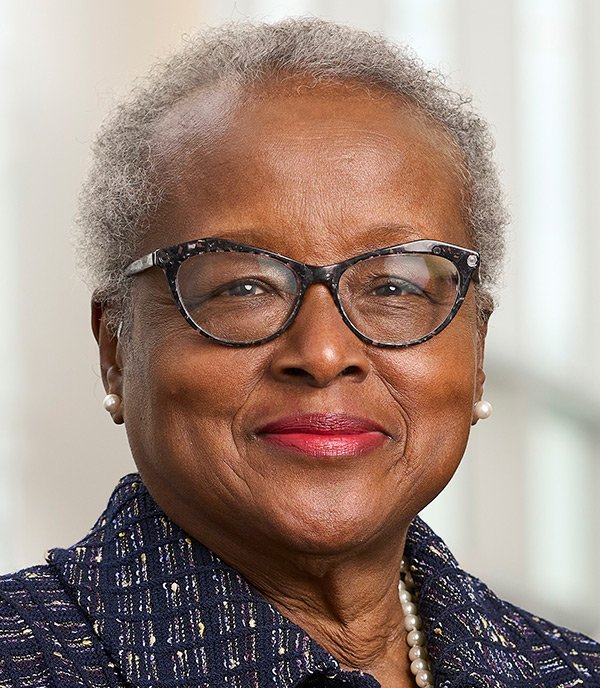
Alumni Spotlight: Dr. Sharon E. Milligan, MSW ’73
ACSW alumna Dr. Sharon E. Milligan is an Associate Professor at the Jack, Joseph and Morton Mandel School of Applied Social Sciences, Case Western Reserve University. In 2021, she served as Interim Dean and prior to that, she was Associate Dean for Academic Affairs and chaired the Master of Science in Social Administration/Master of Social Work and the Master in Nonprofit Management Organizations programs. She has also served as Associate Director of the Center on Urban Poverty and Community Development.
Dr. Milligan has been continuously involved in social work, community development, and public health as a program developer, researcher, teacher, and consultant to government and nonprofit agencies. As an educator, she has taught graduate courses in community development, social welfare policy, and research methodology. As a researcher, she directed a study to uncover technology for evaluating conditions and assets in low-income communities and has led several funded research projects focusing on health and minorities.
In this interview, Dr. Milligan shares perspectives on education, program evaluation, community development, and more.
What do you think are the greatest challenges that social work programs are facing?
There are, of course, many strengths that we are maintaining in the education of students, with a focus on the competencies that are important. I think the challenge is how we assess those competencies. We’re working on that as a profession. Another major challenge is the cost of education; not just tuition but the cost of attendance, what it actually takes for social work students to complete the two or three years of classes, including the cost of living. Many students are working as they go through a program, and also doing their field placements, and many exit with debt. The average social worker does not make a lot of money; we’re doing good with an entry level salary of $50,000.
We are witnessing renewed emphasis on racial equity; what do you think social work programs must do to achieve that?
One of the things we are struggling with is the question of what equity means, and what diversity and inclusion mean in our profession. And we are also struggling with the question of how equity plays out in society. I do believe that our programs need to achieve an education that relates to the lives and lived experiences of a variety of people. I think about the founders of social work, in the days of Jane Addams, and how we approached social change and social justice in the past, and I had assumed we would now be doing this differently. But, we need to approach the experience of being proximate in terms of the people, as Bryan Stevenson has talked about, and understanding and being open to the lived experiences of individuals in the communities we want to work with and help transform. We are still a divided country and race plays a significant part in the division.
What challenges are there in designing a social work curriculum that addresses racial inequity?
We’ve struggled with how we approach this, but we now believe that infusion of racial justice throughout the total curriculum is the most effective way to manage this, to help both students and faculty as they struggle with what it means to achieve racial equity in society and the world. So, together in the learning community we hope we can move the needle toward greater equity in our communities and across the world. But it can take a lot of introspection.
As an example, in one of my first employment opportunities I was trained in interventions for mother-child interaction, and at the time I never thought about how women of color never saw photos of brown mothers, or an illustration of a brown mother with a brown baby in the womb. Yet we just recently saw a young physician who produced such an illustration. It made me wonder why I hadn’t thought of that. Is it part of the struggle within myself? One assumes there is a single standard in terms of the kinds of exposures we could give people in our educational setting, and I suspect many people felt the same way when they saw
that illustration.
Program evaluation is an area of focus for you; how can program evaluation help organizations and the communities they serve?
A lot of my program evaluation work has been in neighborhoods, in the community, and that’s where JACSW helped me think about how and where to practice. This has taken me on a very interesting pathway of interacting with entities that were attempting to see what we can know about developing the effectiveness of organizations. Many were in poor neighborhoods, and often African American communities where you saw the intersection of poverty with race. So, part of what I learned is that evaluation does relate to equity, even though we didn’t used to call it that. The question is, how do you design an evaluation that can give us knowledge of how these organizations work and what’s important, and how do you establish long-term or short-term impact outcomes for the evaluation.
I have approached this as an expert but also as a learner, learning from people in the neighborhood. There was one particular community member who really took me to task. Her name was Katherine Butler, and when I would show her my diagrams with boxes, she’d say, “Dr. Milligan, those little boxes with their words in them are my lived reality.” And I’d never heard that before. Now, of course, everyone talks about lived experience. But she challenged me to think about and visualize the process with an understanding that our boxes and arrows represent real peoples’ lives. Proceeding from that, I have tried to develop outcomes that are not deficit-based but express the values, hopes, and dreams of people who live in those spaces. I think we still struggle with this as a profession.
You have also done research into community development; what is key to successful community development?
At the risk of repeating myself, engagement of residents in the process is key, no matter how difficult that is, and it can be challenging. We can be challenged when we come in with notions that we are in the transformation alone. We are not in it alone. And we must include a variety of people, not just the politicians, but the average person who goes to work every day. We must also be attentive to the organizations and institutions that already exist; people have already struggled in those spaces. Successful community development also includes knowing those individuals who provide services within the community, and not just human services, but the grocer or the person who owns the convenience store. What does it mean to have a corner store that does not carry a full selection of resources? What does that mean for the health of the community? We have to consider all the resources that are available or those that are needed.
How can social workers ensure that community needs and community voices remain central to their work?
It takes a lot of work comparing what you read in the literature to people’s lived reality. I think a big challenge is not only having community voices, but also using mixed methods of understanding the community. One has to look at the literature and see what has been written about similar neighborhoods, for example, asking how the work in Chicago translates to the work in Cleveland. We also need to understand that data can be fraught with issues related to equity; data science can be fraught with racist information. So, we have to account for the frequency of disparities, or adjust for them. Lastly, I don’t start any work without having focus group conversations with various voices from the community. The data in and of itself is not sufficient for understanding community needs. You need the community voices, and to understand that there are many levels of voices within a space.
What roles can universities play in supporting and partnering with marginalized communities?
The most important thing is that the university continues to be community-facing in the broadest sense. We need to bring people into the university not just as learners, but as teachers. Community members can learn but they can also challenge, as I noted before, so that we as academics are also learning. I love the idea of community fellows, which I know UIC has done, and I think as universities become increasingly aware of the benefits of real community engagement, such fellows can provide great value to our institutions and our research.
Did your education at JACSW influence your orientation toward community development and program evaluation?
I didn’t realize it at the time, but I came to Chicago at the end of the great migration to cities such as Chicago and Cleveland. So, I not only learned a lot from the people I worked with in the university, but also people who lived in the neighborhoods I worked in. So, it was the experience of living in Chicago and being immersed in it, and going to Jane Addams which is so part of the community, and then having two years of field placements in those neighborhoods. I learned so much about social work practice and organizing. It was not lost on me that Jane Addams herself worked in the community, so I felt at the time that I was at the right school, and in the right moment to learn community engagement, community practice, and group work.
You are also interested in art and its intersection with social work; can you please tell us about that?
There is definitely an intersection of art with social justice. I think portraits are especially important in terms of how we see “the other” and how we see ourselves, and to our sense of identity and pride. How we portray people, what they do in the world and how they fit in the world, is important and powerful. We often think about community as a physical space, but it’s also a space in which people live and thrive, and being able to show that is a wonderful way to transform spaces. That’s something I’ve always paid attention to in community development, trying to create an authentic space in which people can be reflective. I don’t care what you say to people, but if what you show them and surround them with contradicts their experiences, you’re only going to go so far. That’s why I love photovoice projects that allow people to show you their space and what it means to them.
While in Chicago, I saw a lot of public art in neighborhoods, and I loved that about Chicago. With my own children, I took them not only to museums but to public art spaces to talk about, for example, a mural and what it means. What does it represent? Is it the lived experience of the people who live there? Those artists, like social workers, listen to voices, to what people say about themselves, and what they aspire to.
Is there anything you’d like to add?
Yes, and this connects back to one of the first things we talked about, the cost of education. I chose UIC based on the quality of education, but also on the amount of debt I would have after graduating. I’m originally from Florida, and coming to Chicago was expensive. The city was an urban laboratory, which was attractive and which taught me a lot, but part of my choice was based on debt. And many students are still struggling with that. But getting your education at UIC Jane Addams is a great investment. There are so many ways you can use social work practice, and so many wonderful opportunities to contribute to society.
Click here for the full article.