
Seattle Adoption Agency Searches Files to Help Adoptees Uncover Family Secrets
A Seattle-based adoption agency is unearthing secrets thousands of people didn't even know existed.
Author: Michelle Li (KING5)
Originally Published: 11:39 AM PST February 22, 2020
SEATTLE — A Seattle-based adoption agency is unearthing secrets that potentially thousands of people didn't know existed.
The Amara adoption agency is searching through files from 1950 to 1999 to bring light to information that never reached adopted children who are now well into adulthood. The effort has been dubbed "Project Search and Reunion." It is an unprecedented move by any adoption agency.
“Within each of these files are sometimes baby photos of an adoptee that they've never seen before," explained Angela Tucker, Amara's post-adoption director and creator of the program. "We feel that is an injustice for it to just to be sitting here. We want to get it back to whom it belongs."
Amara has been conducting adoptions since the 1920s. It has around 6,000 files stored away in a water and fireproof room, which is required by Washington state law. The law makes adoption agencies keep the records for at least 99 years, never to be seen by an actual adoptee.
Adoptees often don't know rooms like these exist at every adoption agency in the country. So, they have no idea what information they could be missing. Laws like Washington’s are similar across the country. Even though Amara cannot disclose specific information, like the names of birth parents, Amara adoption specialists can share other information that may shed light on an adoptee's past.
“Adoption practices have changed over the decades," said Tucker. "Fifty years ago, we really believed that secrecy was best for kids that were being adopted. Today, we kind of believe the opposite."
For example, 50 years ago social workers would think it would be damaging for a child to know they had siblings. Today, the thought is that it would be in the best interest of the child to know they have siblings. Amara has thousands of files that include baby pictures, medical information, stories about birth families, and even gifts that never got to the adoptee.
Tucker believes this information is critical to an adoptee and their families, partly because she's experienced a reunion with her birth family.
"When I found my birth parents in the state of Tennessee, I learned my birth mother's hair was graying when she gave birth to me," said Tucker. “That little nugget of information helped me understand a lot about her. That's something that many people wouldn't think is that important for me to know, but for me to know it was crucial."
Tucker sports a noticeable gray patch in the front part of her hair.
In each file at the agency, there is the adoptive family's home study which includes information prior to them adopting a child and a social worker's notes making sure they were an appropriate family for adoption. Files may also contain medical documents about the birth parents, the newborn's hospital band, a picture of the birth parents or baby, and legal documents. Amara believes that information should be shared and owned by the adoptee, at least as much as the law dictates.
For example, Amara might not be able to share the name of a birth mother, but it could share that the woman loved horses. For most people, it would be a small detail, but when a woman named Patty learned that exact detail from her file, she said it was electrifying.
"Nobody else in my family was into horses," explained Patty. "Everything clicked. It is a definite connection. I couldn't understand how anyone could not love horses, you know? My [adoptive] mom was scared to death of them."
Patty also learned that her birth father had left her a ring for her 16th birthday. Social workers forgot about the ring and it sat in Amara's file room for 60 years, until recently. Patty now wears that ring on a necklace every day.
"It was amazing," said Patty. "Even though I had hoped over the years that they wanted to be in touch with me, too. I didn't know."
"For Patty to learn this information is simultaneously amazing, and great, and tragic," said Tucker. "That tells us that he cared about her, and what a loss for him to never know that she got [the ring] and that she treasures it."
Through Project Search and Reunion, Patty also learned her birth father was killed in the Korean War, her birth mother is still alive, and Patty has biological siblings.
"I suppose it's kind of like being born again," said Patty.
Patty recently turned 69, and at the time of the interview, she wanted to legally proceed with contacting her biological family.
Amara continues to look for volunteers to help with Project Search and Reunion. The agency is also educating other adoption agencies about its groundbreaking work.
"It's an injustice that we didn't know this before, and that we had to rely on an agency to create a project that values them, that sees them," said Tucker. "Loss of control is a common denominator for adopted people. We're always waiting for others to tell us about ourselves. Most people don't have to think about the fact that they know their birthdate; that they know which hospital they were born in; that they know their birth parents' names. Those things are often taken for granted and for adoptees, it's not a right."
Please click here to see the original post.
Commentary: I was adopted. 'Disclosure’ raises new questions about ‘closure.’
By DENNIS HETZEL, CHICAGO TRIBUNE
Late in 1951, Marguerite Dargan, a bright, lively 19-year-old woman from Rock Island, got pregnant.
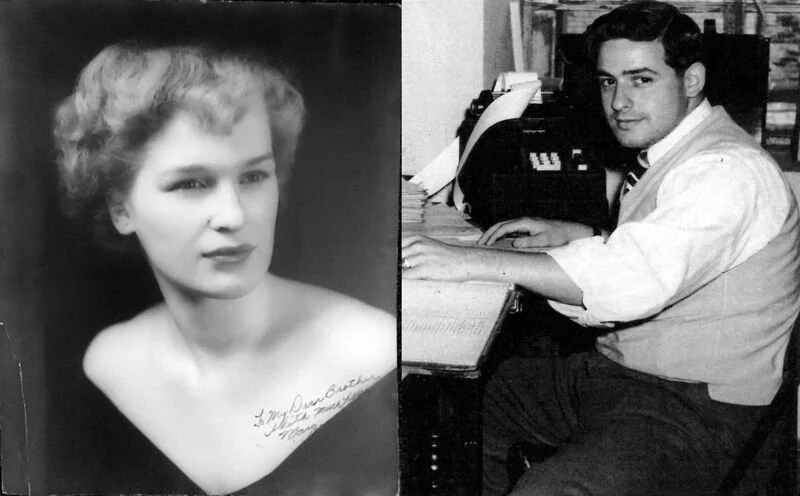
Dennis Hetzel's parents, Marguerite Dargan and Sherman Dutch.(Dargan and Dutch family photos)
The father, Sherman Dutch, was a Jewish man and a decorated Air Force veteran who took part in D-Day. He returned home to Madison, Wisconsin, after the war to get his accounting degree and start a career. He probably met Marguerite when she boarded and babysat at the nearby home of his sister and brother-in-law. After Marguerite learned she was pregnant, her family sent her to Chicago to stay with her grandparents. The plan: Keep things quiet. Offer the infant for private adoption. Get on with life.
The child was born July 22, 1952, and was described as “mixed race” to the few who knew. Marguerite named him “Michael Joseph Dargan” and clouded the father’s identity on the Illinois birth certificate, which records the dad as a soldier named “John Dargan.” Her doctor, Betty Delson, knew a blue-collar couple who badly wanted a child and lived in an ethnic Hungarian neighborhood on Chicago’s West Side. The courts awarded custody to Paul and Ruth Hetzel, and they changed Michael Joseph’s name to “Dennis Richard.”
Because of Marguerite, Sherman, Ruth, Paul and everything else that has happened in my life, I’m here and I’m me.
New York just became the most recent state to join Illinois and other states that allow adult adoptees the right to see their original birth certificates, and this certainly will make it easier for more adoptees to learn their stories. However, it’s important to remember that these documents are mere puzzle pieces. “Disclosure” is not a synonym for “closure.” Disclosure is simply the exchange of information; closure provides emotional peace — or at least helps you get closer to it.
Ruth and Paul Hetzel with young Dennis near Reisterstown, Maryland, circa 1956. (Hetzel family photo)

Ruth and Paul Hetzel with young Dennis near Reisterstown, Maryland, circa 1956. (Hetzel family photo)
I’ve also learned that “closure” isn’t just for adoptees. That became apparent the more I learned about Marguerite and other birth moms of the 1950s and 1960s.
Marguerite couldn’t just “get on with her life.” My recently discovered cousins have vivid memories of their late Aunt Marguerite doting over them, but she never had other children and fought her share of demons. She married later in life and found some happiness, but my cousins say deep sadness enveloped her each July — my birthday month. Years later, one of my cousins told me that she felt a spiritual urging to pray for “Marg’s baby.” I surfaced a few weeks later.
It’s possible she didn’t know Sherman was the father or wasn’t sure. Sherman’s family also has accepted me with open arms, and they believe he never knew about his fatherhood. That squares with the experiences of thousands of other unwed mothers and their families during the 1950s and 1960s.
‘Bad girls’ and slut-shaming
You meet lots of women like Marguerite in Ann Fessler’s “The Girls Who Went Away,” a book that brings tears and anger. Most of the birth mothers Fessler interviewed from that era were cast aside as “bad girls,” slut-shamed even by their parents in many cases and secretly sent away to give birth. They were often denied the right to even hold or see their newborns, and one of my cousins recalls Marguerite making such comments.
The cruel message was that keeping them from their babies would make it easier for them to forget. Young mothers heard such broken-record phases often, as if the loss of all connection with a child from your womb was no more consequential than donating a pile of lightly worn, unwanted clothes to the thrift shop.
For the fathers, the situation was quite opposite. Assuming they even knew their status, they and their families could choose their level of engagement, and society offered many incentives to take little or no responsibility.
I had resigned myself as I entered my 60s to never knowing much about my story and was particularly sad that my children and their children would have missing puzzle pieces in their lives as well. Thanks to DNA test results and many helpful people, the answers emerged in the past three years.
Twists in a family history
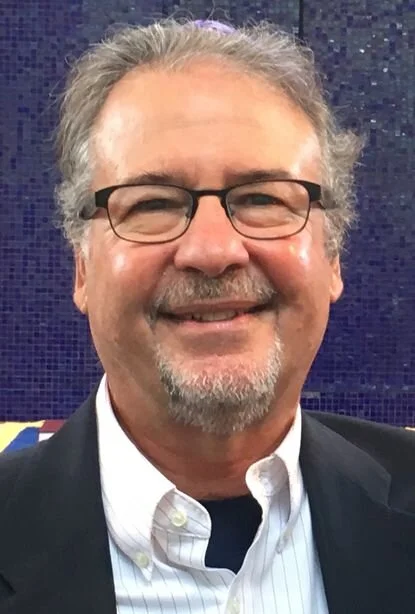
Dennis Hetzel (Dennis R. Hetzel)
Like many adoptees, I’ve found answers filled with unpredictable twists. For example, I lived in Madison for four years as managing editor of The Capital Times newspaper and knew some of my relatives. I just didn’t know we were related. Today I go to a Methodist church, but my surprising discovery that I’m half Jewish pulls hard on my psyche. I’m not sure what that means for me spiritually — but I’m glad I know.
You also learn that the dead ends on your journey can lift barricades for others. A member of my wife’s family connected with a long-lost daughter from her experience as a teenage unwed mother after getting the huge clue of the daughter’s DNA match to my son. I helped a Chicago doctor learn that the woman who I thought gave birth to my father (she didn’t; she’s a great-aunt) was actually his missing grandmother.
Still, I’d like to know more about Sherman’s and Marguerite’s relationship, and I wonder if Marguerite tried to find me or learn what happened to her child. There’s no evidence she did so, but I know enough to harbor no doubts that she wanted to know what happened to the son she never knew and maybe wasn’t even allowed to hold.
I’ve also learned the closure journey comes with a price. Marguerite paid her sadness forward to me, and I feel it most strongly every July. I don’t mind, because I’m also more at peace. I want to believe that she is too.
Dennis Hetzel grew up in Chicago and Hoffman Estates. He lives in Holden Beach, N.C., and recently retired as executive director of the Ohio News Media Association. He’s a former newspaper reporter, editor, publisher, journalism teacher and the author of two novels, “Killing the Curse” and “Season of Lies.”
Link to the original Chicago Tribune article here.
**Coming Soon**
Although the physical location of Foundlings Home closed in 1971, we’ve partnered with organizations who bring our mission into the 20th and 21st centuries. To give adoptees and their families an idea of the incredible work that is still being done through CFH, we are featuring a blog to highlight each organization and their connection to Foundlings home and then tell stories from MercyWorks, New Beginnings, RUSH Adolescent Family Center, SOS Children’s Villages, and the Jane Addams College of Social Work.