
SOS Children’s Villages Illinois is now One Family Illinois!
On July 1, 2024, SOS Children’s Villages Illinois transitioned to a new name and identity, One Family Illinois.

While the name has changed, their services, approaches, and commitment to excellence remain the same. One Family Illinois (formerly SOS Children’s Villages Illinois), founded over 30 years ago, helps children and youth in the child welfare system and their families to heal, thrive, and achieve permanency goals.
The Chicago Foundlings Home looks forward to supporting One Family Illinois and together we will continue to make a meaningful difference in many, many lives.
SOS Illinois Participates in Mental Illness Awareness Week 2020
During this time, we have learned our health is linked; and we have experienced a ripple effect. The health of one person, one neighborhood, one city, one state, one nation, has been tested. The same is true of our mental health. Our connectedness is forcing us to stay apart physically, but emotionally we need each other to get through this. By staying home we protect our world’s physical health, but by connecting through a phone call, zoom meeting, or social media we protect each other’s mental health. We are each other’s strength. Join SOS Illinois in support for Mental Illness Awareness Week – #MIAW.
SOS Children’s Villages Illinois is raising awareness for mental health October 4-10 in an effort to ensure children in foster care have the opportunity to lead healthy and fulfilling lives. We place great importance on the mental health of the children in our care. That’s why SOS Illinois has a dedicated team of clinicians that provide trauma-informed therapeutic services for each of the children and families we serve.
Children in Foster Care are 60% More Likely to Struggle with a Mental Health Condition
According to the American Academy of Pediatrics, Healthy Foster Care American Initiative, mental and behavioral health is the “greatest unmet health need for children and teens in foster care.” The statistics for children in foster care in relation to mental health issues are alarming, especially considering the following statistics on youth mental health in the general population:
1 in 6 U.S. youth aged 6-17 experience a mental health disorder each year
Suicide is the 2nd leading cause of death among people aged 10-34
The average delay between onset of mental illness symptoms and treatment is 11 years
17.2% of the general population of high school students have “serious thoughts” of suicide, including 47.7% of lesbian, gay, and bisexual high school students
50% of all lifetime mental illness begins by age 14
High school students with significant symptoms of depression are more than twice as likely to drop out compared to their peers
70.4% of youth in the juvenile justice system have a diagnosed mental illness
For youth in foster care, especially those within the LGBTQ+ community, these statistics are increased.
Psychotropic Medications Prescribed Present Alarming Concerns
Medications such as mood stabilizers, anti-anxiety prescriptions, antipsychotics and stimulants are being prescribed to youth in foster care as a method of treatment for behavioral and mental health issues in children as young as 3 years of age.
Research has identified alarming concerns in relation to the administration of these psychotropic medications, including the fact that oftentimes multiple medications are used simultaneously from the onset of treatment.
The SOS Illinois Village model of care presents daily, regular opportunities for youth in foster care to obtain guidance, counseling and support that offers a stable environment centered around the healing of traumatic events in their lives so that they may break free from the limitations set by their mental health conditions and eliminate their dependency on psychotropic medications.
The Child and Family Services Improvement and Innovation Act Seeks to Closely Monitor Administration of Psychotropic Medications
This Act was brought into effect in 2011 and requires that State Child and Family Services Plans includes details of how emotional trauma associated with maltreatment for children in foster care is addressed, including details on how psychotropic medication usage is monitored.
You can read more about the Child and Family Services Improvement and Innovation Act here.
In addition to the monitoring of psychotropic medication usage, the Fostering Connections to Success and Increasing Adoption Act of 2008 requires that each state consult with pediatricians and additional experts in order to develop a plan for the coordination and oversight of medical and mental health services for children in foster care.
SOS Illinois Provides Opportunities for Healing and Longevity
Each child that enters our Villages has a dedicated support system from the very start. From our full-time Foster Parents to our on-site clinicians, therapists, mentors, case managers, support staff and more, the youth in our care are able to find safety and security in knowing they’re surrounded by a community that only wants the best for them.
These children are offered a real chance at renewing their sense of trust and hope. They’re also able to heal from the traumas of their past while gaining footing on steady ground in an effort to provide them the confidence, skills and resources they need in order to become responsible and caring adults.

SOS Illinois Supports the #MIAW Campaign
You are not alone #MIAW
The theme of this year’s Mental Illness Awareness Week is, “What People with Mental Illness Want You to Know.” Throughout the week, we will be raising the voices of those with lived experience to talk about some of the conditions and symptoms that are most misunderstood.
Mental Illness Awareness Week runs from October 4 – 10 and coincides with additional related events:
Tuesday Oct. 6: National Day of Prayer for Mental Illness Recovery and Understanding
Thursday Oct. 8: National Depression Screening Day
Saturday Oct. 10: World Mental Health Day
Saturday Oct. 10: NAMI Walks National Day of Hope
You Are Not Alone
NAMI continues our year-long awareness campaign, You Are Not Alone, to feature the stories of people affected by mental illness to fight stigma, inspire others and educate the broader public. Now more than ever, the mental health community must come together and show that no one is ever really alone. No one should be without the information, support, connection and help they need.
How To Participate in #MIAW
There are many ways to get involved and remind people they are not alone by sharing stories about how connecting with someone during the health crisis has affected you, or what it means to have access to care by sharing through text, graphics, video or any other medium.
Follow SOS Illinois during the #MIAW Campaign
During Mental Illness Awareness Week, and the full month of October, SOS Illinois will be sharing resources, insights, and wisdom about caring for your own mental health, and supporting the mental health of others. You can find us on our social media platforms, such as Facebook, Twitter, Instagram, and Pinterest. Additionally, we will be sharing information about the ways that our Village Model of Care helps to support the mental health of youth in foster care, and how you can get involved to help get our communities happy and healthy.
View the original post here.
Navigating Our Next Steps at SOS Illinois

As Illinois continues to navigate the state of the current health crisis, and as our nation works to heal the damages of racism, SOS Illinois continues to assess our changing course of action. Despite the many unknown factors still facing us, as a nonprofit serving communities hit hardest by current events, there is much assurance in the belief that we must first and foremost act upon the goodness that is ours. We will continue to heal, teach, and strengthen children, as well as guide them to move beyond fears and uncertainty. By leading each child to take the much-needed steps, we show them they can trust in the power of the human spirit and in authentic, unconditional, and powerful love. Out of such love for others, we will be implementing new protocols on our journey to provide more services in each of our Villages. During the next few months, we will have a strategic focus on safety, education, behavioral health, and diversity & inclusion for our Villages.
Addressing Safety at SOS Illinois
Gov. Pritzker signed an Executive Order called – Restoring Illinois – Protecting Our Communities – to safely and conscientiously resume activities that were paused due to the COVID-19 pandemic. While programming and services at SOS Illinois were deemed essential and work continued throughout the “stay at home” order, administrative offices were closed with staff access to offices on a need-only basis.
As we reopen administrative sites, we are taking precautionary measures by putting into place additional protocols. These actions will help us ensure good sanitation practices, social distancing, protective face coverings, and self-monitoring are in place. We are adding these steps in order to maximize the health and well-being of our children and families, Foster Parents and staff, as well as birth parents and visitors.
Each site will have limitations as to the number of staff that can be present at any given time. This applies to high traffic areas, as well as individual offices and cubicle areas. Furthermore, these protocols will extend into our homes, where Foster Parents have diligently and mindfully followed all social distancing precautions while providing ongoing support for the children in their care. The extra measures are meant to provide a standardized response to ensure all homes are protected as staff members and birth parents resume in-home visits.
Assessing Educational Needs at SOS Illinois
During the special circumstances surrounding the COVID-19 pandemic, having accessible, educational resources for Foster Parents and children was and continues to be vital. As Foster Parents took on the additional roles of teachers due to online learning in the spring, it quickly became clear that certain factors, such as the age of the children and whether they could be self-directed, access to a decent computer or device, as well as having good internet were of paramount concern.
Across the nation, parents shared struggles with the new notion of e-learning, and continue to do so as the new academic year begins. Due to the suddenness with which states shut down, very few could adequately prepare for these circumstances, including our teachers and schools. Our Foster Parents, like so many other parents, dug in and did all they could to keep children on task and progressing through assignments. We’ve been fortunate to receive a donation of Chromebooks for each home to make e-learning more accessible. Additionally, we have equipped homes with higher speed internet and will address ongoing concerns. As the semester begins, we will continue to assess the types of support SOS Illinois can provide to Foster Parents as it relates to in-home schooling, supporting diverse learning, and more.
During the summer, we were extremely fortunate to have had this process started by Win Biernacki, a longtime SOS Illinois supporter and wife of SOS Illinois Board Member and Former Board President, Don Biernacki, who graciously offered video segments for Foster Parents in order to answer their questions on virtual learning, at-home education, and supporting our children’s academic needs during this health crisis. We built d upon this and hired a consultant, who focused on writing and implementing an educational plan that will support every age and level of learning at our Villages should e-learning continue. Additionally, we will be onboarding a new educational team that will support our children and staff so that they are able to truly thrive in this remote schooling environment. Look forward to us sharing an update on how our children and families are adjusting to a new semester of at home learning later this fall.
Providing Support for Behavioral Health
The level of uncertainty experienced by all of us was challenging and in many ways trauma, which is all too often part of what occurs for children entering the foster care system. Yet, uncertainty, fear, and brokenness can be a source of hope. On weekly calls between senior leadership and Foster Parents at each site, our discussions quickly moved beyond fear to our collective notion of hope in each other. We trusted that despite having to remain physically apart (out of love for others), we were united and most capable of conquering fears to reestablish the certitude of our hope in each other to create a better tomorrow.
From this experience we have come to understand that just as important as our safety and education are, so too is our mental health as well as that of the children in our care. We will be working with our parents and staff to take the next steps to dialogue with children in order to let them know that the brokenness in our society will not define us, but motivate us to be who we really are – a people on a common journey towards the good.
Already, staff at SOS Illinois have established outlets for different age groups in order to address some of these behavioral health needs. Group sessions via Zoom are taking place, and resources are being provided to help Foster Parents be able to begin conversations that deal with larger, complex issues related to events taking place in our city and around our country.
Chief Operating Officer, Delphine Rankin, shared this reflection in a recent team meeting that summarizes the efforts of the Village. “I am proud and grateful we have been able to react to so many challenges and faced incredible change without hesitation as a result of the health crisis. No one blamed anyone, and no one faltered. Our Villages pulled together, and with a team effort rallied through this unprecedented time.” Using that same approach, we will now face the next challenges, knowing that at the core of all things, the safety, well-being of the children in our care is of the utmost importance.
Embracing Diversity and Inclusion on our Villages
As our Villages and services continue to care for children and families of diverse racial and ethics backgrounds, SOS Illinois is making the commitment to do more to provide diversity and inclusion training, workshops, and education for our Foster Parents and staff. As Chicago continues to be a primary focal point in the fight to eradicate racism – especially racism that affects Black children and adults – we recognize that it is important now more than ever to unify as a force aligned with anti-racism efforts in our city and beyond.
In response to this growing need, SOS Illinois had gathered a specialized Racial Justice Committee. The goal of this committee, spearheaded by an outside consultant, is to “advance the core mission of SOS Children’s Villages Illinois by critically assessing and creating strategies with a focus on innovative methods to create on-going plans for continued areas for education, training, and advocacy in areas of promoting equality, addressing racism and bias, and advocating for social justice reforms both within the organization and surrounding communities.” This committee, made up of staff and Foster Parents, will continue to work together over the next year on identifying the areas of greatest need without our organization and surrounding communities to address racial bias an intolerance, as well as to create opportunities for culture-sharing and respectful conversation.
We’re looking forward to sharing the ways this new committee will help strengthen our community through a four-part blog series premiering on our blog in September.
Continuing to Move Forward
Like other communities around us, we understand that our collective future comes with some uncertainty. However at SOS Illinois, we are taking an active approach at navigating our next steps with care, tact, and compassion for one another. You can stay updated on each moment by subscribing to our e-newsletter and can support our efforts to keep our children and families safe by making an online gift today.
Please view the initial blog post here.
Welcoming All Families: SOS Illinois Supports Same-Sex Foster Parents
In February 2020, the United States Supreme Court agreed to decide if private foster care agencies in the U.S. can turn down LGBTQ foster parent applicants under religious objectification. Though a decision from SCOUTS has yet to be made, SOS Children’s Villages Illinois recognizes that at the heart of a healthy foster care family is dedication and compassionate support. It is our belief and practice that diverse single adults and couples provide loving, committed care to the children in our Villages, and offer an important perspective to our Village life. We are proud to welcome LGBTQ Foster Parents into the SOS Illinois family, and invite you to consider taking on this life-changing role.
History of LGBTQ Foster Parents in the U.S.
As SOS Illinois celebrates our 30th Anniversary, so too we celebrate the diverse Foster Parents who have joined our community, serving thousands of children across our three Villages in Chicago and Lockport, Illinois. The history of LGBTQ foster parents is, in some ways, parallel to our own, as we have openly welcomed LGBTQ candidates and staff for the last three decades.
Over the last ten years, many child welfare professionals and agencies alike have begun to welcome LGBTQ parents and families in the fold. As early as the 1960s and 1970s, coalitions and advocates began petitioning for state-wide and national recognition of not only same-sex marriages, but same-sex adoptions and foster care placements. Over a thirty-year span, a growing body of research on LGBTQ parents and their children clearly affirms the ability of LGBTQ individuals and same-sex couples to parent, alleviating myths and false narratives about the negative impact on children raised by LGBTQ parents.
In May 2013, the “Every Child Deserves a Family Act” was introduced to U.S. Congress, but was never enacted. This Act would have stipulated that any organization that facilitates the foster and adoptive care of children and has some form of funding from the federal government could not discriminate against prospective foster or adoptive parents based on sexual orientation, gender identity, or marital status. This stipulation also protected children being fostered or adopted from discrimination based sexual orientation and gender identity. However, as this bill would have only applied to organizations and agencies receiving federal funding, private institutions would still have been able to refuse prospective same-sex adults and couples.
Such push-and-pull of policy has not stopped LGBTQ adults from growing their families through foster care and adoption. By 2020, LGBTQ adults are fostering and adopting at rates higher per capita than those outside of the LGBTQ community. In fact, according to Life Long Adoptions, same-sex parents in the United States are four times more likely than different-sex parents to be raising an adopted or fostered child. Among couples with children under the age of 18 in the home, 13% of same-sex parents have an adopted child, compared to just 3% of different-sex parents.
As we continue to move forward with our own mission, we are committed to supporting and encouraging LGBTQ adults and couples to become part of the SOS Illinois community.

Why Support LGBTQ Foster Parents?
Aside from supporting the civic rights of LGBTQ adults, especially in regards to becoming parents, there are unique advantages to including LGBTQ foster parents within foster care communities.
There are more than 450,000 children and youth currently in foster care in the United States, many with diverse backgrounds, identities, and needs. As such, child welfare and foster care agencies are tasked to recruit an equally diverse pool of families to provide crucial support. In particular, LGBTQ foster parents may provide specialized support for LGBTQ children and teens, who are often overrepresented in the foster care population compared to their peers.
According to recent census research, between 7-27% of all youth in foster care identify with a sexual orientation other than “heterosexual,” creating increased needs for empathetic support.
Additionally, according to AdoptUSKids, “LGBTQ families bring particular strengths to parenting children in foster care, including an ability to identify with difficult feelings of isolation or a sense of being ‘different.’” For those within the foster care system, having a parent that understands what it means to be misunderstood by your peers, targeted for harassment, or under-supported by policy is a major benefit.
Becoming a Foster Parent at SOS Illinois
Joining the diverse Foster Parent community at SOS Illinois offers unique opportunities not available within a traditional foster care model.
One of the things that sets SOS Illinois apart from traditional foster care is full-time, professional Foster Parents. The SOS Illinois model places Foster Parents in single-family homes in one of its Villages, where up to six children ranging in age from infants to young adults call home.
For our Foster Parents, daily life involves taking care of each child’s diverse needs and schedules. During the COVID-19 health crisis, the dedication of our Foster Parents is even more remarkable, as they have taken on new roles as at-home teachers and tutors, coaches, and more. Applying to join our community today means that you can join this league of extraordinary single adults and couples committed to providing hope and healing to siblings in Illinois foster care. Learn more today on our Foster Parenting page to see if our inclusive community is right for you.
Please see the original post on SOS Illinois’ website.
Transporting Hope: SOS Illinois’ Charitable Fundraiser Gathers Industry Leaders to Support Children in Foster Care
Evening of Hope is the annual fall fundraising event for SOS Children’s Villages Illinois. The funds raised from this event play an incredibly important role in the wellbeing of the children and families we serve, and this year was no exception. Check out the photos of this event at the end of this article!

Evening of Hope 2019 VIP Honorees and Committee Members gathered with SOS Illinois leaders
About Evening of Hope 2019
Held on Thursday, October 10 at the Museum of Contemporary Art in Chicago, Evening of Hope was a celebration of innovation, community, and hope. The event honored the builders and visionaries who keep SOS Illinois charged to continue breaking new ground in Illinois foster care through charitable works of giving and awareness-raising. Over 600 guests enjoyed the street food carving stations, cocktails, silent auction items, DJ R3DLINE, and the incredible museum exhibits featured at Evening of Hope 2019.
VIP Reception Brings Together Illinois Industry Leaders
Leaders in the transportation industry joined board members and sponsors for a special reception prior to the main event that highlighted the important work of SOS Illinois. Evening of Hope 2019 VIP Honorees included: José Alvarez, Illinois Tollway Executive Director; Jamie Rhee, Chicago Department of Aviation Commissioner; Rocky Donahue, PACE Executive Director; Omer Osman, Illinois Department of Transportation Acting Secretary; Bruce M. Marcheschi, METRA Chief Operating Officer and Deputy Executive Director; and Retired Judge Gloria Chevere, Chicago Transit Authority Board Member. Each VIP Honoree shared inspirational remarks on their dedication to the services provided by SOS Illinois.
Welcomed by Board President Jim Wolfe, attendees were thanked by Event Chair and Board Vice President John Trotta who shared, “I am so proud to be in this industry . . . you are amazing, and when you are downstairs you’ll see there are going to be 500-600 people here who care about our kids . . . To see the kids graduate, to see the difference we collectively have made is amazing.”

José Alvarez
VIP Honorees Share Wisdom and Commitment of SOS Illinois’ Mission
José Alvarez, Illinois Tollway Executive Director, who first learned of the SOS Illinois mission during his time at the Chicago Housing Authority, started by discussing Casa Tepeyac, the site in the Back of the Yards Neighborhood, and how he remembered the vacant lot before the facility was built, “The kids that benefit from this, the families that benefit from it, these are the same families I grew up around. These are the same kids I went to high school with. And these are the same kids that may be going to school with my kids. Thanks to organizations like yours, you help kids actually make it home . . . this is a real organization making a real difference for people.”

Jamie Rhee
Jamie Rhee, Chicago Department of Aviation Commissioner shared that she is a DCFS Foster Parent and has been caring for her child since she was 18 months old. She continued, “We owe it to the generations coming to make sure we are providing the best environment for them to succeed . . . we have a vested interest in creating that pipeline for the next generation . . . and that starts with each and every one of us, in this room, every day to say how do we make the north and the west and the south sides of Chicago equal. How do we give equal access to jobs and opportunities and businesses to grow and flourish and be diverse. These kids deserve it.”

Rocky Donahue
Rocky Donahue, PACE Executive Director remarked, “all of you in this room, be it the staff at SOS (Illinois), or the board, or those volunteers, you’re the real honorees . . . this organization does meaningful work that changes children’s lives and families’ lives.” He then continued, “This organization is kind of like PACE. We’re all in the infrastructure business, and we’re all taking individual lives and bringing them into a bigger and broader community and making that community better. What SOS (Illinois) is doing by changing those (children’s) lives and making them a part of the bigger community is really inspirational. As a person who serves the public, and now seeing how well SOS (Illinois) does, just imagine how great our world could be if we could do this the same way.”

Omer Osman
Omer Osman, Illinois Department of Transportation Acting Secretary started by talking about his family of eleven brothers and sisters and how his dad worked to ensure each one attended college. He then shared, “This organization is an international organization. What this organization does is make an immediate impact not only on the individual, but an impact on the family. A whole family, and by extension, a Village. This work is important, I’m so proud to be a part of it.”
Bruce M. Marcheschi, METRA Chief Operating Officer and Deputy Executive Director continued, “There is nothing more important than that strong bond of family. Every child deserves that. Every child deserves an opportunity. Without that, I think you mentioned the future, there is no future. We’re the roadbuilders of their future, so to speak. We need to get them there. Without the support in this room, and the love and the generosity in this room, we wouldn’t have what we have today. And we can’t let this mission falter, we need to keep it going.”
Retired Judge Gloria Chevere, Chicago Transit Authority Board Member, spoke “These words are not only mine, I also have the honor of speaking on behalf of the President of the Chicago Transit Authority, Mr. Dorval Carter, who could not be here today, but he absolutely wanted to be here. I’m thrilled to be here tonight.” She furthered,” SOS (Illinois), the work you are doing to help kids in our community is vital to the future success. I’m thrilled to hear of your 100% graduate rate. Your organization offers them, us, and our community hope . . . I know it makes a difference.”
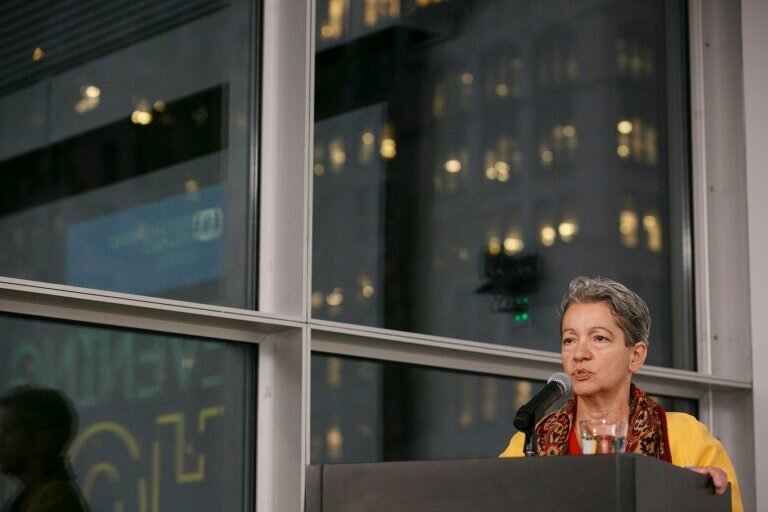
Judge Gloria Chevere
With that, Tim McCormick, CEO of SOS, Illinois closed the reception with two parting comments, “We have one common story, the stories we heard from each of our VIPs. It’s not about the struggle, it’s about where we go with the hope to get there . . . and the second thing is, we will gather and continue to do this. This is a story worth telling. It gives us hope, as many of us heard, not only for the children and families, but also for our society; and this is what Evening of Hope is about.”
Evening of Hope and Helps Children in Foster Care Flourish
The funds raised at Evening of Hope are crucial in helping SOS Children’s Villages Illinois continue to provide high-quality, exceptional programs and services to children in foster care. At SOS Illinois, our model of care is uniquely different than that of traditional foster care, and we are proud and honored to be able to bring that awareness to Evening of Hope. We are committed to providing safe, stable, and loving homes for children in foster care in Illinois, as well as providing preventative services to at-risk families. Our model of care allows us to keep brothers and sisters together in an individual home in the care of a full-time, professional Foster Parent. In doing so, we lay the foundation for rebuilding trust, confidence, and hope for each child in our care. As a result of this model, we annually celebrate a 100% high school graduation rate compared to the national average of only 50% of youth in foster care.
Evening of Hope 2019 Photos
Professional photos from this event are available for download. Don’t forget to tag us as @sosillinois on Instagram and @soscvi on Facebook when sharing them with your friends! Enter PIN 9669 to download.
Committed to Charitable Giving in Chicago
Evening of Hope is generously supported by both individuals and corporate partners committed to investing in a local charity in Chicago. You can check out the fundraising events full list of sponsors, and learn how you can get involved in building the future of foster care.
Foster Care Awareness Month
SOS Children’s Villages Illinois + Foster Care Awareness Month
To learn more about becoming a Foster Parent with SOS Illinois, visit us at sosillinois.org/fpq
Did you know that May is Foster Care Awareness Month? SOS Children’s Villages Illinois highlights the needs to create a sense of community for foster kids and keeping siblings together. To read more, here is a link to SOS Children’s Villages Illinois CEO, Tim McCormick, speaking to Hinsdale Living Magazine in 2018 about the goals of SOS Illinois and how you can get involved. For those of you ready to dive right in, see below more information on the phase’s of becoming a foster parent at SOS Illinois.
Foster Care Facts (via American SPCC)
45% of foster children live in non-relative foster family homes.
32% of foster children live in relative foster family homes.
23% of foster children live in institutions, group homes, trial and pre-adoptive homes.
118,000 children and youth in America are waiting to be adopted.
On average, a child can spend almost 12 to 20 months in foster care.
10% of foster children spend more than 5 years in foster care.
26% of children entering foster care are under the age of one.
About 22% of youth in foster care are age 13 or older.
20,500 youth are emancipated from foster care without reunifying with their families, or being adopted.
Of youth who age out of foster care, 1/4 are incarcerated within 2 years and only 1/2 graduate from high school.
Children and adolescents with foster care experience are diagnosed with PTSD at twice the rate of U.S. war veterans.